Meteor Shower Geminids: The Midnight Window Everyone Misses—How to Catch Up to 150 Meteors per Hour
Watch the spectacular Geminid meteor shower peak this Saturday night.
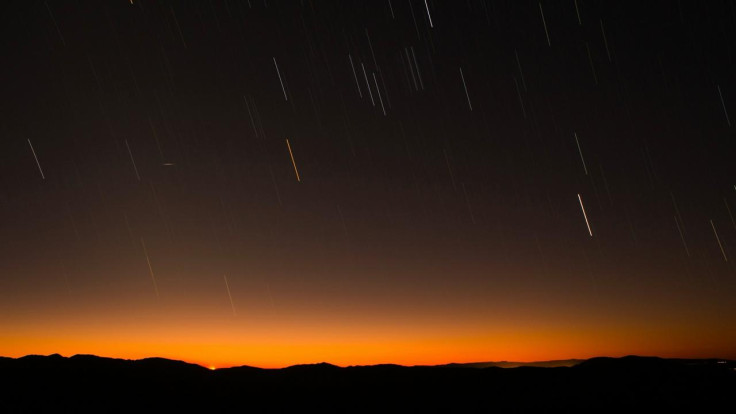
One of the year's most reliable and spectacular celestial events, the Geminid meteor shower, is set to reach its peak this weekend, offering skywatchers the chance to witness a barrage of bright, multicoloured shooting stars.
The main event will occur overnight on Saturday, 13 December, and into the early hours of Sunday, 14 December, with forecasters predicting rates of up to 150 meteors per hour under optimal dark-sky conditions.
Why The Pre-Dawn Hours Offer The Best Views
Although a few stray meteors may be spotted throughout the night, there is a specific window that yields the most dramatic results. The optimal time to watch is strictly after midnight through the early hours before dawn.
This timing matters because the constellation Gemini, which acts as the shower's radiant point, climbs higher in the sky as the night wears on. As the radiant rises, the geometry for viewing improves drastically.
At the same time, the Earth rotates directly into the oncoming stream of debris. This increases the number of meteors striking the atmosphere.
How A Rock Comet Creates A Better Show
What makes the Geminids strange is their origin. Most showers happen when Earth passes through the dusty tail of an icy comet as it swings near the Sun.
The Geminids are different; they come from the debris trail of 3200 Phaethon, which is actually an asteroid. Astronomers often refer to it as a 'rock comet'. This unusual classification stems from its highly elliptical orbit, which brings it closer to the Sun than any other named asteroid, causing it to shed rocky debris in a comet-like fashion.
Because this debris is rocky rather than icy, the particles are denser. When they hit our atmosphere, they burn slower and brighter, often creating intense colours. The specific hue of a meteor is determined by its chemical composition: sodium produces a bright orange, iron a yellow, and magnesium a blue-green.
As the planet ploughs through this cosmic rubble, the density of the stream creates the high hourly rates that make this shower so famous.
Locating The Twins
To find the shower's radiant point—the spot where the meteors appear to originate—you need to look for the constellation Gemini. This is where the shower gets its name.
You can find the constellation sitting just to the northeast of Orion. It is wedged in the sky between Taurus and Cancer. The easiest way to confirm you are looking in the right spot is to find the two bright stars, Castor and Pollux, which represent the heads of the twins.
While finding the constellation helps you get oriented, do not make the mistake of staring straight at it. That is the quickest way to miss the best part of the show.
The Geminid meteor shower peaks this weekend, Dec. 13-14!
— NASA JPL (@NASAJPL) December 12, 2025
The meteors will be visible all night – just look to the eastern sky.
Under the darkest skies (and after allowing your eyes to adjust), you could see up to 120 Geminid meteors per hour.
Happy meteor-gazing! pic.twitter.com/U4kHdw7KFQ
The Trick To Seeing Longer Trails
Meteors near the radiant are travelling straight toward you, meaning they produce very short streaks that are hard to spot. Instead, look toward the darkest part of the sky, slightly away from the radiant.
By scanning the nearby constellations, you are more likely to catch the meteors hitting the atmosphere at an angle. These produce the long, dramatic trails that streak across large sections of the sky.
Preparing For Cold Weather And Dark Skies
While the Geminids will start appearing in the mid-evening, you do not need to stay up all night to catch a glimpse of the show. However, patience and preparation are required for the full experience.
Anyone brave enough to head out in the freezing pre-dawn darkness of 14 December is in for a treat, as this is when the trails are brightest. It is essential to find a location away from city streetlights to simulate perfect dark sky conditions.
For the best experience, remember to wrap up warm against the winter temperatures. You must allow your eyes at least 30 minutes to adjust to the dark before you can expect to see the fainter meteors.
Once your eyes have adapted, simply sit back, relax and enjoy one of the standout skywatching events of the year. For those checking the forecast and planning their evening, knowing the best time to head out is the key to seeing the maximum number of shooting stars.
© Copyright IBTimes 2026. All rights reserved.
- MOST POPULAR IN Trending