

'We're Running Out of Time': Avi Loeb Claims Strange Cosmic Visitor Proves We Need a Space Base Now
Loeb says rapid, repeatable access to anomalous interstellar objects requires a dedicated space observatory and rapid-response capability—before the next chance passes.
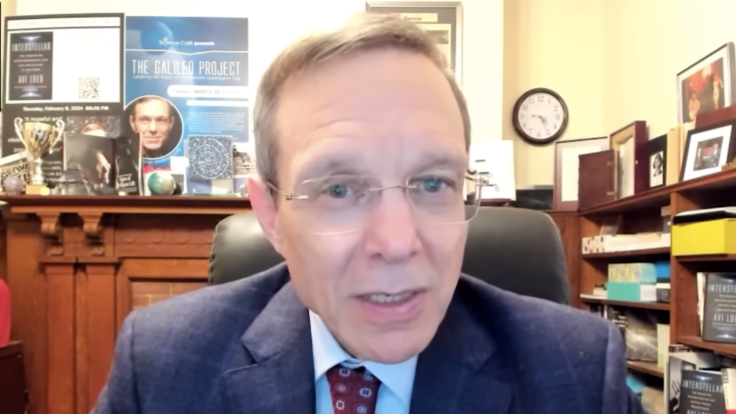
Avi Loeb warned that humanity faces a narrowing window to study anomalous interstellar objects and that a permanent space platform is the only way to respond.
Harvard astrophysicist Professor Avi Loeb has spent weeks arguing that the unusual interstellar visitor known as 3I/ATLAS demands a new posture for science and national strategy. In interviews and personal posts, he has urged the creation of a dedicated space-based observational and response platform, arguing that Earth-bound telescopes and ad-hoc responses leave investigators blind to rapidly evolving phenomena. The plea is as much operational as it is philosophical: Loeb says we lack the infrastructure to intercept and characterise fast-moving interstellar visitors while they are accessible.
Loeb's Case: Why A Space Base Matters
Loeb frames 3I/ATLAS as a problem of timing and access. In recent televised conversations, he stressed that interstellar objects transit the inner Solar System quickly, often with little warning. That laboratory-grade measurements require being much closer than current ground, and Earth-orbit assets allow. He told interviewers that to distinguish natural from engineered signatures, scientists need a persistent, well-instrumented platform that can be pointed, repositioned, and, if necessary, dispatch small probes.
Loeb repeatedly emphasises the human cost of delay. He argues that opportunities to gather decisive evidence are single-shot: once an object has passed perihelion or fragmented, unique information is gone. That is the operational logic behind his insistence that the world must fund and build an immediately deployable observational platform beyond low Earth orbit. His public interventions are framed not as speculative alarmism but as risk management for frontier science.
Evidence and Method: What Loeb Is Relying On
Loeb points to a catalogue of anomalies attributed to 3I/ATLAS, unusual brightness changes, pulsed signals reported by some observers, and a trajectory that, he says, warrants extra scrutiny. Rather than relying on second-hand summaries, Loeb has taken to primary channels: recorded interviews, posted Q&A sessions, and essays on his own Medium page in which he documents his responses to both genuine data releases and the misinformation swirling around the object. He has repeatedly invited NASA and other agencies to release raw data for independent analysis.
At the same time, Loeb has been transparent about uncertainty. In the interview, he hedges probabilities and frames his position as an open scientific hypothesis that demands empirical testing rather than rhetorical certainty. That stance underpins his policy ask: not to claim knowledge of extraterrestrial intelligence, but to insist on capability, an observational platform capable of resolving questions that current assets cannot.
The Misinformation Problem And Legal Steps
Loeb's call for a space base has been amplified and complicated by an episode of digital deception. In early December, he discovered AI-generated videos impersonating him, spreading sensational claims about 3I/ATLAS. Loeb published first-hand denunciations on his Medium account, documented the fake clips' tell-tale artefacts, and called on platforms to act. He reported the channel to YouTube and, according to his own posts, consulted Harvard legal advisers about potential defamation claims. The episode reinforces his broader point: if public science is to be defended, the infrastructure must include not only telescopes and probes but reliable channels for authentic scientific communication.
Loeb's public actions on this front remain remedial rather than litigious: he has told readers he is 'in consultation' about legal options rather than reporting a filed suit. That distinction matters for readers who demand documentary proof; Loeb's primary sources are his own posts and recorded interviews, which he has made available for scrutiny.
What Building A Space Platform Would Entail
Loeb offers a high-level blueprint rather than a detailed procurement plan: a stable platform beyond low Earth orbit, with modular instrumentation, rapid-response pointing, and an architecture for launching small chase vehicles or sensor packages. He argues such a facility could be shared internationally, hosted by agencies or consortia, and used for scientific, planetary-defence, and technological monitoring missions. In interviews, he repeatedly notes that the cost of hesitation is paid in lost data and missed opportunity, a calculus he says outweighs the upfront investment.
Sceptics counter that existing missions and telescopes can be better coordinated and that extraordinary claims require extraordinary evidence. Loeb accepts this and frames the debate as pragmatic: whether governments and funders prefer to keep reacting or to create standing capacity to answer questions when the next anomalous visitor appears.
Human drama threads through Loeb's argument. He speaks not only as a scientist but as an advocate for a future in which humanity is capable of quickly and cleanly answering the deepest questions about its place in the cosmos. Whether decision-makers will treat his plea as a policy priority remains to be seen. For now, Loeb's message is simple and urgent: build the tools before the next visitor slips by.
The window to act, he warns, is closing.
© Copyright IBTimes 2026. All rights reserved.