

3I/ATLAS Update: Harvard's Avi Loeb Says Experts 'Dismiss' Evidence Comet Could Be Technological-Origin
Avi Loeb claims experts reject evidence that interstellar 3I/ATLAS is alien technology.
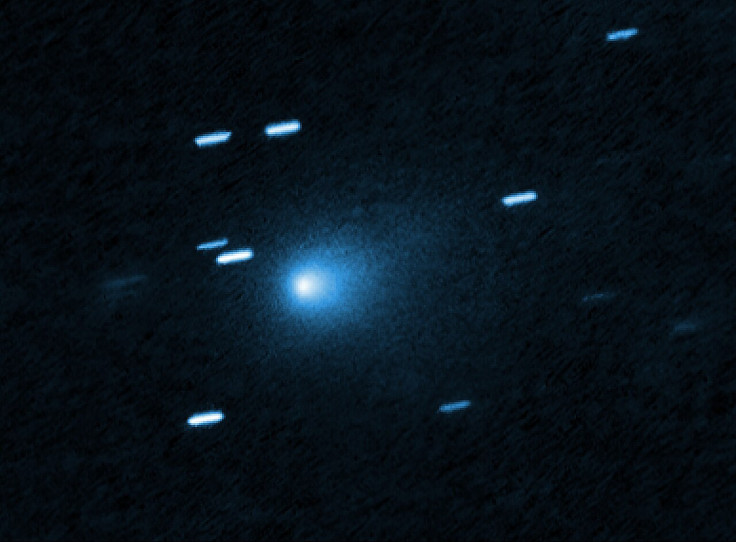
The third-ever confirmed visitor from the deep gulf between star systems is currently sweeping through our own, yet its arrival has done more than just excite astronomers. It has ignited a furious public and philosophical war over one of humanity's oldest questions: are we alone?
At the centre of the storm is 3I/ATLAS, a celestial object that refuses to behave like a conventional comet and has prompted one of Harvard's most high-profile scientists to challenge the core assumptions of his entire field. He is convinced that what we are seeing is not merely a rock or ice lump, but potentially a piece of alien technology, and he is taking aim at his colleagues for their 'rigid' refusal to even entertain the idea.
Dr. Avi Loeb, the controversial yet brilliant Harvard astrophysicist and former chairman of Harvard's astronomy department, has refused to accept the official line that 3I/ATLAS is simply another comet. In a recent, highly charged escalation, Dr. Loeb has publicly taken aim at the scientific experts who insist on dismissing his theories.
He argues that the mainstream community is clinging rigidly to traditional scientific explanations, thereby blinding themselves to the possibility that this object could be a piece of alien technology or, at the very least, a carrier of extraterrestrial material. For Dr. Loeb, the refusal to consider the technological hypothesis is less about science and more about a deeply ingrained cultural bias.
The Astonishing Chemical Cocktail of 3I/ATLAS
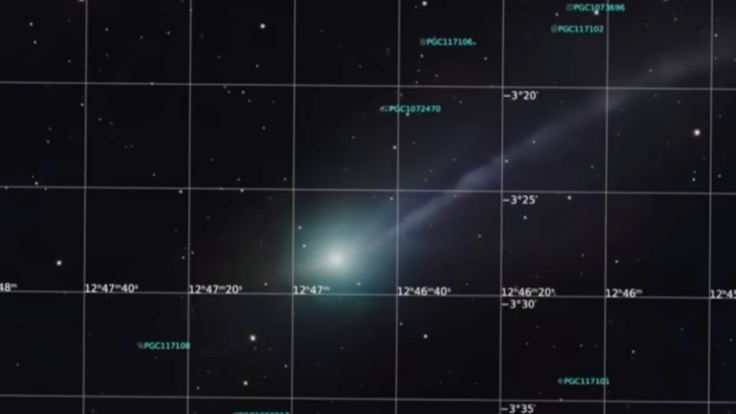
The case for 3I/ATLAS being something truly extraordinary has just been reinforced by an astonishing chemical analysis. Using the giant Atacama Large Millimeter/submillimeter Array (ALMA) in Chile, researchers revealed that the object is an unexpectedly rich carrier of life's chemical building blocks. It is venting substantial, unusually high amounts of two crucial organic molecules: methanol and hydrogen cyanide.
These are not faint traces, but overwhelming evidence of complex chemistry. According to the team's findings, methanol is being produced at a striking rate of roughly 40 kilogram per second, amounting to about 8 per cent of all vapour escaping from the comet.
For comparison, typical comets born within our own Solar System usually show only around 2 per cent of this particular molecule. Hydrogen cyanide is also emerging close to the comet's rocky nucleus at rates between 250 and 500 gram per second.
Why does this matter? Both hydrogen cyanide and methanol are considered key building blocks for complex organic chemistry—the very chemistry that precedes the formation of life. Dr. Loeb has seized upon this data, claiming that this highly enriched chemical cocktail looks less like a threat and more like the signature of a 'friendly interstellar gardener' who may be deliberately attempting to 'seed' life's building blocks across the galaxy.
This provocative interpretation directly challenges the consensus, which holds that these molecules simply indicate that 3I/ATLAS is a unique, ancient comet that hasn't passed near a star for hundreds of millions of years. It suggests the comet is carrying information about the kind of chemical environments that exist far beyond our own solar neighbourhood.
The Cosmic Culture War: Why Experts Dismiss 3I/ATLAS
Despite the sensational chemical findings, the majority of the scientific community maintains that 3I/ATLAS is a comet, however unusual. Their position is supported by observations from the Hubble Space Telescope and other instruments, which clearly show the object is developing a visible coma—the fuzzy halo of gas and dust—and a tail as it approaches the Sun.
These are classic, tell-tale features of a comet and entirely consistent with a natural origin. NASA's consistent line has been that 3I/ATLAS poses absolutely zero threat to Earth and will remain safely distant, with its closest approach scheduled for December 19, 2025, at a distance of 270 million kilometres (168 million miles).
But Dr. Loeb remains undeterred by the consensus. He highlights other anomalies he believes defy simple explanation. These include the comet's mysterious acceleration, its highly eccentric hyperbolic trajectory, and, perhaps most controversially, a rhythmic, 16.16-hour 'heartbeat'—a strange periodic brightening and dimming that has yet to be fully explained. For him, these elements, when combined with the abundance of life-related chemistry, constitute strong circumstantial evidence.
The core of the conflict is a philosophical one. Loeb believes that since most stars formed a billion years before the Sun, an 'ambitious gardener from an earlier star' would have had plenty of time to affect the history of life on our planet, suggesting that humans are not alone in the cosmos.
His critics, however, view the 'technological' explanation as an extreme, unnecessary leap of logic until all natural explanations—no matter how complex—have been exhausted. What is undeniable is that 3I/ATLAS, only the third object of its kind ever observed, has transformed from a mere astronomical curiosity into the epicentre of a cosmic culture war over the nature of alien life.
The journey of 3I/ATLAS through our Solar System has stripped away the simple, comforting illusion that we fully understand the cosmic environment around us. By revealing an unprecedented cocktail of life's building blocks, and displaying physical oddities like its rhythmic 'heartbeat,' this interstellar visitor forces us to confront uncomfortable questions about our place in the universe. Whether you side with the scientific consensus or with Dr. Loeb's provocative technological hypothesis, the message is the same: the universe is stranger than we imagined.
© Copyright IBTimes 2026. All rights reserved.