

Elon Musk Breaks Character With Shock Revelation About What He Truly Believes About God
Elon Musk made an unexpected and unusual admission about his spiritual beliefs on the Katie Miller podcast.
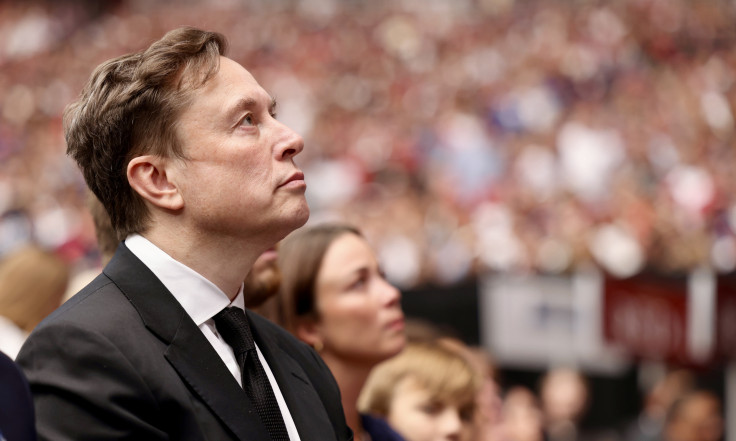
Elon Musk delivered a statement on faith that industry watchers said was unprecedented for the billionaire whose public identity has been defined by technology and science.
In a wide-ranging conversation on the Katie Miller podcast, Musk framed the origins of the universe in terms that departed from his typical scientific discourse and edged into a philosophical and metaphysical realm. His remarks, which acknowledged 'The Creator' and reflected an openness to a creative origin of the universe, came as a surprise to many commentators closely tracking his public remarks on religion.
The exchange between Musk and host Katie Miller revealed a nuanced position on the existence of a higher power, blending philosophical openness with scientific reticence. Musk's words have already triggered vigorous debate about whether the tech leader is rethinking long-held sceptical assumptions about God and existence.
Unexpected Spiritual Admission From a Reluctant Commentator
Musk's comment came during a segment of the podcast where Miller asked directly about the billionaire's personal beliefs. When Miller asked whom he 'looked up to the most,' Musk replied simply: 'The Creator.'
Pressed further on his position regarding God, Musk stated: 'God is the Creator.' His answer was notable for its direct invocation of a term more commonly associated with theological discourse than the usual language of scientific inquiry.
When Miller followed up with the question: 'You don't believe in God though, do you?' Musk responded: 'Well, I believe this universe came from something. People have different labels.' This indicates he views the question of God less through the lens of doctrinal religion and more through a philosophical acknowledgement of a creative origin.
The content of this interview stands in contrast to Musk's previous public comments on religion and disbelief. Historically, he described himself as 'not very religious' and said he had 'never been particularly religious,' though he expressed respect for moral teachings found in religious tradition.
A Pattern of Evolving Views On Faith And Belief
The recent remarks align with a broader pattern in Musk's public statements in recent years, which reflect an evolving rather than static view of spirituality and belief. In earlier interviews, Musk described himself as a 'cultural Christian,' noting respect for the moral teachings of Jesus while stopping short of traditional belief.
For example, in a conversation with psychologist Jordan Peterson, Musk said: 'While I'm not a particularly religious person, I do believe that the teachings of Jesus are good and wise' and characterised himself as a 'cultural Christian.'
In other contexts, Musk has framed his philosophical orientation as one of curiosity, saying his 'religion, for lack of a better word, is one of curiosity,' and emphasizing his desire to understand the universe rather than adhere to standard religious doctrine.
Past remarks have also included candid observations about faith and existence. On a podcast, Musk acknowledged that when asked where the universe came from, he responded that something must have caused it and that 'you could say whatever caused the universe to be is God, depending on your view.'
This background contextualises the latest comments not as an abrupt conversion but as part of an incremental shift toward acknowledging the complexity and mystery of existence. Musk's public philosophy on spirituality has maintained a consistent thread of openness rather than belief in a specific religious tradition.
Reactions And Implications Across Spheres Of Public Debate
Musk's remarks have reverberated across social media and discourse communities that rarely intersect technology leadership with matters of faith. Some audiences have interpreted his statements as a symbolic validation of belief in a creator, while others see them as the billionaire's attempt to intellectualise the question of origins without subscribing to formal theology.
Observers in religious and secular communities alike have pointed to Musk's choice of language, referencing 'The Creator' rather than specific doctrinal identifiers, as significant. It suggests a philosophical deism that allows for a higher cause without defining its nature or moral attributes.
Critics have cautioned against reading too much into the remarks, noting Musk's long-held emphasis on scientific inquiry and his reluctance to embrace organised religion. They argue that his statements reflect a personal grappling with existential questions rather than an endorsement of theological doctrine.
Elon: "I'm probably a cultural Christian."
— Chrisman (@chrisman) July 22, 2024
Reminds me of what Chesterton said:
“Christendom has had a series of revolutions and in each one of them Christianity has died. Christianity has died many times and risen again; for it had a God who knew the way out of the grave.” pic.twitter.com/2JYOrABtjV
At the same time, those engaged in debates about science and faith have highlighted Musk's words as evidence that even leaders rooted in empirical and technological domains acknowledge profound uncertainties about the origins and purpose of existence.
Musk's comments also raise questions about the broader conversation among influential figures in technology regarding spirituality, human purpose, and the limits of scientific explanation. Such discussions are increasingly prominent as advances in artificial intelligence, cosmology, and theoretical physics push public discourse beyond purely material explanations of reality.
The podcast exchange will likely be revisited as analysts and commentators interpret the implications of Musk's statements for public understanding of science and belief. Whatever the long-term impact, the remarks mark an unusual moment in which a figure of Musk's profile publicly addressed foundational questions about existence in terms that transcend conventional scientific discourse.
Elon Musk's acknowledgment that the universe 'came from something' and his reference to a creator underline the enduring human pursuit of meaning, even among those best known for redefining the boundaries of technology.
© Copyright IBTimes 2026. All rights reserved.