Michael J. Fox Says Parkinson's Has 'Gotten Harder' and 'We're Getting Close' to a Cure After Acting Return
Fox is balancing the growing realities of Parkinson's with faith in research he has spent decades helping to fund
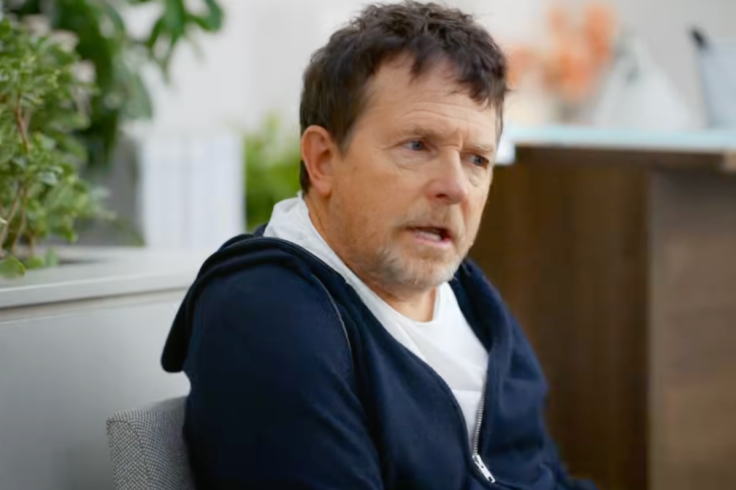
Michael J. Fox says Parkinson's disease has 'gotten harder' over time, even as he believes researchers are moving closer to a cure. In a People interview published on 9 September 2026, the 65-year-old actor described worsening challenges alongside growing hope from scientific progress. Federal health authorities still state that Parkinson's disease has no cure.
Fox's foundation says he was diagnosed with Parkinson's in 1991 at age 29. People report that his symptoms began around 1990. He disclosed the diagnosis publicly in 1998 and founded the Michael J. Fox Foundation for Parkinson's Research in 2000.
The foundation says it has invested more than $3 billion (€2.60 billion and £2.23 billion) in Parkinson's research worldwide. Fox told People that his public profile could help draw attention to the cause. He said living with the disease also gave him a direct understanding of the urgency felt by patients and families.
Michael J. Fox Faces a Harder Reality With Parkinson's
Fox said the physical realities of Parkinson's have become more difficult with time. 'Of course, things have gotten harder over the years,' he told People.
Parkinson's is a progressive neurological disorder that can affect movement, balance and coordination. Symptoms vary between patients and can worsen over time, according to the US National Institute of Neurological Disorders and Stroke.
Fox was named the 2026 recipient of the Lasker-Bloomberg Public Service Award on 9 September 2026. The Lasker Foundation recognised his work empowering patients and accelerating research into better treatments and a cure.
The honour follows more than two decades of work through his foundation. The organisation describes itself as a major funder of Parkinson's research and has invested billions in efforts to understand and treat the disease.
Fox has continued that advocacy while returning to acting. He stepped away from full-time acting in 2000 after leaving Spin City, though he later returned for guest and series roles.
By 2020, Fox said difficulty memorising lines had become a new challenge. Shrinking later offered him a way back without pretending Parkinson's was not part of his life.
Shrinking was co-created by Bill Lawrence, Brett Goldstein and Jason Segel. Fox guest-starred in season three as Gerry, a man living with Parkinson's disease.
The role placed him opposite Harrison Ford, whose character, Paul Rhoades, also has Parkinson's. Fox described the experience as 'insanely fun' and said the role allowed him to work more naturally with his condition.
Michael J. Fox Sees Hope in Research and Acting Again
Fox received a 2026 Emmy nomination for outstanding guest actor in a comedy series for Shrinking. The Television Academy lists the nomination for the episode 'The Field.'
Apple TV released Shrinking season three from 28 January through 8 April 2026. The series has already been renewed for a fourth season.
Fox has said he would be open to returning and has not ruled out other acting work. His foundation, however, remains central to his public life.

On the prospect of a cure, Fox did not offer a timetable. He told People that researchers cannot say exactly when one might arrive. Instead, he pointed to scientific progress as a reason for optimism.
That distinction matters. Fox's belief that 'we're getting close' reflects his assessment, not an announcement that a cure is imminent.
Federal health authorities continue to state that no cure currently exists. Treatments can help manage symptoms, while researchers study approaches aimed at slowing or preventing disease progression.
Fox has pointed to research breakthroughs, new treatments and improved scientific tools as signs of progress. His foundation says more than 180 drugs are in active or upcoming human testing.
It also says nearly half of those programmes focus on slowing, stopping or preventing disease progression. That pipeline does not establish when, or whether, a cure will emerge.
Fox told People that the foundation is preparing a fundraising campaign seeking another $2.5 billion (€2.17 billion and £1.86 billion) for research. The figure remains attributed to him because it was disclosed in that interview.
'Science is hard,' Fox told People. He said progress requires time, collaboration and sustained investment, while maintaining that recent advances give him hope.
© Copyright IBTimes 2026. All rights reserved.
- Recommended For You