Michael Schumacher: McLaren Boss Compares Setbacks to F1 Legend's Pain
Stella uses the Michael Schumacher blueprint to fuel McLaren's fight vs. Verstappen
The smell of burning rubber and champagne quickly fades, but the sting of a strategic error lasts an entire season. For the Woking-based McLaren outfit, the thrill of their resurgence this year has been repeatedly tempered by costly mistakes – tactical, operational, and technical – that threaten to derail a genuine fight against Max Verstappen's relentless dominance.
The Woking squad has already been fraught with competition from the reigning champion, who took victory last time out in Qatar to take the championship down to the wire. McLaren has also remained firm and steadfast in its approach to equality and fairness between Lando Norris and Oscar Piastri, amid their own personal quest for the drivers' title.
These aren't the kinds of errors a team fighting for a Drivers' Championship can afford. Last Sunday's race in Qatar was a rare but painful blunder that saw both Lando Norris and Oscar Piastri left on track under the Safety Car, effectively gifting away a shot at victory.
These failures follow on the heels of the double-disqualification fiasco in Las Vegas, where the team was also guilty of failing to sufficiently keep its MCL39s within the minimum plank thickness. It was a failure of measurement and procedure, handing both drivers a maximum-points loss that could yet prove pivotal in the tight battle.
Yet, amid the pressure and the disappointment, Team Principal Andrea Stella has remained the picture of calm, choosing to frame these incidents not as failures, but as the unavoidable cost of rapid growth. He insists the team's foundation — its 'no-blame culture' — is strong enough to absorb the shock.
Speaking to media including Motorsport Week, Stella reaffirmed the squad's commitment to learning, saying, in an analysis of the Qatar strategy: 'I think in terms of the misjudgement is something that we will have to review discussing internally'.
He elaborated that a thorough review would seek to understand not only the technical facts but also the human element. 'We'll have to assess some factors, like, for instance, whether there was a certain bias in the way we were thinking that led us as a group to think that not all cars necessarily would have pitted'.
The search for the solution, according to Stella, is purely analytical, not accusatory. He highlighted that the 'no-blame culture is at McLaren', and that their ethos is one of 'progress, is a culture of continuous improvements'. This is a critical philosophical stance, distinguishing a team that punishes individuals from one that evolves systemically.
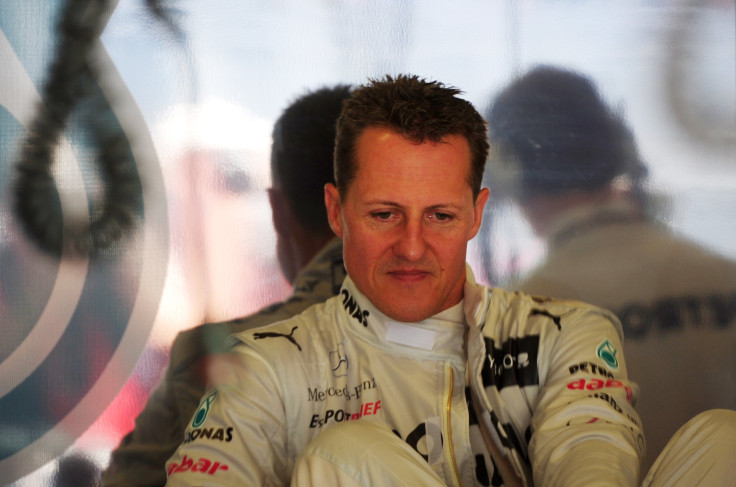
Michael Schumacher's Painful Analogy: Why Champions Must Suffer
This philosophy of absorbing the 'pain' to drive the progress is where Stella draws upon his own history in the sport. His analogy is simple, profound, and rooted in the modern era's greatest champion, Michael Schumacher.
Stella worked closely with the German during his title-winning years at Ferrari, and he sees a clear parallel between McLaren's current struggle and the Scuderia's painful rebuild in the mid-1990s. Michael Schumacher famously moved to a then-struggling Ferrari in 1996, after securing his first two World Championships elsewhere.
The German transitioned to a Scuderia that had been mired in years of mediocrity, leading an arduous campaign of near-misses and technical setbacks before the golden era began in 2000. He went on to remain as champion himself until the year 2005.
'Racing is tough, racing may give you tough lessons, but this is the history of champions', Stella explained, linking that history directly to the present day. 'I worked with Michael Schumacher, we won several titles together'.
He continued, reflecting on the psychological toll such a process takes. 'We all think about the titles now, but after Vegas, I was thinking how much pain he had to go through, for instance, when Michael started his experience at Ferrari. This is just the history of Formula 1; this is the true nature of racing'. It is an acknowledgment that greatness is forged not in smooth sailing, but in the white-hot heat of adversity.

Michael Schumacher's Blueprint: How McLaren Plans to End Verstappen's Dominance
The message from Woking is clear: the team must embrace its setbacks as the necessary tuition fee for future glory. They are taking the double knockbacks as a fuel for their 'determination to learn', aiming to adapt faster than their rivals.
'We are disappointed, but if anything, as soon as we start the review, we will get even more determined to learn from our lessons, adapt and be stronger as a team,' Stella stated.
This determined resolve leads to the ultimate, high-stakes goal: not just to compete, but to win the championship and end the Red Bull era.
Stella knows that the opportunity before Norris and Piastri — the chance to compete for the Drivers' title — is a generational one. '[We want to] make sure that this phenomenal, beautiful opportunity that we have to compete for the Drivers' Championship and be the ones that actually stop Verstappen's dominance in this period of Formula 1, we want to face it at the best of ourselves'.
The team now turns its attention to the next race, fully expecting a sharp, immediate reaction. Stella concluded with a confident final note, looking beyond the recent disappointments: 'So, I'm looking forward to the next race, and I'm looking forward to seeing a strong reaction from our team'. The gauntlet has been thrown down, and McLaren is betting that pain today will translate into championships tomorrow.
The road to championships, as Andrea Stella reminds us, is paved with tough lessons and the painful resolve to learn from them. McLaren is not just competing; it is executing the Michael Schumacher blueprint for success, banking that today's setbacks will forge tomorrow's champions.
© Copyright IBTimes 2026. All rights reserved.
- MOST POPULAR IN Sports