

Newsom Spares All 548 California Death Row Inmates, Including Notorious Serial Killers, in Historic Move
The Supreme Court must sign off on 382 cases before Newsom leaves office in January
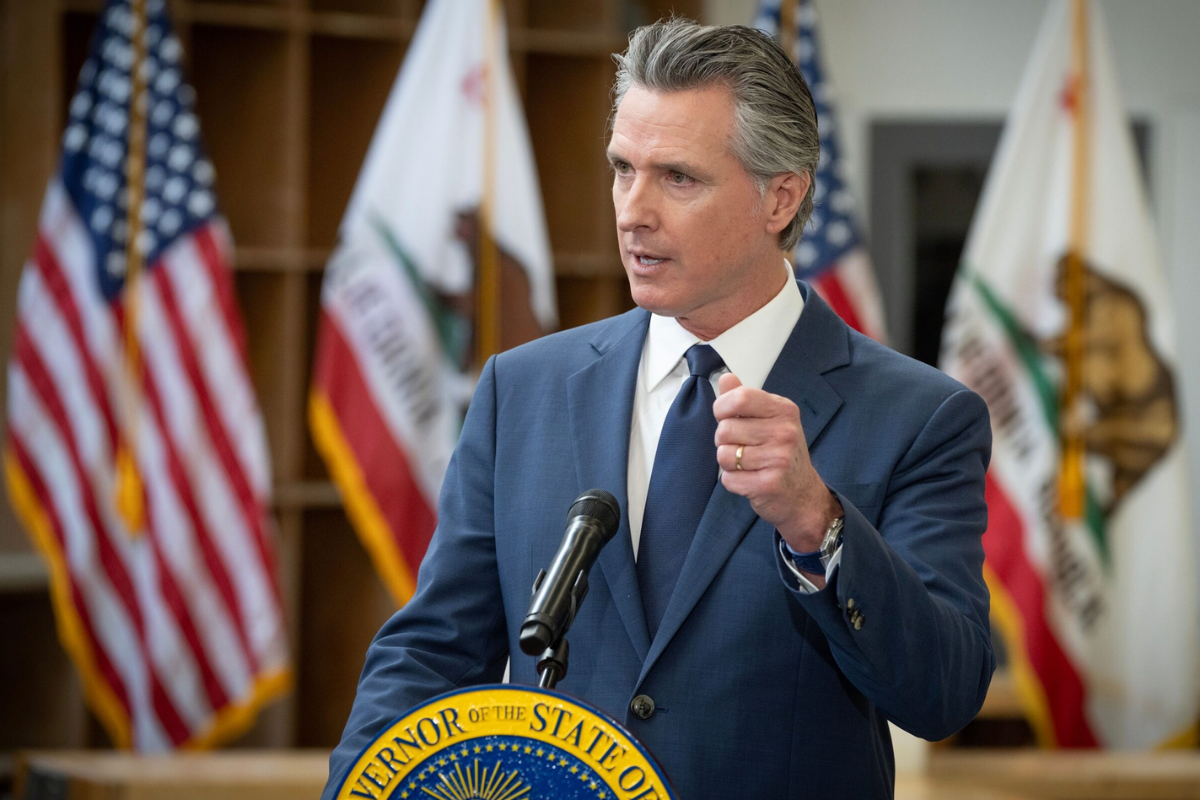
California Gov. Gavin Newsom on Thursday, 5 November, moved to commute the death sentences of all 548 people on the state's death row to life in prison without parole, a group that includes serial killers Charles Ng and Joseph Naso. Most of the commutations still need California Supreme Court approval before Newsom leaves office on 4 January.
Who Is Covered by the Order
Ng was convicted in 1999 of killing 11 people in the Sierra Nevada foothills in the 1980s. Naso was convicted of murdering four women and sentenced to death in 2013. Richard Allen Davis, who kidnapped 12-year-old Polly Klaas from her Petaluma home in 1993 and murdered her, Cary Stayner, who killed tourists near Yosemite in 1999, and Richard Farley, who killed seven former co-workers in Sunnyvale in 1988, are also covered.
The governor's office said the group comprises 529 men and 19 women, and the Death Penalty Information Center called it the largest mass clemency in US history.
What the Supreme Court Must Approve
The commutations do not all take effect at once.
The state constitution requires four of seven California Supreme Court justices to recommend clemency for anyone convicted of more than one felony. The governor's office says that covers 382 of the 548 cases, leaving 166 that Newsom can commute alone. Any request the justices have not approved by 4 January would lapse, and it is unclear how many reviews will be finished by then.
In an open letter, Newsom said he acted because he believes 'state-sanctioned killing is incompatible with California's values.' The order does not abolish capital punishment. Newsom said, 'The power to repeal the death penalty rests with the Legislature and voters.' Prosecutors can still seek death sentences in future cases.
The announcement came two days after Xavier Becerra won the governor's race. Becerra succeeds Newsom on 4 January and pledged in May to extend the execution moratorium. Once in force, the commutations stand regardless of who runs the state.
Reaction From Supporters and Opponents
American Civil Liberties Union executive director Anthony Romero said the commutations end a punishment that 'has burdened California for far too long.' Clemency California said in a release that murder victims' families, law enforcement figures, and civil rights leaders support the decision. Polly Klaas' sister, Jess Nichol, also supports the clemency, according to the Death Penalty Information Center.
Riverside County District Attorney Mike Hestrin said Newsom acted 'without notifying the district attorneys whose offices prosecuted these cases.' Before the announcement, Polly Klaas' father, Marc Klaas, said 'serial killers have all found an ally in Gavin Newsom,' and San Luis Obispo County District Attorney Dan Dow wrote that a blanket commutation would be 'a slap in the face' to murder victims' families.
How California Reached This Point
California last carried out an execution on 17 January 2006, when Clarence Ray Allen, 76, was put to death at San Quentin, now the San Quentin Rehabilitation Center. Newsom imposed a moratorium on 13 March 2019, when 737 people were on death row.
Voters rejected repeal in 2012 and again in 2016, when Proposition 62 failed with 53.15 per cent voting no. Proposition 66, which aimed to speed up appeals, passed the same year with 51.13 per cent, according to the California Secretary of State.
When he announced the moratorium, Newsom said the system had cost roughly $5 billion (about £3.7 billion) since 1978.
© Copyright IBTimes 2026. All rights reserved.