

'Worst We've Seen': Ten Needles Stabbed Into Christa Pike During Botched Lethal Injection Attempt
Court filing outlines repeated IV attempts as Christa Pike's lawyers monitor her recovery and Tennessee orders a review
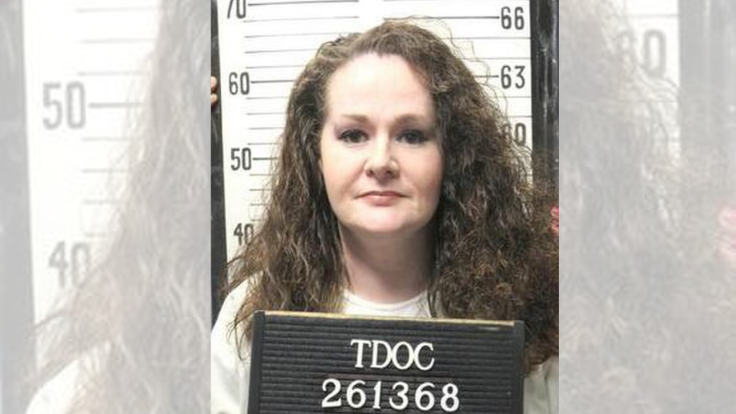
Christa Pike's execution team employed approximately 10 needles while attempting to establish intravenous lines in Tennessee on 30 September, her lawyer Randy Spivey alleged in an account included in a 22 October court filing.
Pike, 50, had spent 30 years on death row before officials attempted to execute her with pentobarbital. The lethal injection attempt was halted, and she was taken to hospital in critical condition, placed on a ventilator and remained unconscious for several days.
The filing adds her lawyer's account of the procedure to a case that has prompted an independent review. Tennessee Gov. Bill Lee suspended the state's remaining executions scheduled for the year, while Pike's lawyers have reported improvements in her condition alongside concerns about possible lasting effects.
Christa Pike Filing Describes Repeated IV Attempts
According to Spivey, execution team members repeatedly attempted to insert intravenous lines into Pike's arms and expressed concern that some of her veins had 'blown'. His account describes their concerns during efforts to establish access to a vein through which pentobarbital could be administered.
Spivey put the number of needles employed during the process at approximately 10. The estimate concerns attempts to establish intravenous access, rather than the number of doses of the lethal drug Pike received.
The lawyer also reported that Pike continued breathing and producing choking-like sounds during the procedure. The execution attempt was subsequently halted.
Robin Maher, executive director of the Death Penalty Information Center, previously described the incident as unprecedented in the modern era.
'This event is the worst we've seen and unlike any other botched execution in the modern era,' Maher stated. 'There is no precedent.'
Recovery Remains Uncertain for Christa Pike
Pike regained consciousness in early October and was later discharged back to prison in Tennessee. Her lawyers have described improvements in her ability to walk independently and speak in full sentences.
Those reports of physical progress were accompanied by continuing concerns about her cognitive and psychological functioning. Her attorney stated that monitoring was continuing and that obtaining a clearer picture of any lasting effects could take another month or longer.
The estimate formed part of the reported recovery update. It did not establish a fixed date for an assessment or whether Pike would experience permanent impairment.
In an earlier statement, her legal team described Pike as 'dealing with the profound psychological trauma' of surviving the failed execution, 'including the terror, pain, and uncertainty of believing she was about to die'.
'Christa also continues to experience cognitive challenges with concentration and memory,' the lawyers added.
The accounts of improved movement and speech therefore sit alongside unresolved questions about the longer-term effects of the execution attempt.
Christa Pike Case Prompts Tennessee Execution Review
Pike had been scheduled to become the first woman executed in Tennessee in more than 200 years. She was sentenced to death after being convicted of murdering her Job Corps classmate, Colleen Slemmer, who was 19.
On 12 January 1995, Pike, her then-boyfriend Tadaryl Shipp and their friend Shadolla Peterson lured Slemmer to a wooded area of the University of Tennessee's agricultural campus.
Pike was convicted of murder and conspiracy to commit murder the following year and was the only defendant sentenced to death. She has acknowledged her role in Slemmer's killing.
Her attorneys have argued for a life sentence instead, citing her age at the time, mental illness and a history of severe sexual abuse.
After the failed execution, Lee ordered an independent review into what went wrong.
'Carrying out a lawfully imposed sentence is among the State's most serious responsibilities, and the people of Tennessee expect it to be done in a manner that is not only legal and constitutional, but is effective,' Lee stated.
© Copyright IBTimes 2026. All rights reserved.