

DHS Cleared To Test Military Heat Ray Shelved in Afghanistan Over Fears It Could Burn Migrants
Memo bars Pentagon staff from firing the weapon, leaving DHS alone to run it and set the rules
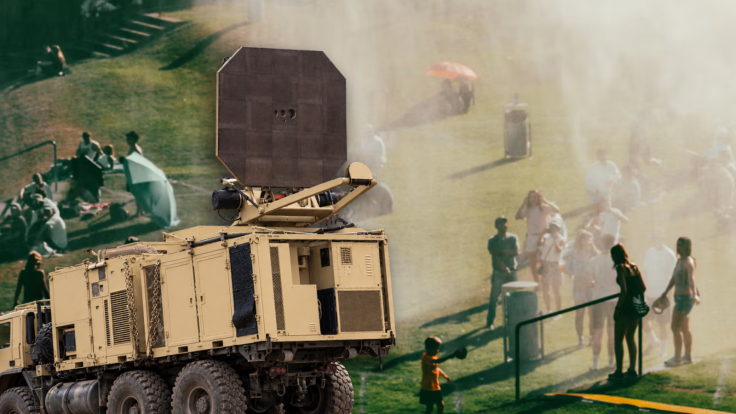
The Pentagon has cleared the Department of Homeland Security (DHS) to test a military heat ray on the US-Mexico border, reviving a weapon that Homeland Security rejected in 2018 when officials considered using it against migrants crossing into the country.
The memo, signed by US Defense Secretary Pete Hegseth and obtained by CNN, authorises a seven-month loan of one Active Denial System (ADS) to DHS, starting in September. It bars Department of War personnel from operating the weapon, leaving DHS alone to run it and write the rules for its use.
The device has never been fired at the border, though current and former Customs and Border Protection (CBP) officials have discussed using it to scatter crowds in areas with heavy crossings, CNN reported. A CBP spokesperson said the agency keeps evaluating new technology that can save lives while improving national security.
A Weapon Homeland Security Already Refused
The clearance reverses a call made inside DHS eight years ago. In October 2018, weeks before the midterm elections, then-Secretary Kirstjen Nielsen rejected a plan to install the system at the border, telling an aide she would not authorise it and that it should never be raised again, two former officials told the New York Times. The suggestion had shocked the room.
Nielsen served under Trump at the time. The weapon had been largely abandoned for years over doubts about its effectiveness and the ethics of aiming a battlefield crowd-control tool at civilians.
How the Heat Ray Works
The ADS fires an invisible beam of millimetre-wave energy that reaches a little over half a mile, or roughly 1,000 metres. It penetrates about 1/64 of an inch (0.4 millimetres) into the skin and heats the surface fast, creating what officials compare to the blast of heat from opening a hot oven. The feeling triggers an almost instant urge to flee and fades within 10 to 15 minutes.
The Pentagon calls the weapon non-lethal and says killing someone would need exposure far longer than the reflex to move away allows. Even so, it has caused second-degree burns twice on record, including an airman hurt during a 2007 training exercise after procedural errors led to overexposure. He recovered fully.
Who Is Accountable if Someone Is Burned
The clause barring Department of War staff from operating the system assigns operational responsibility to DHS. DHS alone would fire the beam and write the tactics, techniques, and procedures governing it, although the clause does not establish whether the Pentagon would be legally shielded from liability if someone were injured.
'The border is now a military installation and a battle lab for testing new systems, to include directed energy weapons,' Patrick Weaver, Hegseth's deputy chief of staff, wrote on X.
Jared Keller, who writes the Laser Wars defence newsletter, said he would simply not deploy such a weapon.
From the Battlefield to the Crossing
The system was sent to Afghanistan in 2010 but pulled out without ever being fired in combat. In July 2025, a Pentagon office publicly backed using active denial technology at the border, pointing to the change now taking shape.
Clearance to test is not deployment, and DHS has not said whether it will use the weapon. For border communities, the memo still marks a turn toward battlefield tools in everyday enforcement.
© Copyright IBTimes 2026. All rights reserved.