

'You Will Be Dead': Polish MEP's Border Warning Raises Questions About Poland's Use of Force
Tarczyński's remarks have renewed debate over Poland's border policies
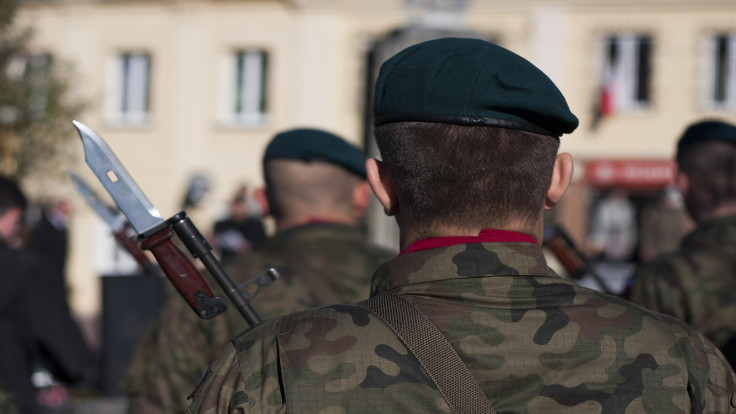
Polish MEP Dominik Tarczyński has revived questions about the use of lethal force at Poland's border after warning prospective crossers, 'You will be dead. Shot dead.' His remarks have drawn attention to the country's hardline immigration stance and the limits of what officers are legally permitted to do.
Speaking on The Rubin Report in September 2026, the opposition politician linked his threat to attacks on Polish soldiers guarding the frontier with Belarus. His words have circulated widely, raising questions about whether they reflect official policy or simply political rhetoric.
Tarczyński's Border Warning
Tarczyński, a member of the conservative Law and Justice party, told interviewer Dave Rubin that anyone attempting to cross the border and harm Polish troops risked being killed. 'If you are trying to cross a border and harm any of our soldiers, you will be dead,' he said during the 19 September interview, recalling similar remarks in the European Parliament.
He followed with the warning, 'Do not come to the Polish border because you will be dead. Shot dead.'
🚨🇵🇱 ÚLTIMA HORA: POLONIA NO JUEGAEl eurodiputado polaco Dominik Tarczyński lanzó una advertencia contundente:«No se acerquen a la frontera polaca. De lo contrario, estarán muertos. Les dispararán hasta matarlos».Europa tiene mucho lo que aprender de Polonia. https://t.co/CznLZoH5Ad
— Isaac (@isaacrrr7) October 18, 2026
The distinction matters. Tarczyński is an elected member of the European Parliament, not the official commanding Polish border forces. His remarks do not establish a government policy of shooting people simply for attempting an unauthorised crossing.
Polish authorities have reported warning shots during confrontations at the frontier, but such incidents do not demonstrate that everyone approaching the border faces a lethal response.
Polish Law on Use of Firearms
Poland's rules changed after violence along its border with Belarus, where Warsaw accused Minsk of deliberately directing migrants towards the European Union as a form of political pressure. In May 2024, Polish soldier Mateusz Sitek was stabbed while guarding the border. He died the following month, intensifying demands for stronger protection for deployed personnel.
Legislation adopted on 26 July 2024 and brought into force in August expanded circumstances in which soldiers, police and border officers could avoid criminal liability for using firearms while responding to unlawful attacks. According to Poland's official legislation register, the amendments also addressed military operations during peacetime and legal assistance for personnel facing proceedings.
However, the law is not a blanket authorisation to shoot migrants. Whether force is justified depends on the circumstances, including the threat faced by officers and the necessity of their response.
Amnesty International warned in July 2024 that the proposals risked weakening safeguards against excessive force. Its deputy regional director, Dinushika Dissanayake, said firearms must be restricted to situations involving an imminent threat of death or serious injury.
Warsaw's Hard Line on Immigration
Since the Belarus border crisis began in 2021, Poland has reinforced its frontier with fencing, surveillance equipment and military deployments. Prime Minister Donald Tusk's government has continued strict controls, including restrictions introduced in March 2025 on asylum applications at the Belarus frontier. Rights organisations have criticised pushbacks and the dangers faced by migrants in border forests.
Warsaw argues that its measures protect national security against hostile interference from Belarus and Russia. Furthermore, Tarczyński's warning captures the uncompromising language surrounding that debate. Polish law permits firearms in defined defensive situations, but crossing the border illegally does not, by itself, make someone a lawful target.
© Copyright IBTimes 2026. All rights reserved.