

Pentagon Hooks 50 Military and Civilian Staff Members to a Polygraph in Hunt for Iran War Munitions Leaks
Military's joint staff under scrutiny amid concerns over leaked munitions data
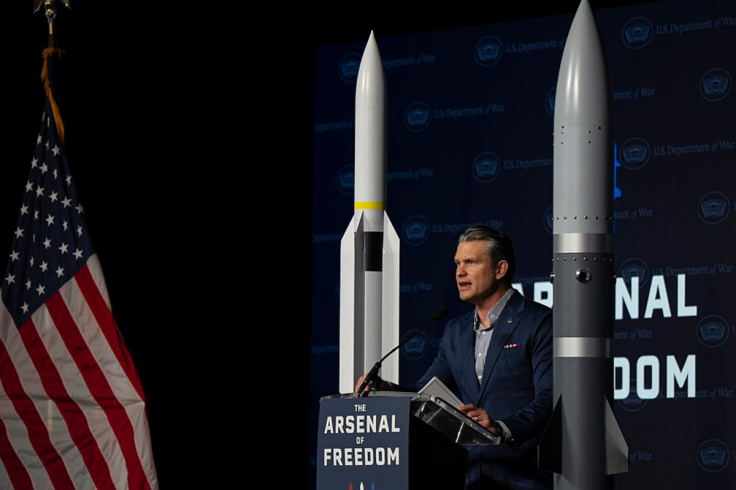
Pentagon investigators administered polygraph tests to roughly fifty members of the US military's Joint Staff in August, part of an unprecedented hunt for whoever leaked details of dwindling American munitions stockpiles to journalists.
The New York Times first reported the tests on Friday, 4 September 2026, citing officials briefed on the investigation. Both military officers and civilian employees were asked whether they had disclosed classified information to the press, including data on shrinking supplies of long-range precision missiles and Patriot interceptors used in the war against Iran.
Pentagon spokesman Sean Parnell said the department does not comment on internal personnel or investigative matters but takes leaks of classified national security information 'extremely seriously' and investigates them accordingly.
A Leak About Munitions Raises Security Concerns
Investigators were also concerned that a government official could have been operating as a foreign spy, CBS News reported, because access to the specific munitions data was highly restricted.
The tests targeted the Joint Staff, a body of senior military officers who advise the president and numbers between 1,500 and 2,000 people, though not everyone on the staff was polygraphed. Gen. Dan Caine, the chairman of the Joint Chiefs of Staff, was not among those tested, a senior Pentagon official told CBS News.
The FBI did not administer the tests; the military's own internal investigators carried them out, according to CBS News.
The polygraph sweep followed a separate leak of part of the Secretary of Defense's confidential Orders Book, which revealed that six senior military leaders had formally objected to extending large-scale operations against Iran, warning that the war was 'unsustainable' and was eroding the military's global readiness.
People familiar with the effort told the New York Times that mass polygraph testing on this scale among senior military officials is highly unusual and may serve two purposes at once, identifying whoever spoke to journalists while discouraging other Joint Staff members from making unauthorised disclosures in the future.
The scrutiny comes at a delicate moment for the Pentagon, with continued reporting on the state of America's weapons stockpiles raising questions about the military's capacity to sustain a prolonged conflict or respond to a separate crisis elsewhere.
Hegseth's Expanding Task Force on Leaks
The polygraphs represent the latest step in a broader crackdown Defense Secretary Pete Hegseth has pursued since taking office.
In July, Hegseth announced that the Pentagon and Justice Department had formed a joint task force to identify and prosecute people responsible for what he described as unauthorised disclosures of sensitive information.
Hegseth gave the Pentagon's Office of General Counsel, led by Earl Matthews, broad authority to demand records and assistance from staff during leak investigations.
Under Hegseth's tenure, sources reported that the Pentagon has also blocked promotions or removed at least 80 senior military officers, restricted journalists' access to the building, and dismissed the editor-in-chief of the military newspaper Stars and Stripes following a report on the aircraft carrier USS Abraham Lincoln.
That pattern of departures has drawn criticism even from within Hegseth's own party, with Republican Sen. Thom Tillis recently calling on Trump to replace him over what Tillis described as inept management of the department.
Hegseth's frustration with leaks has surfaced before. In March last year, after the New York Times reported the Pentagon was preparing to brief Tesla chief executive Elon Musk about China, Hegseth reportedly threatened to polygraph the entire department.
During his search for that leaker, he shouted at Admiral Christopher Grady, then the acting chairman of the Joint Chiefs, 'I'll hook you up to a f------g polygraph!' according to the Wall Street Journal, though Grady was not tested at the time.
Trump Calls the Leaks 'Treasonous'
President Trump has separately pushed for more aggressive measures against reporters and their sources.
The Wall Street Journal and CNN reported in May that Trump handed then-acting Attorney General Todd Blanche a stack of news articles he considered a threat to national security, with a sticky note on top reading 'Treason' in marker, urging the Justice Department to subpoena journalists' records.
Trump has publicly denied that American munitions stockpiles are dangerously low, insisting the military holds 'massive amounts' of weaponry, even as he has separately acknowledged that supplies of some specific munitions are limited. He has described the leaks as 'treasonous statements' and 'fake news', warning that whoever is responsible will be 'hunted down' and face severe prison sentences.
With polygraphs already administered and a joint Pentagon-Justice Department task force now active, the search for who told journalists about America's shrinking arsenal shows no sign of winding down.
© Copyright IBTimes 2026. All rights reserved.