

Peru Earthquake Update: Tremors Cut Power to 9,000 Properties and Damage Ayacucho Region Hospitals
Thursday's earthquake was the latest strong seismic event to hit South America in recent months, following deadly quakes in Colombia and Venezuela
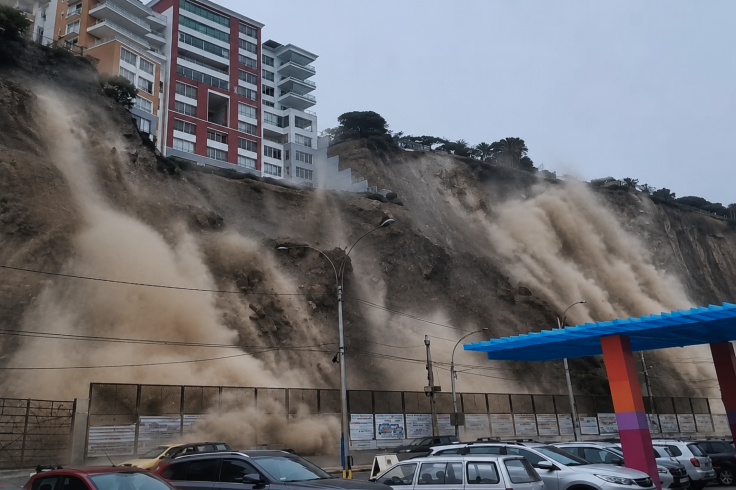
A magnitude 6.7 earthquake struck Peru's southern Ayacucho region on Thursday afternoon, cutting power to around 9,000 properties and damaging multiple hospitals and health facilities, according to Peru's National Institute of Civil Defence (Indeci).
The Peru earthquake update comes after initial reports said at least three people were injured and dozens of homes and schools were affected in the remote Andean area.
The earthquake hit at around 13:00 local time (18:00 GMT) at a depth of roughly 62 miles, about 19 miles north-west of the small settlement of Aniso, data from the US Geological Survey showed.
Indeci said damage was reported at 10 healthcare facilities in Ayacucho and two more in the neighbouring Cusco region, though services remained operational.
Damage to Hospitals and Homes in Ayacucho After Peru Earthquake
Peru's defence minister Rafael Belaunde told the media that 22 homes and six schools had been damaged, with three people hurt but not seriously injured, according to reports.
Indeci's preliminary report listed 33 homes affected across Parinacochas and Lucanas provinces, with three deemed uninhabitable and one destroyed.
Health infrastructure took a notable hit. The Health Ministry's Emergency Operations Centre recorded damage to 10 health service providers in Ayacucho and two in Cusco, while six facilities in the Ayacucho Health Network were also affected.
Um terremoto de magnitude 7,2 foi registrado na tarde desta quinta-feira, a 35 quilômetros ao norte do distrito de Coracora, no sul do Peru, informou o Instituto Geofísico do Peru.
— Julio Schneider 🇧🇷🇺🇸 (@juliovschneider) August 21, 2026
Segundo o relatório, o terremoto ocorreu a uma profundidade de 108 quilômetros. pic.twitter.com/gIdlVOl0nc
The COES said the three injured people were treated at Coracora Support Hospital, underscoring how local clinics became the first line of response even as they dealt with their own structural issues.
Power disruption compounded the strain on emergency services. Indeci said around 9,000 properties lost electricity, with the Ministry of Energy and Mines' COES reporting outages affecting 6,023 users in Nazca province, Ica, and 2,990 in Puquio district, Lucanas, Ayacucho.
For a region where many homes rely on basic construction and health posts serve wide catchment areas, that kind of knock-on effect is the stuff that turns a shake into a proper headache for responders.
Magnitude Discrepancy and Regional Seismic Context
While the USGS logged the quake at magnitude 6.7, Peru's Geophysical Institute (IGP) recorded it at 7.2, a gap that matters for how people perceive risk and how authorities frame their response.
The IGP's National Seismological Centre placed the epicentre roughly 21.7 miles north of Coracora in Parinacochas province, at an intermediate depth of about 67 miles.
Earthquakes are common in Peru, which sits along the meeting point of the Nazca and South American tectonic plates. Thursday's tremor was the latest strong seismic event to hit South America in recent months, following deadly quakes in Colombia and Venezuela.
A magnitude 7.4 earthquake struck Colombia on 10 August, prompting a state of emergency and leaving more than 300 dead, according to local authorities. Venezuela was hit by twin earthquakes on 24 June, with magnitudes of 7.2 and 7.5 recorded 39 seconds apart; more than 6,000 people are known to have died, local officials said.
Tremors from the Ayacucho event were felt across large parts of the country, including in Lima, around 300 miles away. Indeci and other agencies have continued to monitor for aftershocks and update damage assessments, with the emphasis on keeping health services running while engineers inspect schools and homes.
© Copyright IBTimes 2026. All rights reserved.