

Philadelphia Airport Ground Stop Explained: Why Newark Flights Were Also Hit
Radio-frequency problems at the FAA facility led to ground stops at Philadelphia International, Newark Liberty and Teterboro airports
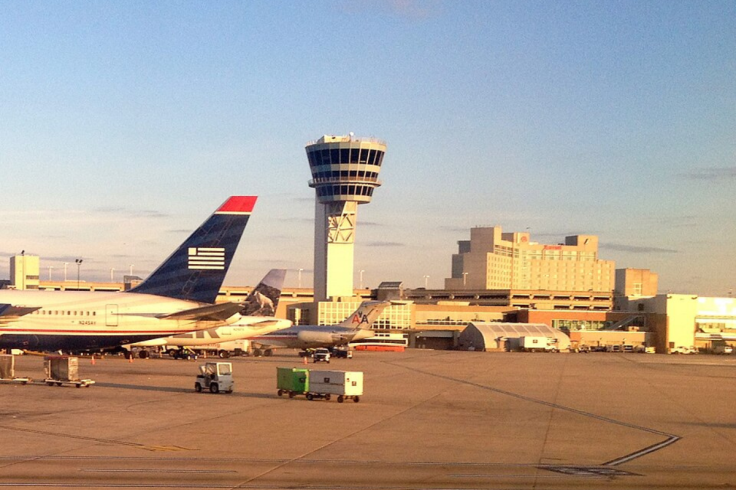
The Philadelphia International Airport ground stop hit Newark Liberty as well because both airports rely on the same Philadelphia-based air-traffic control facility, leaving aircraft grounded and delays building across several major airports.
The Federal Aviation Administration issued the restrictions on Monday, September 21, after radio and frequency problems developed at Philadelphia TRACON, the Terminal Radar Approach Control facility responsible for managing aircraft in the surrounding airspace.
The disruption was not limited to Philadelphia International Airport. The FAA paused flights into Philadelphia, Newark Liberty and Teterboro Airport because of problems with some frequencies at Philadelphia TRACON.
What Caused the Ground Stop?
The immediate cause was an equipment outage involving radio frequencies at Philadelphia TRACON. The FAA did not initially specify exactly which equipment failed, but officials said the problem involved frequencies controllers use. These communications systems are essential for safely coordinating aircraft approaching and departing busy airports.
Philadelphia TRACON manages aircraft across a wider area rather than only those travelling directly to Philadelphia International. A technical problem can therefore affect several airports at once. Delays at Philadelphia International began climbing late Monday morning, although some flights continued to depart in limited numbers.
Why Was Newark Also Affected?
The key to the Newark disruption is who controls its airspace. Philadelphia TRACON also directs aircraft travelling into and out of Newark Liberty International Airport in New Jersey. As a result, Newark can be affected by a problem at the Philadelphia facility even when Newark Airport itself has no equipment failure.
The arrangement is relatively recent. In July 2024, the FAA transferred responsibility for Newark's airspace from New York TRACON to Philadelphia. The change was intended to address staffing problems at the New York facility.
That transfer helps explain why an outage at Philadelphia TRACON could trigger restrictions at Newark. When controllers cannot use some of their required radio frequencies normally, aircraft movements have to be restricted. The FAA therefore paused flights headed for Newark as well as Philadelphia and Teterboro.
How Bad Were the Delays?
The disruption quickly affected passengers at Newark. By around 11 am, Newark delays had reached an average of 75 minutes and were continuing to increase, according to NBC New York. Flight-tracking data also showed dozens of aircraft waiting on a Newark runway.
Aircraft were also held at Philadelphia, while arriving and departing operations were affected. Even flights not directly connected to the original problem can experience later delays because aircraft and crews are left out of position.
What Is a Ground Stop?
A ground stop is an FAA traffic-management measure that temporarily prevents or restricts aircraft from departing for a particular airport or area. It does not necessarily mean an airport has completely closed. Instead, flights can be held at their departure airports when controllers cannot safely accommodate normal traffic levels.
In this case, the restriction was linked to communications problems at Philadelphia TRACON rather than a reported runway or terminal closure at Philadelphia International. The measure allowed air-traffic authorities to reduce the number of aircraft entering affected airspace while the technical problem was addressed.
Why Did One Outage Affect Multiple Airports?
The Philadelphia-Newark disruption demonstrates how interconnected the US aviation system is. Although Philadelphia International and Newark Liberty are in different states, aircraft travelling through Newark's airspace are handled by Philadelphia TRACON.
A communications failure at the facility can therefore affect flights at Philadelphia, Newark and Teterboro simultaneously.
The disruption can also continue after the immediate problem is resolved. Aircraft held on the ground still need to depart, while delayed crews and planes can create a backlog for later flights. Passengers travelling through Philadelphia or Newark should therefore check directly with their airline for the latest flight information.
For Newark travellers, the crucial distinction is that the disruption was not caused by a separate Newark Airport equipment failure. The FAA's restrictions stemmed from frequency problems at Philadelphia TRACON, explaining why an outage in Philadelphia could ground flights in New Jersey.
© Copyright IBTimes 2026. All rights reserved.
- Recommended For You


