

NASA's Ageing Space Station Gets a Major Power Boost Just Four Years Before Its Planned Retirement
The eighth array completes a five-year upgrade, raising the station's power capacity from about 160 to 215 kilowatts
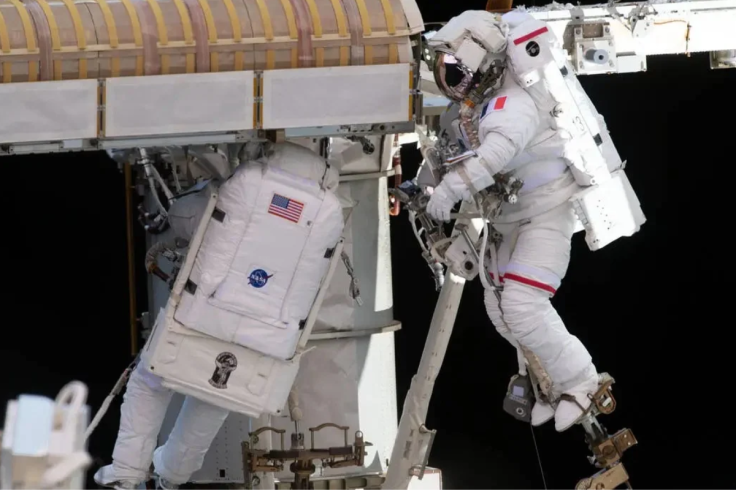
Two astronauts completed a major power upgrade to the International Space Station on Thursday, 5 November, ending a five-year installation programme. NASA astronaut Anil Menon and Canadian Space Agency astronaut Joshua Kutryk installed the eighth and final roll-out solar array during a spacewalk.
NASA says the additions increase the ageing station's power-generation capacity from approximately 160 to 215 kilowatts. The upgrade will support scientific research, life support and other essential operations.
It comes roughly four years before the laboratory's planned retirement around 2030, with the new arrays also supporting its eventual controlled deorbit, currently expected around the end of 2030 or early 2031.
The installation concluded a programme that began in 2021 to compensate for declining electricity production from the station's original solar panels. Those arrays were installed between 2000 and 2009 and designed for a 15-year service life.
Rather than replace the existing equipment, NASA developed smaller, more efficient panels to supplement its power output.
NASA Completes Five-Year Space Station Power Upgrade
The final two ISS Roll-Out Solar Arrays, known as IROSAs, arrived aboard a SpaceX Cargo Dragon spacecraft on 15 October 2026. Menon and Kutryk installed the seventh array on 29 October before returning outside the station a week later.
Their final spacewalk began at 8:36 a.m. Eastern Time on 5 November. The astronauts worked on the station's starboard truss, where the eighth array was to be mounted on the 3B power channel.
Moving the equipment into position required careful coordination. Menon carried the array while attached to the station's Canadarm2 robotic arm before handing it to Kutryk. The astronauts then transferred the assembly between themselves to reach its mounting bracket.
The equipment weighed approximately 750 pounds, or 340 kilograms. Once secured, the new solar array would extend to roughly 63 feet.
The operation marked the completion of a wider effort involving 18 spacewalks since 2021. According to NASA's official mission report, astronauts had prepared electrical connections and installed eight arrays to increase the station's available power.
Throughout the upgrade, the existing power system had to continue supplying electricity to research equipment, computers, life support and visiting spacecraft.
Unexpected Electrical Reading Briefly Delays Final Space Station Solar Array
The final installation encountered a technical problem when flight controllers detected a lower-than-expected electrical reading from the newly connected solar array.
'We are seeing half of the expected shunt current that we want,' NASA spacewalk officer Nichole Stilwell told the astronauts from Mission Control.
The reading temporarily delayed deployment while controllers assessed the electrical connections. Because the arrays generate electricity when exposed to sunlight, the astronauts needed to wait until the station entered Earth's shadow before checking the equipment.
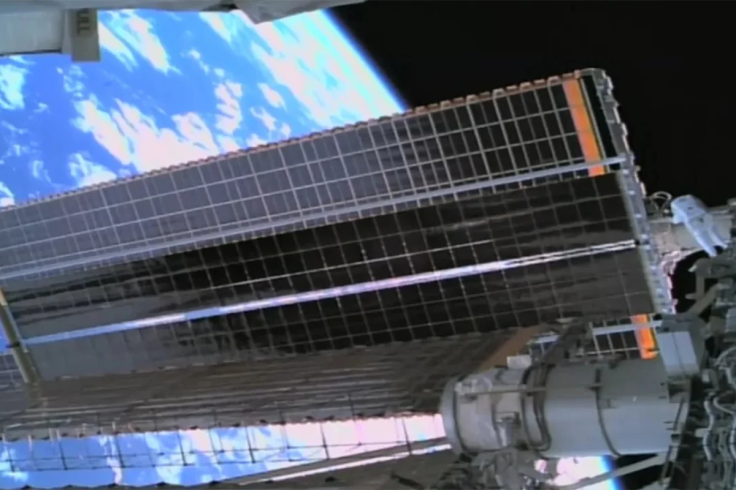
The crew continued other tasks while awaiting the next period of orbital darkness. After the connections were checked, flight controllers reported that the electrical readings had returned to acceptable levels.
'We are seeing good shunt currents on the ground, so we are go for deploy,' Stilwell said.
The astronauts subsequently released the restraints holding the solar blankets in place. The array unfolded using stored energy in its carbon-composite booms rather than a deployment motor, extending to its full length in approximately 10 minutes.
The spacewalk ended at 3:35 p.m. Eastern Time, after six hours and 59 minutes outside the station. No station-wide power failure was reported, and the final installation was completed successfully.
'We got it done!' Menon said as the work concluded.
Why NASA's Ageing Space Station Still Needs More Power Before Retirement
The newly installed arrays are smaller than the station's original solar wings but use more efficient solar cells. Although they partially shade the older panels, NASA says the completed system provides a substantial net increase in generating capacity.
The improvements arrive as NASA prepares for the final years of the International Space Station's operational life. The agency and its international partners currently plan to continue operating the laboratory through 2030, before carrying out a controlled deorbit around the end of that year or in early 2031.
The station still requires reliable electricity to support crew activities, scientific investigations, communications and essential systems. NASA has also identified continued power availability as necessary for operations associated with its eventual retirement.
The agency's retirement plans do not mean the station's research activities are ending immediately. Astronauts are expected to continue conducting experiments and maintaining the ageing laboratory while preparations progress for its eventual replacement by commercial platforms.
Thursday's spacewalk was the 286th supporting the International Space Station's assembly, maintenance and upgrades. It also completed the installation phase of a project intended to sustain the orbital laboratory through the remainder of its planned service.
After the astronauts returned, Stilwell congratulated the crew on completing upgrades designed to take the station 'to the end of its journey'. The new arrays are expected to remain part of its electrical infrastructure as NASA continues preparations for retirement and controlled re-entry.
© Copyright IBTimes 2026. All rights reserved.