Judge Dismisses Church Full-Body Baptism Pool Plan Because It Is a 'Needless Waste of Water'
The Diocese of Southwell and Nottingham said Anglican baptism does not require full immersion where sprinkling or pouring water is available
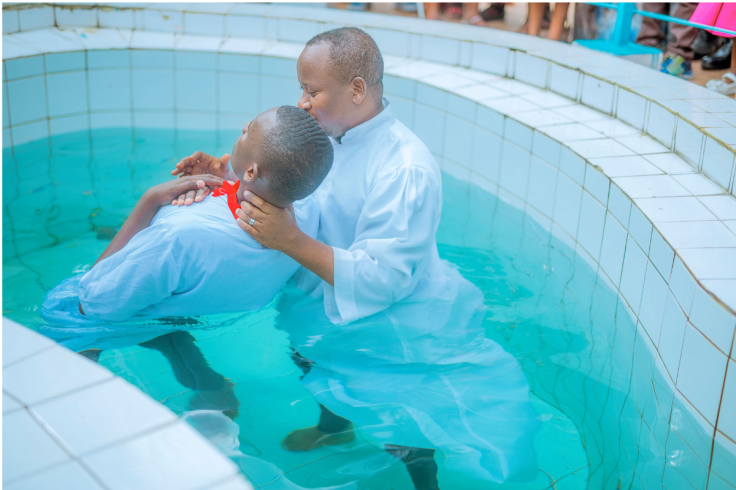
The chancellor of the Diocese of Southwell and Nottingham has rejected St Mary's Church's request for a 940-litre portable immersion baptistery in Radcliffe-on-Trent, Nottinghamshire.
Christopher Ockelton refused the parish's petition to purchase and store the portable font, according to the 2026 Consistory Court judgment Re St Mary Radcliffe-on-Trent 2026 ECC S&N 1. The church had argued that some adult converts wanted baptism by full immersion.
The chancellor ruled that Anglican teaching does not require immersion where other recognised forms of baptism are available. He also warned that using the proposed baptistery could result in a 'needless waste of water.'
Why the Church Baptism Pool Was Rejected
For context, St Mary's already has a traditional baptismal font. The petition sought permission for an additional facility, allowing people to be baptised by being fully immersed in water.
The judgment acknowledged that baptism in running water is a familiar Christian practice. Ockelton referred to the baptism of Jesus in the River Jordan, while noting that baptismal fonts have long allowed Christians to perform the ceremony without completely immersing the person.
The court's decision rested partly on the Church of England's established practice. It said aspersion, the sprinkling of water, and affusion, the pouring of water, were lawful forms of baptism. Where either was available, the judgment said, immersion was not necessary.
'The necessity for baptism by immersion, asserted to exist at Radcliffe-on-Trent, has no theological basis,' Ockelton said.
He added that 'in the Anglican church there is never any need for baptism to take place by immersion, if provisions exist for baptism in some other lawful way.'
The parish had described the proposed facility as meeting a pastoral need. However, the chancellor rejected the argument that the preferences of people seeking baptism justified providing a separate immersion facility.
He suggested that any pastoral difficulty might instead be addressed by explaining that the different forms of baptism did not change its effects.
Ockelton also responded to the parish's argument about the wishes of prospective converts.
'I think 'overstated' is intended; but the doctrine and practice of the Church is not determined by those about to join it,' he said.
That wording is firm, but the judgment was narrower than a general ban on immersion. It concerned whether St Mary's should be authorised to install an additional facility in the circumstances set out in the petition.
Judge Raises Water Waste Concern
The proposed portable font could hold up to 940 litres of water. Ockelton compared that volume with the much smaller amount used during a baptism at the church's existing font.
The chancellor said each use could consume 'thousands of times more' water than a baptism using the existing arrangement. He also said it could require 'perhaps as much as ten times' the amount used for a domestic bath, with the water then drained away.
The judge also indicated that, even if doctrine and the law had supported the petition, the court might still have declined to approve it because of the amount of water involved.
'If doctrine and the law had been on the side of the petitioners, the court might well have felt nevertheless that its discretion should not be exercised in such a way as to endorse needless waste of water,' Ockelton said.
The environmental point also relates to the Church of England's wider climate policy. The Church has a target of achieving Net Zero Carbon by 2030. Ockelton said churches should 'take a lead in the stewardship of natural resources.'
That does not mean the judgment established a Church-wide prohibition on immersion baptism. Nor did it decide that full immersion is never permitted in Anglican settings. Its finding was specific to the parish's request for a second baptismal facility, where other recognised forms were already available.
For St Mary's, the existing traditional font remains in place, while the proposed portable immersion baptistery was not authorised.
The parish describes itself as a Church of England congregation with around 150 members. Its website says it holds traditional and contemporary Sunday services.
The case leaves a pointed question for churches weighing pastoral preferences against environmental responsibility. How much water should a congregation use to provide a form of baptism that the court says Anglican doctrine does not require?
© Copyright IBTimes 2026. All rights reserved.
- Recommended For You