

Donald Trump's Conduct May Involve Medication and Removed Guardrails, Geriatric Neurologist Suggests
Dr Germaine Odenheimer said unknowns about Trump's medication, test results and medical records made it impossible to determine whether neurological change was involved
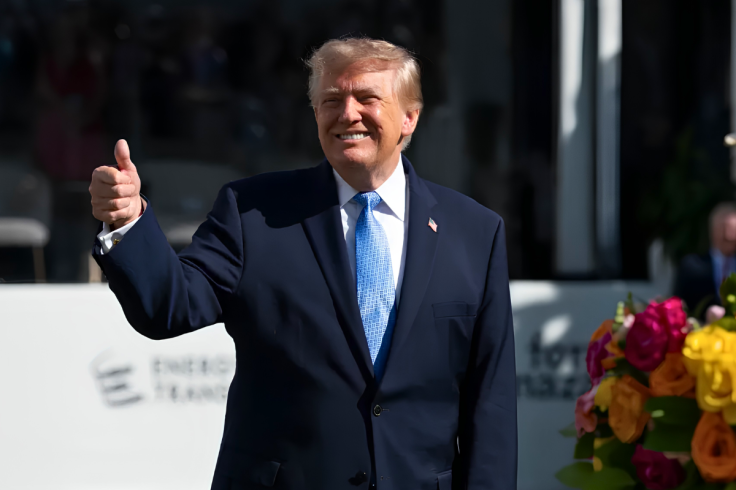
Donald Trump's shifting behaviour may be linked to medication and the removal of political 'guardrails', a leading geriatric neurologist has suggested.
Geriatric neurologist Dr Germaine Odenheimer told Dr Steven Hassan's podcast on Monday that a combination of medication and fewer constraints on Donald Trump could be contributing to changes in the former president's behaviour.
Her comments followed what she described as longstanding concerns about Mr Trump's cognitive abilities. Odenheimer, professor emeritus at the University of Oklahoma College of Medicine, questioned whether increasingly conspicuous behaviour reflected a change in his brain, fewer people restraining him or a combination of both.
Donald Trump's Gaffes and the Medication Question
Discussing verbal gaffes, Odenheimer emphasised that Mr Trump did not consistently misspeak. That variation prompted her to suggest that medication might sometimes affect his thinking. The discussion did not establish a diagnosis or identify any drug he was taking.
'It's probably medication is most likely but he might be taking something that doesn't allow him to think as clearly and so he misspeaks.'
She had watched Mr Trump's lengthy Republican speech, but explained that nothing in that address stood out to her as a specific problem with his language skills. In her assessment, older people become more susceptible to the cognitive effects of medicines, and medication could also explain the unsteady gait she described.
She cautioned against treating apparent deterioration as proof of dementia. 'Well, that doesn't mean that he has dementia. He might.'
Fewer Constraints Around Donald Trump
Hassan, a cult expert, argued that Mr Trump's conduct had been similar for a long time. He attributed the current difference to the absence of people around him prepared to tell the former president that he should not say or do certain things.
He cited Mr Trump's comments at a Republican mini-convention in Dallas the previous month, when the former president described paying advisers substantial sums while disregarding their counsel.
Hassan recalled Mr Trump announcing that he would proceed with a remark despite being advised against it, before criticising Republican Senate candidate Ken Paxton.
Odenheimer argued that the Supreme Court had removed constraints on Mr Trump. 'So, he doesn't have anybody telling him what to do.'
The extent to which the behaviour reflected neurological change remained uncertain, she explained. Hassan argued that political guardrails had been 'systematically disassembled over decades.'
Hassan also recalled Mr Trump claiming at the midterm convention that he had been elected three times. Odenheimer linked that statement to the idea that repeating a lie could eventually lead someone to believe it.
Why Donald Trump's Medical Details Matter
Odenheimer connected the discussion to a broader concern about medicine, arguing that doctors could operate in separate professional silos. She described patients referred to dementia clinics despite also having conditions such as diabetes or thyroid problems.
In those cases, she suggested, cognitive impairment could be connected to difficulties following treatment instructions. She argued that those possibilities deserved attention when patients were referred for assessment of dementia.
On cognitive testing, Odenheimer suggested that repeated assessments, if they were taking place, could indicate concern about Mr Trump. She did not provide the results of any such tests.
'So, there are a lot of unknowns. We don't know what meds he's on. We don't know his laboratory study results. We don't know the results of his cognitive testing, but it is suggestive that if they keep repeating cognitive testing on him, somebody's worried about him,' Odenheimer stated.
She attributed the gaps in her knowledge of Mr Trump's health to the White House not releasing all his medical information.
© Copyright IBTimes 2026. All rights reserved.