One in Six Trump Voters Drift Away From Him as RNC Chairman Says Party Must Defy History
Republicans Have $130.4M for a Grassroots Push, but New Poll Puts Trump's Approval at Just 32%
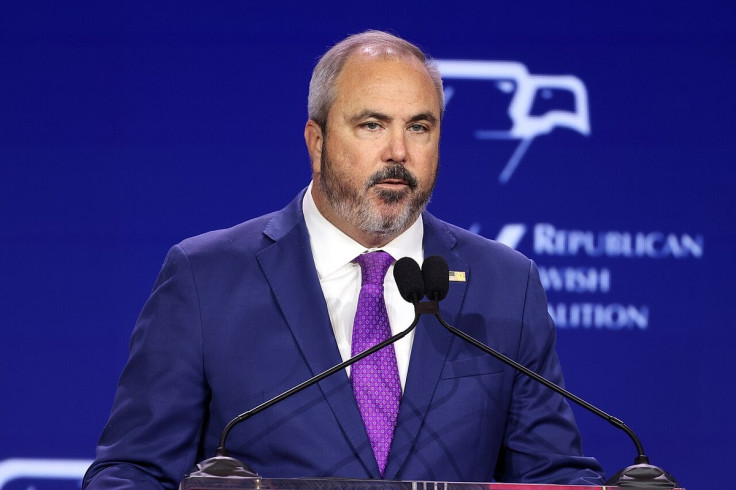
Joe Gruters, chairman of the Republican National Committee (RNC), says his party must defy history in November. But a new poll suggests Republicans may have another problem: one in six people who voted for Donald Trump in 2024 say they would not vote for him again.
The 3 November midterms will decide which party controls Congress and could determine how much of Trump's legislative agenda he can push through during the remainder of his term. Midterms have historically punished the party in power, with the president's party gaining House seats just three times since 1934. Gruters told Newsweek that Republicans will need 'probably one of the biggest grassroots efforts that the party's ever seen' to overcome that history.
How the Dallas Convention Fits In
Gruters' push begins with a two-day convention in Dallas, which ends on Thursday, 10 September. With no presidential nominee to choose, the unusual midterm event gives Trump and Republicans in close races a national platform to rally supporters ahead of November.
On Wednesday night, Trump promised a $5,000 (£3,690) payment to American adults if Republicans retain control of Congress, although questions remain over how the proposed payments would be funded and implemented.
The work that follows the convention attracts less attention. Through its State Party Strategies team, the RNC helps state Republican organisations with data, fundraising and training, and has run more than 300 training sessions with 53 state and territory parties over the past year.
The RNC also says another programme has given state parties more than $2.5 million (£1.8 million) for meeting targets, while six state party chairs praised Gruters for putting local volunteers first.
What the Poll Found About Trump Voters
A University of Massachusetts Amherst poll found that 84 per cent of people who voted for Trump in 2024 would vote for him again. That leaves roughly one in six who say they would now make a different choice or not vote at all.
Few of those voters say they would switch to Kamala Harris. Just 2 per cent would now back the Democrat Trump defeated in 2024, while 7 per cent would choose a third-party candidate and another 7 per cent would not vote.
Alexander Theodoridis, who helps run the poll, described the shift as modest, saying: 'This is hardly a mass exodus from the Trump tent.' However, he said a shift of that size could have been decisive in a race as close as the 2024 election.
The poll also found signs of weakening support within Trump's own party. Among Republicans, his approval fell from 89 per cent in April 2025 to 75 per cent in August 2026. Across all adults surveyed, Trump's approval stood at 32 per cent, while 64 per cent disapproved of his performance.
Gruters told Newsweek that November will ultimately come down to turnout, with victory going to the party that succeeds in getting more of its supporters to the polls.
How Much Money Each Party Has
The RNC enters the battle with a substantial financial advantage. Federal filings show the committee had $130.4 million (£96.2 million) in cash at the end of July and reported no debt.
The Democratic National Committee (DNC), by comparison, had $16.1 million (£11.8 million) in cash while owing $17.9 million (£13.2 million).
DNC chairman Ken Martin favours spending over saving. He told Newsweek that Democrats need to keep spending and let the results speak for themselves. Martin also said the DNC had raised about $100 million (£73.8 million) more than Tom Perez had raised at the same point when he led the committee during Trump's first term.
Who Doubts the Strategy
One prominent critic argues that the RNC now has little power of its own.
Rick Wilson, who helped found the anti-Trump Lincoln Project after years as a Republican strategist in Florida, told Newsweek that the party now serves as a brand for one man, while Trump loyalists at the fundraising group MAGA Inc. decide where the money goes.
Gruters rejected that view and pointed to Vice President JD Vance, who serves as the RNC's finance chairman. He also told Newsweek that his goals do not differ from the president's.
The challenge facing Republicans is nevertheless clear. The RNC is trying to defy the historical pattern that works against the president's party in midterm elections while relying heavily on Trump to motivate voters. At the same time, the UMass Amherst poll found that 64 per cent of respondents disapprove of the president and roughly one in six of his 2024 voters say they would not vote for him again.
For Gruters and the RNC, turning those numbers around, or persuading enough remaining Trump supporters to show up in November, could determine whether Republicans succeed in defying history.
© Copyright IBTimes 2026. All rights reserved.
- Recommended For You