

Trump Dangles $5,000 Cheques After Promising Dividends Before and Never Delivering
The new proposal could cost at least $1.2 trillion, or roughly two-thirds of the entire federal budget deficit in 2025

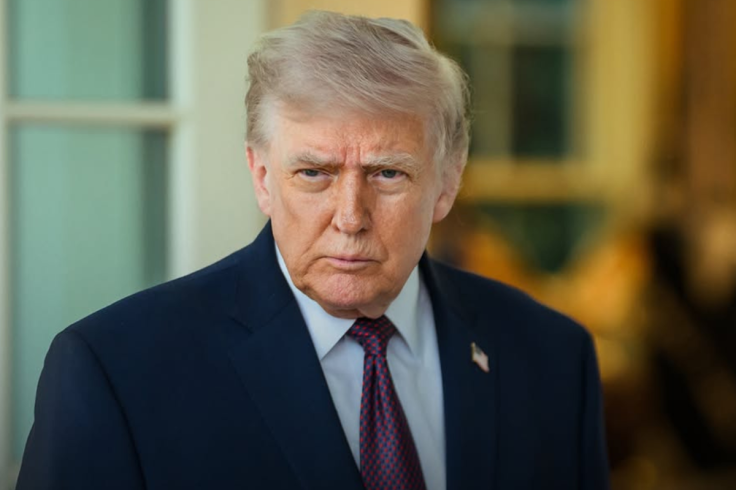
US President Donald Trump just told US voters that if they help Republicans win the 2026 midterm elections, he would issue $5,000 dividend cheques to every US adult, which would be the largest federal stimulus-style payments in the country's history.
At roughly 245 million eligible adults, a $5,000 payment would imply a headline cost of over $1.2 trillion. Note that the government is already running large deficits and carrying over $40 trillion in national debt.
Speaking at the Republican Party's midterm convention in Dallas on Wednesday, Trump told voters that 'if the Republicans win, you win with us and you get $5,000,' while urging them to 'pretend that I'm not on the ballot,' putting himself at the centre of a midterm campaign in which he is not personally seeking election.
He reportedly described the payment as a reward for what he called America's economic strength, but the catch is that the dividend cheques would have to be spent in the US.
Even Vice President JD Vance has suggested tariff revenue could help fund the payments, although the scale of the proposed dividend is vastly larger than the available tariff proceeds.
Americans Have Heard the Dividend Pitch Before
This is where Trump's latest promise gets interesting. In February 2025, Trump embraced the idea of a DOGE dividend, based on a proposal from investor James Fishback to distribute part of the savings supposedly generated by the US Department of Government Efficiency.
Trump said he was considering returning 20% of DOGE savings to Americans, with another 20% going towards reducing the national debt. The proposal envisaged roughly $5,000 dividend payments if DOGE achieved enormous spending reductions.
However, the proposed dividend never arrived because there was a fundamental problem. The projected savings were never remotely established at the scale required to finance such payments.
Then came the tariff dividend. In November 2025, Trump floated payments of at least $2,000 to most Americans, presenting them as a way of sharing the benefits of his tariff programme. Those cheques also never materialised.
Although these were proposals and political promises, not enacted programmes that were subsequently cancelled, the result for households was the same: no dividend cheque arrived in the end.
Why Should Americans Believe Trump This Time?
Trump's latest proposal is bigger, but the financing question is harder. The programme is likely to cost at least $1.2 trillion, or roughly two-thirds of the entire federal budget deficit in fiscal year 2025. According to US Treasury data, the 2025 budget deficit stood at $1.77 trillion.
More importantly, tariff revenue cannot simply be treated as free cash because tariffs are taxes collected on imports, which first flow into the federal government's accounts. Turning them into individual payments would require legislation and a decision about what competing federal priorities would receive less funding, or whether the government would borrow the money. Congress would also have to approve the funding and establish the legal mechanism for distributing it.
Trump is effectively asking voters to believe that tariff revenue and economic growth can be transformed into a direct cash benefit, but voters have already heard versions of that argument, which leaves them with a straightforward test: what has changed since last year's promises, and where will the $1.2 trillion come from?
Until those questions have answers and Congress actually authorises the money, the $5,000 cheque remains a campaign promise rather than money in Americans' bank accounts.
For households deciding whether to believe it, the most relevant fact may be the simplest one: Trump has promised dividend cheques before. Americans are still waiting for the first one.
© Copyright IBTimes 2026. All rights reserved.