

Taylor Swift Shares Spotlight Coping Mechanisms and Tells Critics That 'You Chose This Every Day'
Swift discusses her approach to criticism and fame, emphasising why making music remains worth the pressures of life in the spotlight
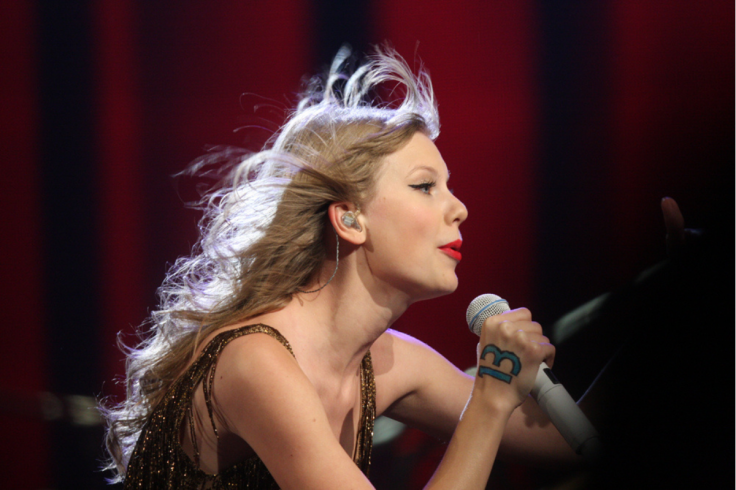
Taylor Swift has revealed how she handles criticism and overwhelming fame during The Icon Sessions, telling herself, 'You chose this every day.' The singer said continuing to make music makes the pressure of life in the spotlight worthwhile.
The conversation was presented by the Recording Academy's Songwriters & Composers Wing as part of its career-spanning series.
Recording Academy chief executive Harvey Mason Jr. interviewed Swift before a live audience at the Grammy Museum's Clive Davis Theater on 18 August, with the conversation released publicly on 24 August.
Swift's comments came during a discussion about public perception and the difficulty of creating music while knowing her work will face scrutiny. She acknowledged that criticism can sometimes affect her work, but said it does not have to stop the creative process.
'Sometimes it fuels it,' Swift said. 'Sometimes when people are mocking me, it's really fun to mock them back. Sometimes I like to just use words that they have to look up in order to talk about.'
Rather than suggesting that fame had become easy to manage, Swift described how she has learned to put its pressures into perspective.
Taylor Swift Shares Her Spotlight Coping Mechanisms
Swift said she has developed several 'processes and coping mechanisms' over the years. One of them is a reminder that she chose this career before its consequences became 'unmanageably big'.
'You chose this. You chose this every day. You could have opted out of this any day before it got unmanageably big,' she said. 'And I decided not to because I love it that much.' She added that the decision gives her a clear boundary.
'That's just where it begins and where it ends,' Swift said. 'Everything that comes with this ultimately is worth it as long as I get to still make music.'

Swift's comments framed public attention as part of the career she consciously chose, with making music remaining the reason she continues despite its pressures.
That approach also explains why she has resisted treating universal approval as a realistic creative goal. Swift said she makes music for listeners who care about it and who use songs to cope with their own lives.
'I'm putting this out for people who care about it and who look to music as a way to cope with their life in the way that I did,' she said
Why Music Still Matters to Swift
Swift recalled being told early in her career that she did not have a 'valid perspective' for a particular genre. Her teenage experiences, she said, were questioned because they did not fit the audience assumptions held by some people in the music industry.
She chose not to follow that advice.
The result was a songwriting career built around emotional detail, shifting genres and an unusually close relationship with fans. During the interview, Swift described music as a way to document human experience rather than escape it. She also said she is drawn to consequences, stakes and the passage of time.
That philosophy has shaped songs across her catalogue, from her early country work to her later pop and alternative projects. In the Recording Academy interview, she connected that evolution to a willingness to avoid making 'lateral moves' creatively.
Her comments about criticism therefore sit within a much longer career trajectory. Swift has repeatedly used public pressure as material, sometimes directly and sometimes through characters, imagery and narrative distance.
Her comments suggest that scrutiny can become part of the creative process rather than something that prevents her from making music.
The singer's latest reflections arrive after another major career milestone. She is set to become the youngest-ever inductee in the Nashville Songwriters Hall of Fame at 36 after being named to its Class of 2026, following her induction into the Songwriters Hall of Fame in June.
The Nashville organisation announced her place in its 2026 class on 11 August.
Her wider message was less about surviving celebrity than protecting the reason she began. Approval can shift. Online opinion can turn wild in a matter of hours. A song, however, can still reach someone who needs it.
'Putting out music you've made that you love so much is not the path to universal validation,' Swift said. 'If you're still doing it, then you love it for the right reasons.'
And for Swift, that appears to be the test. Not whether everyone understands the choice, but whether she still wants to make it.
© Copyright IBTimes 2026. All rights reserved.