

UK Deploys Three Royal Navy Vanguard-Class Submarines, One Will Carry Trident II D5 Missiles
Sky News said at least one vessel was on a routine deterrent patrol, while the Ministry of Defence declined to comment on the 'unusual' deployment
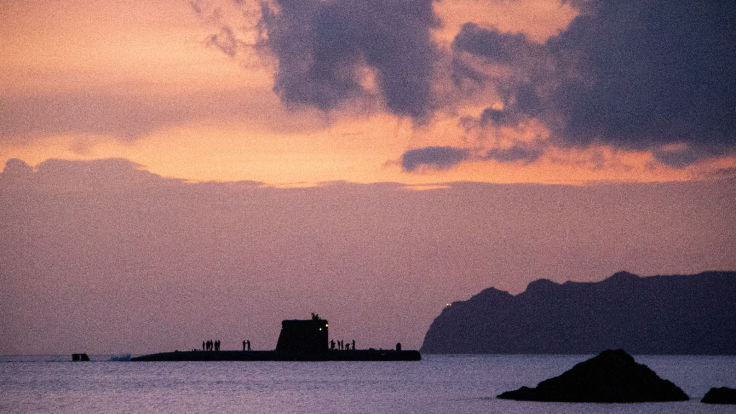
Three of the UK's four Vanguard-class nuclear deterrent submarines are at sea simultaneously, with at least one carrying nuclear-armed Trident II D5 ballistic missiles, Sky News reported.
The deployment brings three-quarters of the fleet to sea, an unusual overlap whose purpose remains unclear. According to Sky News' 27 October 2026 report, at least one submarine was conducting a routine deterrent patrol.
The fourth vessel, His Majesty's Ship (HMS) Victorious, remains at Devonport naval base for maintenance. The other three submarines in the class are HMS Vanguard, HMS Vengeance and HMS Vigilant.
Why Three Submarines Are at Sea
An expert cited by Sky News said a second submarine was likely preparing to replace the vessel on patrol, while the third could be conducting sea trials. Neither explanation has been confirmed as the vessels' actual assignment.
The Times first reported the activity, according to Sky News. An unnamed source described the simultaneous presence of three submarines at sea as 'unusual', without explaining the reason.
Britain maintains a continuous at-sea nuclear deterrent by keeping at least one Vanguard-class submarine on patrol. Having three vessels at sea therefore goes beyond the minimum presence required to sustain that commitment.
The Ministry of Defence (MoD) declined to comment on the deployment, Sky News added.
The broadcaster said the unusual deployment suggested improved submarine availability after years of difficulties that had contributed to prolonged patrols. The activity could also attract attention from Britain's adversaries and North Atlantic Treaty Organisation (NATO) allies.
How the Trident Missile System Works
Government guidance identifies all four Vanguard-class vessels as nuclear-powered ballistic missile submarines equipped with Trident II D5 missiles carrying British nuclear warheads. Each submarine measures about 150 metres and displaces 15,900 tonnes.
That description establishes the class's weapons system; it does not confirm the missile or warhead load aboard each submarine currently at sea.
The Royal Navy says the missiles can strike targets up to 4,000 miles away. During launch, high-pressure gas pushes a missile out of its submarine tube, with ignition taking place once it reaches the water's surface.
A nuclear reactor supplies propulsion and electricity. Government guidance says the submarines can also produce water and oxygen, leaving onboard food supplies as the limit on their endurance.
Long Patrols Put Crews Under Pressure
HMS Vanguard spent more than 200 days at sea in 2025, while HMS Victorious completed a 207-day deployment in 2021, the longest known patrol cited by the broadcaster.
Meanwhile, according to British Forces Broadcasting Service (BFBS) Forces News, modern Vanguard crews often spend five months or longer on patrol.
Retired Royal Navy Commander Roger Ireland told the outlet that earlier crews undertook eight-week patrols. He described a three-month duty cycle covering maintenance, preparations and patrol, followed by three months off.
Separate Warning Over Middle East Travel
Separately, the Foreign, Commonwealth and Development Office (FCDO) updated travel guidance on 27 October 2026, warning of a high risk of sudden escalation in the Middle East.
The Liverpool Echo reported the warning, which urged British nationals to prepare for flight cancellations and travel disruption. Official guidance also warns of possible airspace closures.
The reported submarine activity has not been established as a response to the travel warning or to developments in the region.
© Copyright IBTimes 2026. All rights reserved.