

'Power Is Combat Now': Inside the Pentagon Doomsday Plan To Keep America Fighting if Global War Erupts
FORTRESS would combine independent power, strategic reserves and civilian factory conversions to sustain US bases in war
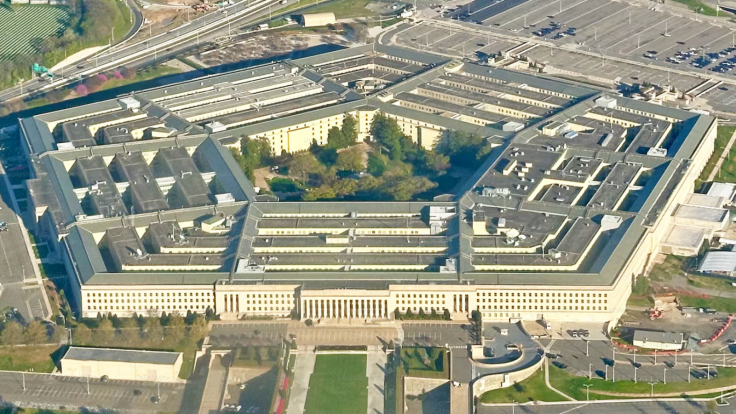
The Pentagon reportedly plans to require every major military installation in the continental United States to sustain essential operations for at least 90 days without outside support under FORTRESS, an initiative preparing for infrastructure disruption during a major war.
The military had already announced plans to reduce major bases' dependence on civilian power grids. FORTRESS would extend those preparations beyond electricity to water, fuel and communications, addressing the possibility that a conflict could interrupt the civilian services supporting military operations on American soil.
'Power is combat now. Without electricity, you lose communications, water, logistics, assembly lines and just basic military command structures,' stated Sean Parnell, identified in the report as the Pentagon's chief spokesperson.
Pentagon Extends Self-Sufficiency Beyond Electricity
The 90-day standard concerns essential operations, rather than every activity conducted at a military base. It would require installations to maintain the services needed to continue operating independently through prolonged disruption.
Parnell, who led the FORTRESS initiative, described reliance on municipal infrastructure as an unacceptable risk.
'We don't want to rely on standard civilian municipal infrastructure to run our national defense. We just simply can't. It's an intolerable risk,' he stated.
FORTRESS envisages portable nuclear reactors, large-scale battery storage and microgrids capable of disconnecting installations from the civilian electrical grid. Those proposals are intended to maintain power during prolonged outages, supporting the communications and logistics on which military operations depend.
'Mission-critical power must be independent, hardened, and redundant,' Parnell stated.
Parnell described FORTRESS as an insurance policy for the homeland. He linked the initiative to a shift in thinking about threats to the United States itself.
'I realized that a lot of the way we think about homeland defense was built around the antiquated assumption that two oceans would protect us,' he stated.
Pentagon Reserves Would Cover More Than Fuel
Energy independence forms only part of the preparations. FORTRESS also anticipates interruptions to international supply routes and the possibility that domestic manufacturers could struggle to meet wartime demand for weapons, equipment and critical materials.
'The next conflict will likely be fought on multiple fronts. Look at the geopolitics behind any major war. When that happens, global supply chains will break,' Parnell stated.
The initiative calls for strategic reserves of munitions, fuel, critical minerals, electronics, spare parts and medical supplies. Those reserves would support military operations if supplies from overseas were disrupted or domestic production could not keep pace.
Stockpile targets would depend on how quickly materials were consumed during a major conflict and how long manufacturers needed to replace them.
For the military's most critical defence dependencies, FORTRESS would also require at least two qualified supply or production pathways. The aim is to reduce the risk that losing a single factory, supplier or industrial capability could interrupt military operations.
Civilian Factories Enter the Pentagon's Wartime Planning
Through the Civil Reserve Manufacturing Network, an existing initiative incorporated into FORTRESS, the Pentagon plans to identify commercial factories capable of switching to defence production during a crisis.
The preparations would involve assessing manufacturers' capabilities and establishing technical specifications, cybersecurity protections, contracting arrangements and conversion procedures before a conflict begins. That work would lay the groundwork for civilian production facilities to support wartime military demand.
FORTRESS calls for recurring industrial stress tests and mobilisation exercises to assess whether manufacturers could maintain production through prolonged disruptions.
Beyond manufacturing, the initiative includes efforts to strengthen military communications, navigation and satellite capabilities against interference. Preparations include maintaining operations when GPS signals are jammed or space-based assets are disrupted.
'You don't want to be making these decisions in the middle of a global multi-front conflict. We have to have a plan,' Parnell stated.
© Copyright IBTimes 2026. All rights reserved.