

Trump's $88,600 Photo Op Raises Eyebrows as 45 Republicans Say They're Skipping or Undecided on RNC Convention
House members had to pay $25,000 to attend, but the House campaign arm later gave away 2,000 tickets
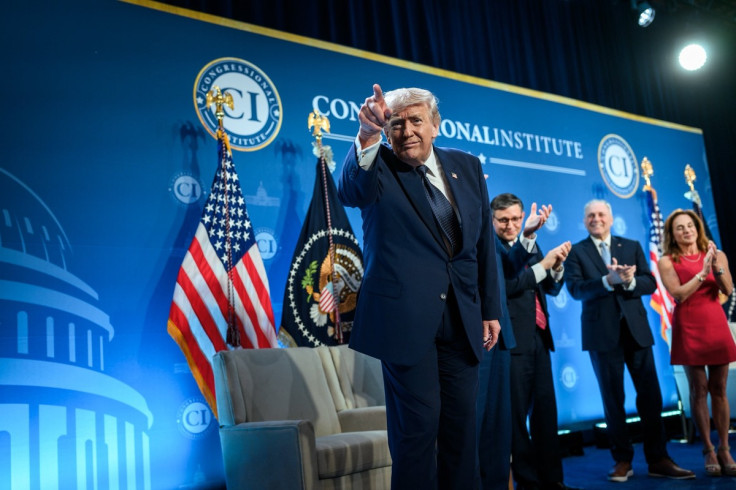
Republicans wanting a photo with Donald Trump in Dallas this week were asked to pay $88,600 (about £68,000). Politico contacted over 70 candidates and members of Congress; 45 said they were not attending or had not decided yet. While the party promoted the event as a display of strength, the guest list has also revealed who is willing to stand alongside Trump.
No major political party has held a midterm convention in over 40 years, with no presidential candidate to select and no formal nomination business to conduct. This means attending is a choice rather than a duty, just eight weeks before the 3 November vote. As a result, every empty seat can be seen as a sign of who is choosing not to attend.
The Republican National Committee (RNC) charged different amounts for access to the president. A photo opportunity cost $88,600, while a roundtable with Trump cost $250,000 (about £192,000). House members faced a separate request from the National Republican Congressional Committee (NRCC) to contribute at least $25,000 (about £19,000) to attend. Several lawmakers were reluctant to pay.
What the Party Was Charging
Money was a major part of the Dallas event, not just an added benefit. Vice President JD Vance was offered at a lower price than his boss, with a photo opportunity costing $35,000 (about £27,000). Other packages ranged from tens of thousands of dollars to more than $100,000. Party officials said the two-day event was fully paid for and raised $42 million (about £32 million).
Not everyone had to pay. Richard Hudson, chairman of the National Republican Congressional Committee (NRCC), said he gave out 2,000 free tickets to colleagues and staff after a mix-up involving a separate fundraising package. About 100 members and candidates were expected to attend. Dallas is also expected to spend more than $2 million (about £1.5 million) on the convention, including about $1.8 million on police security.
Who Decided to Stay at Home
Susan Collins of Maine is not going. Neither is John Cornyn of Texas, whose spokesperson confirmed that he will stay away. Tom Barrett of Michigan and Zach Nunn of Iowa, who are both defending vulnerable House seats, are also staying away. The White House confirmed that Melania Trump will not attend either, but has given no reason.
Most lawmakers gave ordinary reasons for missing the event. Some said they had fundraisers booked before the party chose the date, while others cited events in their home states, weddings or family days out. Several Republicans from the Northeast said they would fly home for the 25th anniversary of the 11 September attacks, which falls the day after the convention ends.
Barrett, who is fighting to keep his seat in central Michigan, told Politico that he cannot control what the president says. However, he can control where he goes and who he appears with. Kathryn Pearson, a politics professor at the University of Minnesota, told Minnesota Public Radio that the president 'isn't very popular with independent voters.' She said Republicans in closely contested seats may think twice about appearing with him.
Why the Absences Are Being Counted
One number stands out: Trump's own poll rating. Reports published on 4 September put Trump's approval at 34 per cent and disapproval at 60 per cent. Other reports gave similar figures, including 35 per cent approval and 59 per cent disapproval. Pollsters disagree on how low Trump's support has fallen, but recent figures consistently show more people disapproving than approving of his performance.
Joshua Blank, research director at the Texas Politics Project at the University of Texas at Austin, explained the calculation to The Hill. He said: 'Hugging Donald Trump is really good in the Republican primary.' But he added that no one knows whether the same strategy will work in a close general election. Candidates in the tightest races now have to decide whether that risk is worth taking on television.
What the Committee Says
The party has defended interest in the event. Natalie Baldassarre, an RNC spokeswoman, told The Hill that interest in attending and speaking had been 'incredible'. She said more than 20,000 tickets had gone out, with about 30,000 people expected to attend.
None of the absences proves much on its own. Diary clashes happen; 11 September remains a significant date, and candidates in tight races have good reason to stay in their districts. Still, a price list brought the issue into focus, and most invitees have yet to confirm their attendance.
© Copyright IBTimes 2026. All rights reserved.