Trump Labels Affordability 'A Democrat Scam' as Inflation Rebound Fuels Voter Anger
President's claim clashes with voter concerns
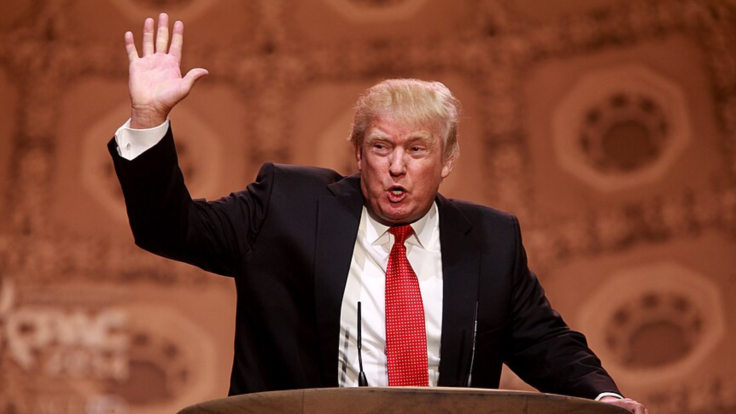
President Donald Trump has characterised Democratic messaging on the cost of living as a 'scam', asserting during a Cabinet meeting that his administration has successfully halted the inflationary spiral inherited from his predecessors.
However, this declaration of victory clashes with fresh economic data indicating a resurgence in consumer prices, driven in part by the administration's own trade policies.
Inflation Trends and the Tariff Effect
Inflation surged to 9.1 per cent in June 2022, the highest level in four decades, driven by pandemic‑related supply chain disruptions and federal stimulus spending. Although it gradually declined, it has not returned to the Federal Reserve's 2 per cent target.
Data from the Bureau of Labor Statistics showed inflation at 3% in January when Trump returned to the White House, falling to 2.3 per cent in April—the lowest since March 2021—before rebounding to 3 per cent in September.
Economists point to the administration's aggressive trade strategy as a key factor in this reversal. The rollout of higher tariffs on imported goods has forced importers to absorb increased costs, which are subsequently passed on to consumers. This 'pass-through' effect has kept prices elevated for electronics, apparel, and industrial components, counteracting the deflationary trends seen in other sectors.
Voter Disapproval and Economic Anxiety
Polling underscores the political challenge. A Fox News survey found that 76 per cent of respondents rated national economic conditions as 'not so good' or 'poor'. Furthermore, 60 per cent described their personal financial situations in similarly negative terms. Overall, 61 per cent said they disapprove of Trump's handling of the economy, compared with 38 per cent who approve.
Support remains strong among Republicans, with 77 per cent backing the President's approach, but approval drops sharply among independents (25 per cent) and Democrats (6 per cent). The figures highlight the partisan divide but also the broader unease among middle‑income Americans, many of whom are pessimistic about their financial future.
TRUMP: “The word 'affordability' is a Democrat scam."
— Fox News (@FoxNews) December 2, 2025
"They say it, and then they go on to the next subject, and everyone thinks 'oh, they had lower prices' — No."
“They had the worse inflation in the history of our country. pic.twitter.com/FFkVRaX6dk
The Reality of 'Sticky' Prices
For the average household, the economic pain is defined not by the rate of inflation, but by the cumulative rise in the cost of living. Grocery bills are a particular pain point, with 85 per cent of voters reporting increases over the past year. Utility bills, healthcare expenses and housing costs have also climbed, with at least two‑thirds of respondents noting higher prices in those categories.
This phenomenon, known as 'sticky inflation', means that while the rate of price increases may slow, the actual prices on the shelf rarely revert to pre-pandemic levels. Consequently, wage growth often fails to bridge the gap, leaving families with a sensation of diminishing purchasing power despite positive topline economic indicators.
Fuel costs have offered some relief, with 30 per cent of respondents saying their petrol expenses have decreased in the past year. However, more than half still reported increases, underscoring the uneven nature of price changes across household budgets.
The Politics of Affordability
Trump's assertion that affordability is 'a Democrat scam' reflects his broader effort to frame economic messaging around partisan blame. He argued that Democrats use the term to imply lower prices while presiding over historic inflation. Yet the persistence of elevated costs and the rebound in inflation complicate the administration's narrative.
For voters, the debate over affordability is less about political rhetoric and more about lived experience. With grocery, housing and healthcare costs continuing to rise, many remain unconvinced that inflation is under control. Over half of respondents—52 per cent—said prices are 'not at all' under control, while only 18 per cent believed inflation is completely or mostly contained.
Looking Ahead
Trump insists that inflation is 'going to down a little bit further', pointing to areas of progress such as cheaper food items and lower mortgage rates. But the combination of tariff‑related pressures, voter disapproval and persistent household strain suggests the affordability debate will remain central to the political and economic landscape.
As the administration seeks to balance claims of success with the reality of voter frustration, the clash between rhetoric and lived experience underscores why affordability remains one of the most contentious issues in American politics today.
© Copyright IBTimes 2026. All rights reserved.
- MOST POPULAR IN World