

Ukraine Cash Triumphs Over MAGA Rage: House Delivers $901B Military Defence Bill to Trump
House approves £711 billion defence bill, curbing Trump and funding Ukraine.
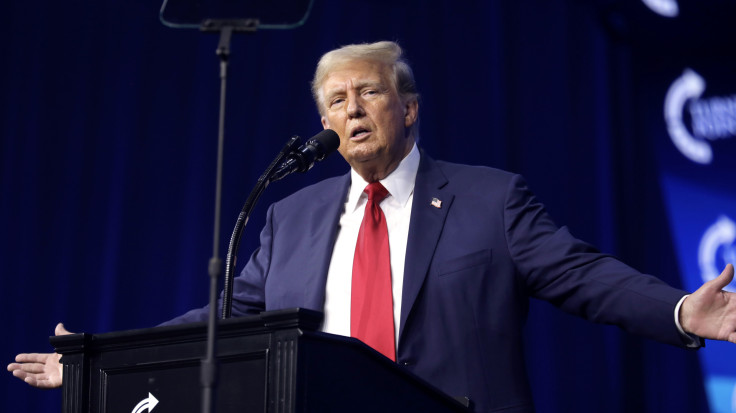
A precarious revolt on the House floor threatened to capsize the Pentagon's budget before it could even set sail, but the legislation ultimately survived the political storm. Despite a furious last-minute rebellion from hardline conservatives, the US House of Representatives has successfully passed a massive military spending package. The legislation, vital for the Pentagon's operations, survived a chaotic procedural threat that nearly derailed the entire process, eventually clearing the chamber with a comfortable bipartisan margin.
The House passed the National Defence Authorisation Act (NDAA) on Wednesday, effectively punting the massive legislation that governs Pentagon spending to the Senate. The final vote tallied 312 to 112, with a coalition of 18 Republicans and 94 Democrats voting 'no' on the bill that authorises £711 billion ($901 billion) in War Department spending. While the final passage appeared decisive, the path to the vote was fraught with internal GOP tension regarding the final negotiated text.
Hardline Republicans Fold After Threatening to Derail Defence Bill
An earlier procedural vote on the legislation barely survived, passing 215–211 at the eleventh hour. The measure was on the brink of failure until high-profile Republicans changed their stance. Representatives Anna Paulina Luna, R-Fla, Marjorie Taylor Greene, R-Ga., Lauren Boebert, R-Colo., and Tim Burchett, R-Tenn., switched their votes from 'no' to 'yes' in the final moments, salvaging the rule.
Had this procedural hurdle not been cleared, the bill would have stalled indefinitely. All Democrats voted 'no' on the procedural rule, leaving the Republican majority to fend for itself against its own internal dissenters. Now that House and Senate leaders have combined their versions of the legislation into one negotiated package, it is expected to face smooth sailing through the Senate before arriving at President Donald Trump's desk.
Ukraine Funding Survives Despite Fierce MAGA Opposition
The primary catalyst for the conservative mutiny was the continued financial support for Kyiv. Hardline conservatives had vocally opposed the bill over the inclusion of Ukraine funding, which is set at £316 million ($400 million) per year for two years. This inclusion stands in contrast to demands from some party members who have called for an end to such expenditures.
Furthermore, the legislation contains provisions that restrict executive power regarding foreign policy. Specific clauses strictly curtail Trump from reducing the US troop presence in Europe and South Korea. Perhaps most notably, the bill stops the White House from hitting the brakes on weapons shipments to Ukraine—a move Trump utilised previously.
Privacy Hawks Fail to Secure Digital Currency Ban
Beyond foreign aid, the omission of a key financial provision fuelled the anger of the Republican right. Conservatives had pushed for a prohibition on the Federal Reserve creating a central bank digital currency (CBDC). The push to ban the CBDC wasn't just about money; it was a fight for privacy. Conservatives warned that if the government controls a digital dollar, they could watch every penny you spend or even freeze your accounts.
Despite this loss, conservative privacy hawks like House Judiciary Committee Chairman Jim Jordan, R-Ohio, secured a victory elsewhere in the text. The legislation includes a non-defence provision mandating that the FBI must disclose when the bureau investigates presidential candidates and other aspirants for federal office.
Missing Provisions on IVF and AI Regulation
Notably absent from the final text were two contentious issues that had sparked debate. Coverage of in vitro fertilisation (IVF) for military families, which became a flashpoint in recent days, is not included in the final NDAA. Neither is a provision that preempts states from regulating artificial intelligence, a clause that had previously been considered.
Speaker Johnson Touts Victory on 'Woke' Policies and Pay Raises
House Speaker Mike Johnson is promoting the bill's domestic achievements to quell dissatisfaction within his ranks. He is touting provisions that offer enlisted troops a 4 per cent pay raise and eliminate diversity, equity and inclusion (DEI) initiatives. The bill also aims to crack down on antisemitism and eliminate £15.8 billion ($20 billion) in spending on 'obsolete programmes' and 'Pentagon bureaucracy'.
However, the bill does impose oversight on the administration. One clause withholds one-quarter of War Secretary Pete Hegseth's travel budget until the Pentagon hands over raw footage of strikes on alleged narco-trafficking boats near Venezuela.
Strict New Investment Rules Target High-Risk Chinese Tech
The legislation takes a hawkish stance on economic security, particularly regarding Beijing. One major section establishes an outbound investment screening system, requiring US companies and investors to alert the Treasury Department when they back certain high-risk technologies in China or other 'countries of concern.' The Treasury retains the power to block those deals outright or force annual reporting to Congress.
Another provision bans the Pentagon from contracting with Chinese genetic sequencing and biotech firms. It also prohibits the purchase of items such as advanced batteries, photovoltaic components, computer displays, and critical minerals originating from foreign entities of concern.
To bolster this economic stance, the NDAA directs the State Department to deploy a new cadre of Regional China Officers at US diplomatic posts worldwide. These officers will be responsible for monitoring Chinese commercial, technological, and infrastructure activities, including Beijing's Belt and Road Initiative. The bill also requires biennial reports comparing China's global diplomatic presence to that of the United States.
While the bill repeals two long-dormant war authorisations tied to earlier phases of US military involvement in Iraq (1992 and 2002), it leaves the primary post-9/11 counterterrorism authority, the 2001 Authorisation for Use of Military Force (AUMF), untouched. This ensures the Pentagon maintains its broad powers for global operations as the military defence landscape shifts toward great power competition.
© Copyright IBTimes 2026. All rights reserved.