

Trump Warns Critics They're Acting 'Treasonous' For Questioning His Physical Health
Amid rising concerns over his stamina and public appearances, Trump accuses media of betraying the country for questioning his health
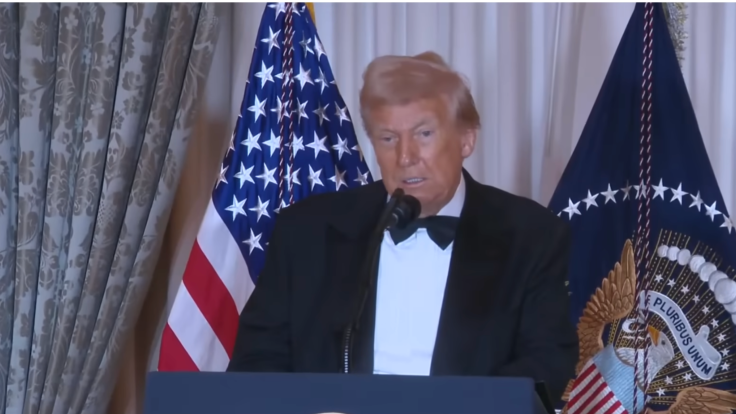
President Donald J. Trump declared that those questioning his physical and cognitive fitness were committing 'treasonous' acts, in a broadside against mainstream media and critics.
The 79-year-old President used strong rhetoric to portray scrutiny of his health as an existential threat to national stability. The reaction underscores growing anxiety about his capacity to lead during a fraught second term at age 79.
Trump's Fury And The Charges Of Treason
In a lengthy post on his social media platform, Truth Social, Mr. Trump directly attacked The New York Times (NYT) and other media outlets for publishing stories on his diminished public appearances and alleged signs of fatigue or decline. He condemned the reports as 'fake', describing them as 'seditious, perhaps even treasonous' attempts to 'libel and demean 'THE PRESIDENT OF THE UNITED STATES.'
Trump doubled down on his defence, citing medical and cognitive tests he claimed to have 'aced,' supervised by top doctors at Walter Reed National Military Medical Center. He insisted these results showed he remained physically and mentally robust despite what he described as a relentless press campaign against him.
The President went further, suggesting that the media should 'cease publication', a direct challenge to the free-press principles at the foundation of American democracy.
Context Of Concern: Age, Images, And Medical Scrutiny
The confrontation stems in part from a recent op-ed by columnist Frank Bruni at the New York Times, titled 'His approval ratings have declined in recent months, and so, by the looks of things, has his vigor.' The column argued that reductions in Mr. Trump's schedule of public events, subtle physical signs observed in photos, and reports of him appearing to nod off during official meetings raised legitimate questions about his stamina.
Those observations have been widely noted by media observers: bruising on his hands, occasional drooping facial expressions, and even a reported moment of dozing during a Cabinet meeting. The White House attributes the bruising to constant handshakes and insists the President is attentive, but the images and reports have fuelled concern.
In October, Mr. Trump visited Walter Reed for what was described as a 'standard' cardiovascular and abdominal imaging scan, his second 'annual' physical in six months. The White House physician said the results were 'perfectly normal,' showing no evidence of arterial narrowing, clotting, or inflammation. Nonetheless, the timing and the additional MRI have only heightened media and public scrutiny.
Legal Meaning — And The Reality Check
Under U.S. federal law, treason is narrowly defined: it requires levying war against the United States or giving aid and comfort to its enemies. Similarly, 'seditious conspiracy' refers to conspiring to overthrow, put down, or destroy by force the U.S. government, or to oppose by force the authority thereof.
Yet, legal scholars uniformly note that writing or publishing a critical article about a public official's health, no matter how harsh, does not meet these thresholds. Critique, even harsh or repetitive, is protected by the First Amendment. There is no evidence that the media's commentary on Mr. Trump's health, no matter how pointed, involves violence, conspiracy, or aid to enemies.
In essence, Mr. Trump's accusations amount to rhetorical denunciation, not a claim grounded in the legal definition of treason or sedition. Independent outlets and media-freedom organisations have called his comments a 'dangerous conflation of criticism with criminality.'
Political Fallout And Rising Doubts
The timing of the tirade is significant. Mr. Trump's latest remarks followed a campaign-style rally in Pennsylvania, part of what he calls an 'Affordability Tour', where he sought to refocus public attention on economic issues. But instead of rallying support, the tirade amplified scrutiny of his own health and capacity to lead.
Within hours, prominent figures responded. Gavin Newsom, governor of California and vocal critic of Mr. Trump, mocked the claim: 'Donald Trump is in poor physical health,' he posted on X shortly after Trump's message.
Media-rights groups and former U.S. officials warn that framing legitimate journalism as 'treasonous' undermines democratic norms and could chill press freedom.
Meanwhile, mental-health and medical experts remain concerned that public statements of good health are insufficient to quell doubts fuelled by visual evidence, sporadic public appearances, and past incidents, such as the October MRI, that deepen public curiosity about the President's fitness for duty.
Donald Trump is in poor physical health. https://t.co/OT3wd1QfBg
— Gavin Newsom (@GavinNewsom) December 10, 2025
Stakes For Public Confidence And Democracy
The stakes are high. A President who seeks to label media and critics as traitors for doing their job challenges the institutional guardrails that protect free speech and democratic accountability. The debate over Mr. Trump's health is not merely personal, but a question of national trust and institutional integrity.
As the 2028 election looms and domestic tensions rise, the resilience of U.S. political norms may face its sternest test yet. Whether this moment becomes a turning point for American democracy depends on how institutions respond, and whether truth remains protected, even when it is inconvenient.
One thing is now clear: in his own words, Mr. Trump has cast his critics as enemies of the state and forced the nation to confront the line between dissent and disloyalty.
Trump's condemnation of media scrutiny as 'treasonous' may rally his base, but it also raises critical questions about power, transparency, and the role of a free press in holding leaders accountable.
The Road Ahead

Watchers say the coming weeks will be crucial. Will the media continue to probe, and will the White House respond constructively or double down? Will other Republican voices defend the First Amendment, or echo the conflation of criticism with betrayal? The answers may shape the future of American democracy.
The pressure is now squarely on institutions as much as individuals.
Trump has thrown down the gauntlet. The United States, and its commitment to free speech, must decide whether to pick it up.
© Copyright IBTimes 2026. All rights reserved.