UN Report Reveals Lack of Doors in Gaza Camps Exposes Displaced Women To Horrific Abuse and Sexual Harassment
A UNFPA audit found safety and privacy risks across all 15 sites assessed

Women living in Gaza displacement sites have described being unable to change clothes privately, avoiding shared bathrooms and fearing harassment, as UNFPA reports identify serious gaps in shelter privacy and safety.
The findings draw on two September 2026 UNFPA reports: one based on accounts from 230 women in Gaza City and Khan Younis, and a separate safety audit covering 15 displacement and shelter sites and two humanitarian service environments.
UNFPA stressed that the reports document women's experiences and identify risks rather than measure the overall prevalence of gender-based violence across Gaza.
Women Describe Life Without Privacy
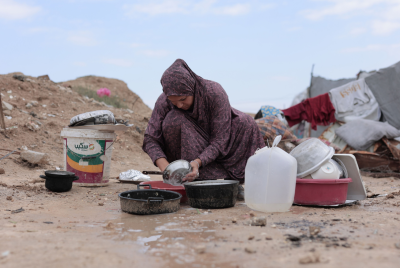
Repeated displacement has left many women with little privacy, with participants describing tents and shelters where even basic daily activities can become difficult.
One woman in Gaza City described having to remain in prayer clothes while washing clothes because of the lack of privacy around her tent.
'We live in tents next to each other,' another woman in Khan Younis said, describing shelters made from sheets or tarpaulin where 'a person cannot secure all the entrances of the tent'.
UNFPA said participants had experienced between two and 10 displacements, with a median of seven. The women described severe overcrowding and an almost complete absence of privacy.
Missing Doors and Unsafe Facilities
A separate UNFPA safety audit found lighting, privacy and water, sanitation and hygiene risks across all 15 sites assessed.
The problems included inadequate lighting, distant sanitation facilities, overcrowding, insufficient separation and a lack of secure internal locks. Women and girls reported changing their behaviour around toilets and water points because they did not feel safe, particularly after dark.
UNFPA recommended repairing and securing doors, windows, partitions and tents, alongside improving lighting and sanitation facilities.
The findings provide a wider context for the fears described by women using shared facilities, where a lack of privacy could leave them feeling particularly vulnerable.

Bathrooms Become a Source of Fear
Shared bathrooms were repeatedly identified as another source of insecurity for women and girls in Gaza displacement sites.
One participant said: 'The restrooms are also the most common place for harassment of girls', describing an incident in which she saw a young man staring at and touching girls.
Another woman described bathing at night in a bathroom without a roof after hearing someone watching her. She left quickly and did not report what happened because she feared being shamed.
The report said such experiences affected women's hygiene practices, with some avoiding shared bathrooms and others shortening the time they spent washing because they feared being seen or touched.
Sexual Harassment and Abuse Risks
The safety audit found concerns about harassment or exploitation at facilities, along pathways and at service points in at least 13 of the 15 sites.
The wider report also documented accounts of sexual harassment, assault and exploitation during displacement. One participant said young men helping girls move between locations would 'take advantage of the situation' to touch their bodies.
'The thing women need the most is a place other than a tent because it's easy for someone to enter and commit any kind of violence inside,' a woman in Gaza said.
UNFPA cautioned that the incidents described in the focus groups were not independently verified and that the findings should not be interpreted as measuring the prevalence of gender-based violence across Gaza.
The organisation also warned that stigma, fear of retaliation and concerns about confidentiality can discourage survivors from reporting abuse or seeking support.
© Copyright IBTimes 2026. All rights reserved.
- Recommended For You