

USS Lincoln Family Members Reveal Fears as Carrier Docks in Thailand After Record 286 Days at Sea
After a record days at sea, USS Abraham Lincoln docks in Thailand as families voice relief, anger and fresh questions over crew welfare and leadership
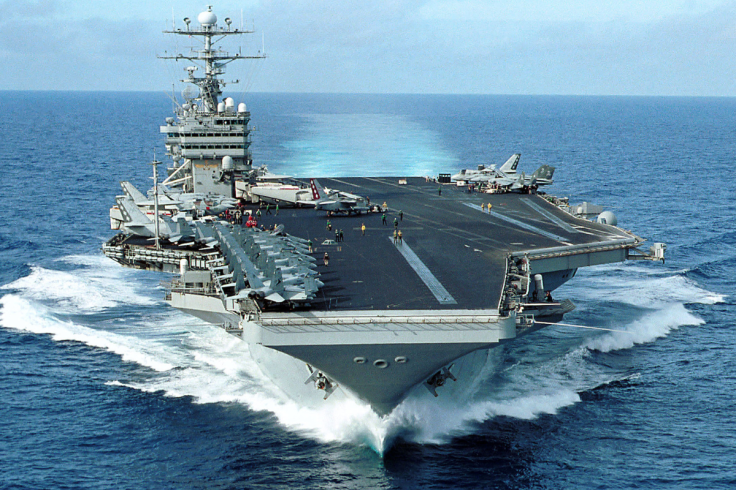
USS Abraham Lincoln has docked in Thailand after a 286-day deployment that included a record-setting 264-day stretch at sea without a full port call, with families of approximately 5,000 sailors on board torn between relief at the long‑awaited port call and anger over how the marathon deployment has been handled.
The nuclear-powered carrier arrived at Laem Chabang, a deep-water port around two hours from Bangkok, on Wednesday, its first full port visit since leaving its home base in San Diego in November 2025.
It is expected to remain in Thailand for several days before beginning the journey back to California, although no firm return date has yet been confirmed for families. While military leadership has defended the operational tempo, loved ones have fiercely criticised political messaging surrounding the marathon deployment.
Congress Raised Alarm Over Onboard Strain
Rear Admiral Robert E Loughran, commander of Carrier Strike Group 3, described the stop as a chance for crew 'to rest and recharge'.
The remark followed months of concern in Washington, where Democratic lawmakers wrote to defence officials during the deployment alleging food shortages, plumbing failures and declining mental health among the crew.
Defence Secretary Pete Hegseth rejected the claims as 'completely misrepresented', while the Navy attributed the strain to the ship's operational tempo in the Middle East.
President Donald Trump further inflamed the issue by suggesting the deployment was 'not nearly long enough,' a comment that families said badly misjudged the mood on board.
Kelly Lattig, whose 20-year-old son Trayoni 'Tray' Daniels serves on the Lincoln, said the remark was demoralising. 'Imagine if you're Tray or any of the other 5,000 kids, and the president comes on and says that you haven't been on the ship nearly long enough,' she said, calling it 'terrible messaging' that made America 'look weak and stupid'. Lattig said she did not support the war itself but remained firmly behind her son.
Rust-Streaked Hull, Brief Shore Leave and Parental Jitters
Photographs of the Lincoln's arrival showed its hull streaked with rust after nearly ten months at sea. Naval officials said the corrosion was cosmetic rather than a safety concern, though it visibly underscored the length of the deployment.
Crew members are now being given a short break in and around Pattaya, a coastal city near the port known for its nightlife, a prospect that left some parents uneasy despite their relief at the docking.
Kendra Carver, Daniels' mother, said she had not spoken to her son by phone throughout the deployment, relying instead on sporadic messages on Instagram. One message in April referred to difficulties obtaining food and basic supplies, though he did not say he had personally gone without. 'Just knowing when he's going to get back. I think that's probably the biggest thing,' she said, adding that the absence of a firm homecoming date had become its own source of strain.
Cristi McGarey, a mother from Chicago, said she felt 'so relieved' after receiving word on Wednesday that the ship had docked safely. She said the reported shortages and equipment failures had been distressing to follow from afar, and directed her frustration at military and political leadership rather than her son's commanders. 'They can't say this job sucks and leave,' she said, describing any failure to properly supply the crew as 'unacceptable'.
According to US Central Command, the Lincoln has now been relieved in the Middle East by the USS George Washington, which took up operations in the region on 20 August, a rotation intended to ease pressure on the Lincoln's crew as it heads home.
For many families, though, reassurance will only come once their children step off the ship in San Diego. While the crew enjoys temporary shore leave around Pattaya, lingering questions remain regarding future deployment caps. The historic voyage has ignited a permanent debate over the sustainability of modern naval warfare.
© Copyright IBTimes 2026. All rights reserved.