

'Where Are All the Aliens?': Astrobiologist Explores the Astonishing Science Behind Finding Life
Astrobiologist Seven Rasmussen's new book explores the Drake equation, the Fermi paradox and the astonishing science behind the search for aliens in our galaxy
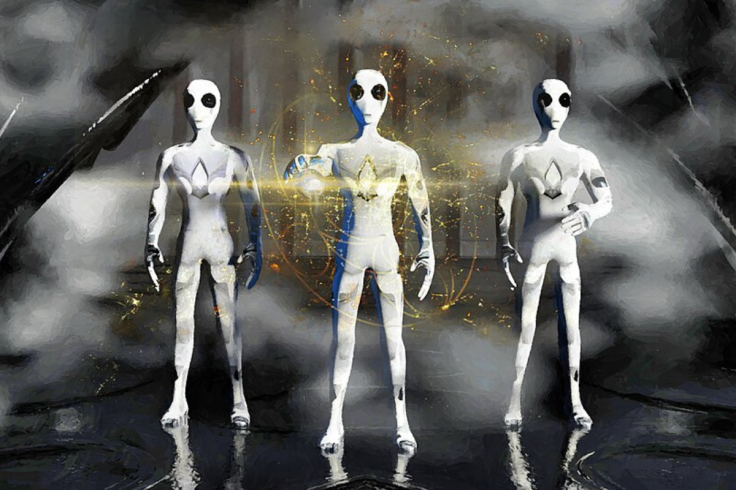
The question 'where are all the aliens?' has intrigued stargazers for centuries, and now researcher Seven Rasmussen is tackling it head‑on in a new book exploring the science behind modern searches for alien life.
Her book, Cloudy with a Chance of Starships, offers readers a tour through the methods, mathematics and human curiosity driving the quest to find out whether we are alone in the universe.
The search for extraterrestrial intelligence has come a long way since astronomer Frank Drake used a radio telescope to listen for signals from nearby stars around 1960, an effort that helped launch what we now call SETI, the systematic hunt for signals from other civilisations. Yet despite decades of listening, scanning and theorising, the cosmos remains stubbornly quiet.
The Drake Equation and the Hunt for Aliens
At the heart of Rasmussen's book sits the Drake equation, a seven‑factor formula that attempts to estimate how many communicative civilisations might exist in our galaxy.
The equation starts with relatively well‑constrained quantities, such as the rate of star formation, then moves into more uncertain territory: how many planets per star, how many of those could support life, and finally, the odds that intelligence emerges and how long such civilisations last.
Rasmussen has said that the equation begins with parameters we understand reasonably well and then shifts to factors that are highly speculative. She notes that the final term, the average lifetime of a technological civilisation, is essentially unknowable at present.
Rasmussen describes astrobiology as less a single discipline than a bundle of many sciences working together. It draws on astronomy, biology, chemistry, geology, physics, engineering and even philosophy.
The field encompasses everything from studying microbial life in extreme environments on Earth to modelling how biosignatures, the telltale chemical fingerprints of living organisms, might appear in the atmosphere of a distant exoplanet.
When scientists search for aliens, they are not looking for little green men waving from orbit. Instead, they hunt for biosignatures and technosignatures, evidence that life or technology has altered a planet's environment.
Certain combinations, such as free oxygen alongside methane in an atmosphere, are considered possible indicators of biological activity.
Artificial chemicals like chlorofluorocarbons, once widely used in aerosol cans and known for damaging Earth's ozone layer, have been proposed as potential technosignatures, though they may not necessarily imply a highly intelligent civilisation.
The Fermi Paradox and the Cosmic Mirror
The apparent silence of the universe helped inspire what is now known as the Fermi paradox, named after nuclear physicist Enrico Fermi.
According to later recollections, Fermi once posed the question during a lunchtime conversation with colleagues: if interstellar travel were possible and other Earth‑like planets existed, 'where is everybody?' That question has never really gone away.
Rasmussen draws inspiration from an idea associated with SETI researcher Jill Tarter, sometimes described as a 'cosmic mirror': the technosignatures we search for out there tend to reflect the technologies we use here on Earth.
After World War II, radio technology dominated, so early SETI focused on radio waves. Once lasers were developed, astronomers began looking for optical signals. Our searches mirror our own technological evolution, raising an unsettling possibility: what if we are simply looking for the wrong things?
There is also the matter of time. Civilisations might flash into existence like fireflies in a vast, dark forest, each burning bright for only a few thousand years before going dark. The speed of light imposes a kind of cosmic quarantine, meaning two civilisations could exist in the same galaxy yet never overlap in time or space.
One might have sent out powerful broadcasts more than a billion years ago, when Earth was inhabited only by simple microscopic organisms. We would have missed them. Another might be watching our planet from a distant galaxy, but what they see is not cities or satellites, only early hominids wandering Africa.
Rasmussen remains an optimist, though she admits the answer to the Fermi paradox might not be comforting. Perhaps life is incredibly rare. Perhaps intelligence rarely develops.
Or perhaps there is a 'great filter', a barrier that prevents most civilisations from reaching the stage of interstellar communication. If that filter lies ahead of us, humanity may yet face the same fate that appears to have silenced the stars.
When asked which term in the Drake equation she would most want to know with certainty, Rasmussen points to fi, the fraction of habitable planets that develop intelligent life.
She has argued that how we define 'intelligence', for example, whether we would consider an octopus or a sperm whale intelligent a century from now, may tell us as much about ourselves as about any aliens we hope to find.
© Copyright IBTimes 2026. All rights reserved.