

'Where Is Everybody?': Over 86 Percent of Astrobiologists Agree That Alien Life Is Real Right Now
Survey Reveals 86% of Experts Believe in Extraterrestrial Life Despite Lack of Evidence
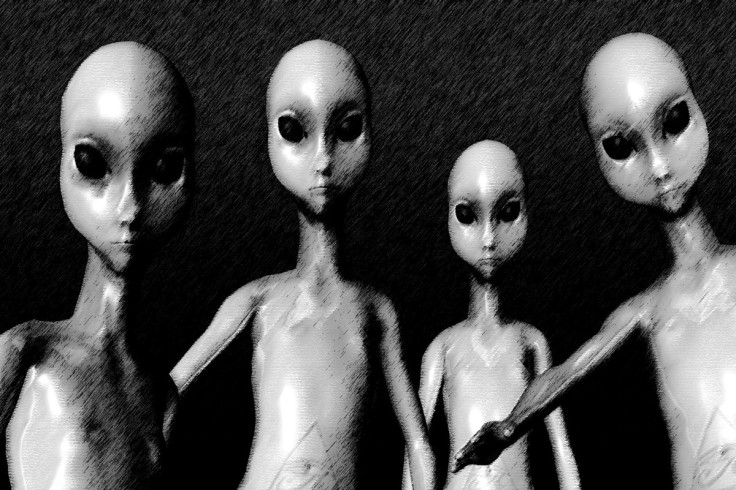
More than 86% of astrobiologists surveyed by Durham University in 2024 believe alien life likely exists somewhere in the universe right now, even as no confirmed evidence has yet been found.
The finding, drawn from responses by 521 specialists studying life beyond Earth, sharpens the long-running question often summed up as 'Where is everybody?' and reframes it as less about belief and more about probability.
Scientists have spent decades scanning the skies, analysing planetary atmospheres and listening for signals, all without a definitive detection. The apparent silence has often been framed as the Fermi paradox, the tension between the high likelihood of extraterrestrial life and the absence of proof.
Yet the Durham survey suggests most experts are not persuaded by the silence alone. While 86.6% of respondents said life beyond Earth is likely, that confidence dropped to 67.4% when the question shifted to intelligent or complex organisms.
'Where Is Everybody': Astrobiologists Point To The Numbers
The Milky Way alone contains between 100 billion and 400 billion stars, and NASA estimates there are at least 100 billion planets in our galaxy. Scale that against the observable universe and Earth begins to look less like a cosmic miracle and more like one example among many possible outcomes.

Mike Garrett, professor of astrophysics at the University of Manchester, put it bluntly, 'We now know that most stars have a planetary system. That means there are loads of places where life can arise.'
He added that life appeared relatively quickly on Earth once conditions stabilised, which, in his view, hints that biology may not be a rare fluke but a recurring process.
That reasoning has gained traction as exoplanet discoveries accelerate. Thousands of planets outside our solar system have already been confirmed, some orbiting in so-called habitable zones where liquid water could exist.
None have yielded definitive biosignatures, but the catalogue keeps growing. Quietly, steadily. Still, probability is not proof. And the gap between 'likely' and 'confirmed' remains enormous.
Where Is Everybody': Ingredients For Life Found Across Space
Beyond sheer numbers, scientists point to chemistry. Key elements associated with life, including carbon, hydrogen, nitrogen and oxygen, have been detected on distant planets, asteroids and comets.
These are not fringe discoveries, they are repeated observations across multiple missions and instruments.
Douglas Vakoch, president of Messaging to Extra-Terrestrial Intelligence (METI), emphasised how quickly life took hold on Earth despite hostile early conditions. 'When the Earth formed 4.5 billion years ago, its surface was hellishly hot,' he said, describing oceans of magma and an environment seemingly incompatible with life.
Yet once cooling occurred, life emerged and spread widely. The implication is hard to ignore, even if it makes some scientists uneasy.
Then there are extremophiles, organisms thriving in places once thought uninhabitable. Deep-sea hydrothermal vents, acidic hot springs, and frozen Antarctic environments all host life forms that challenge assumptions about where biology can survive.
If life can exist in such extremes on Earth, the definition of 'habitable' elsewhere starts to stretch. A lot. And yet, the universe remains stubbornly quiet.
The Silence Problem Still Lingers
Humans have existed for roughly 200,000 years, a blink against cosmic timescales. Civilisations elsewhere may have risen and collapsed long before we had the tools to notice them. Others may not have reached technological maturity yet.
Jason Wright, professor of astronomy and astrophysics at Pennsylvania State University, pointed to the improbability baked into our own existence. 'Life on Earth, especially complex life, required a series of extremely unlikely coincidences,' he said, noting that even if simple life is common, intelligent life may be exceptionally rare. Add vast interstellar distances, and detection becomes even harder.
There is also the uncomfortable possibility that we are looking in the wrong way, or at the wrong time. Radio signals, for instance, may not be the universal calling card we assume.
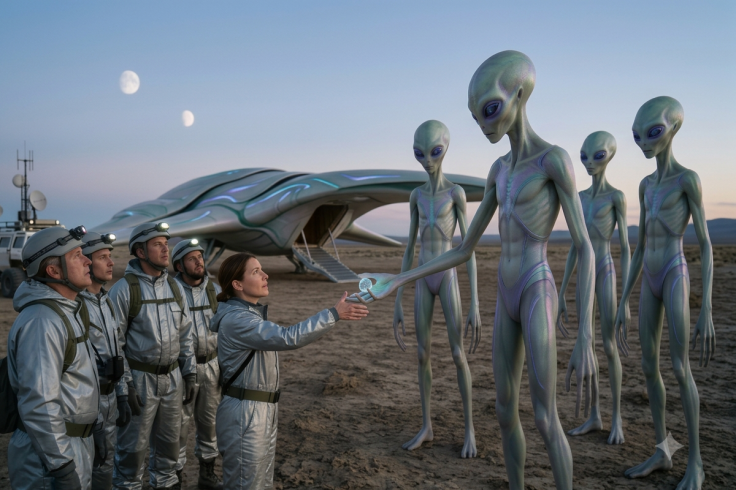
Advanced civilisations, if they exist, might communicate through methods we cannot yet detect. Or they might not be interested in broadcasting at all.
Online, the debate has taken on a life of its own. Threads on Reddit and X show a mix of fascination and scepticism, with some users pointing to the survey as validation that 'we are not alone,' while others question whether expert belief, however informed, risks drifting into assumption.
One widely shared post described the findings as 'reassuring but also kind of unsettling,' capturing the uneasy middle ground the topic often occupies.
Nothing is confirmed yet, so everything should be taken with a grain of salt.
But the direction of travel is clear. Among those who study the question most closely, the idea that life exists beyond Earth is no longer fringe. It is, increasingly, the working assumption.
© Copyright IBTimes 2026. All rights reserved.