

White House Confirms Altered Arrest Image 'For Giggles,' Dismisses Backlash With 'Memes Will Continue'
Official account posts manipulated image of civil rights attorney in custody and defends it as intentional meme messaging.

The White House has sparked a firestorm of ethical and legal debate after officially confirming it disseminated a digitally altered image of a civil rights activist's arrest, with a senior official declaring that the administration will continue using 'memes' as a primary communication tool.
The official White House social media account on Thursday shared a manipulated photograph of attorney Nekima Levy Armstrong, who was detained during a high-profile protest in St Paul, Minnesota.
While original footage showed Armstrong composed, the White House version featured superimposed tears and a distressed expression, a move the administration defended as a legitimate messaging tactic despite warnings from digital forensic experts regarding the erosion of factual integrity.
The admission has fuelled mounting concern among legal experts and civil liberties groups over whether official government accounts should distribute manipulated images connected to law-enforcement actions.
Critics argue the episode exposes a troubling shift in how political power, social media and factual records now collide.
White House Acknowledges Altered Arrest Image And Frames It As Meme
A manipulated version of an original picture was posted on the official account of the White House on X (formerly Twitter), showing Armstrong apparently sobbing as she was taken into custody in St Paul, Minnesota. Homeland Security Secretary Kristi Noem first posted an image showing Armstrong with a neutral expression during her arrest.
https://t.co/ACPZFX2m3x pic.twitter.com/MyvE9HkSRA
— The White House (@WhiteHouse) January 22, 2026
Homeland Security Investigators and FBI agents arrested Nekima Levy Armstrong who played a key role in orchestrating the Church Riots in St. Paul, Minnesota.
— Secretary Kristi Noem (@Sec_Noem) January 22, 2026
She is being charged with a federal crime under 18 USC 241.
Religious freedom is the bedrock of the United States -… pic.twitter.com/LHh994fXf3
The White House's communications team redirected to a post by Deputy Communications Director Kaelan Dorr on X. In that post, the White House stated: 'Enforcement of the law will continue. The memes will continue.'
YET AGAIN to the people who feel the need to reflexively defend perpetrators of heinous crimes in our country I share with you this message:
— Kaelan Dorr (@Kaelan47) January 22, 2026
Enforcement of the law will continue. The memes will continue. Thank you for your attention to this matter. https://t.co/XPGE4PORHL
The administration's response did not clarify who created the altered image, how it was modified, or why the change was made, leaving media analysts and digital experts to assume that artificial intelligence or deep-editing tools were used.
The original image circulated by Noem's official account showed Armstrong peacefully being escorted by law enforcement officers. Less than an hour later, the White House account shared a visually identical photo but with tears and a distressed facial expression superimposed on Armstrong's face.
Social media reactions ranged from confusion to alarm, with critics contending that an altered official image, especially one purporting to add emotion that never occurred, blurs the line between factual reporting and political satire.
Legal And Political Context Of Armstrong's Arrest
Armstrong, a civil rights lawyer and prominent community activist, was among three individuals detained on 22 January in connection with a protest at Cities Church in St Paul, Minnesota. The protest targeted a pastor identified as a local Immigration and Customs Enforcement (ICE) official and was part of broader dissent against federal immigration enforcement practices in the region.
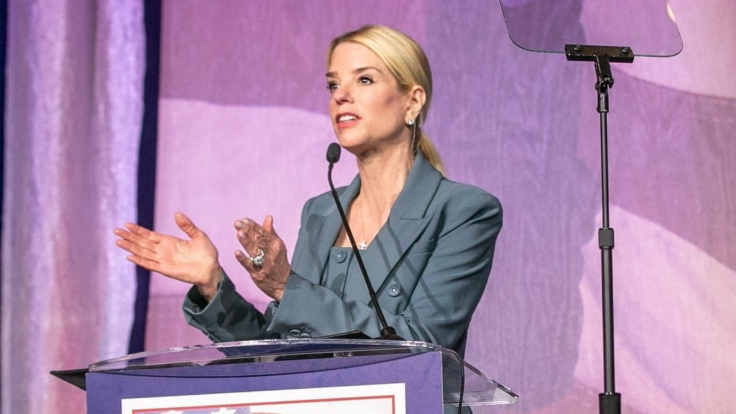
US Attorney General Pam Bondi announced the arrests on social media earlier that morning, stating that Armstrong played a 'key role in organising the coordinated attack on Cities Church' and asserting that the administration does not tolerate what it characterised as 'attacks on places of worship.'
Minutes ago at my direction, @HSI_HQ and @FBI agents executed an arrest in Minnesota.
— Attorney General Pamela Bondi (@AGPamBondi) January 22, 2026
So far, we have arrested Nekima Levy Armstrong, who allegedly played a key role in organizing the coordinated attack on Cities Church in St. Paul, Minnesota.
We will share more updates as they…
Armstrong's attorneys dispute claims surrounding her conduct and the protests. Jordan Kushner, legal counsel for Armstrong, told the Associated Press that videos and photos from the arrest, including the manipulated image, illustrate a distorted government narrative. Kushner said his client remained composed during the arrest and that the administration's altered image was defamatory, stating that video footage captured by Armstrong's husband contradicts the portrayal.
The legal basis for Armstrong's charges is 18 USC § 241, a statute that prohibits conspiracies to injure, oppress, threaten, or intimidate individuals in the free exercise of constitutional rights. Prosecutors assert that the protest's disruption of a church service constituted such behaviour, a claim Armstrong's defenders reject.
Administration's Defence And Wider Communications Strategy
Despite the backlash, White House officials have stood by their social-media approach. Dorr's 'memes will continue' comment underscores a deliberate choice to adopt internet humour and meme culture as vehicles for government messaging.
This tactic is not entirely new; official accounts have previously used stylised visuals and provocative imagery in other posts. However, the decision to apply emotional manipulation to a real arrest and to frame it as a meme has drawn unusually sharp scrutiny from both legal scholars and political commentators.
Here's how you know that 'the cruelty is the point,'
— TheEsoterica (@EsotericaThe) January 22, 2026
The white house digitally altered the image, from like a bog standard arrest picture, to one that made it look like the arrestee here was in emotional distress or pain or whatever.
The White House is intentionally making… pic.twitter.com/dkg6zgUDVe
Some supporters defend the White House's strategy as modern political communication in a highly digital age, where attention-grabbing content can swiftly shape narratives.
Opponents, however, worry that normalising the government's dissemination of manipulated images, even when framed as humour, sets a dangerous precedent for state communication that could erode democratic norms.
As debates continue, Armstrong's counsel prepares additional legal responses, and civil liberties advocates consider broader implications for media integrity and government transparency.
The memorandum stylised image controversy highlights a watershed moment in how official institutions blend politics, social media and the visual record, with implications that extend far beyond a single altered photo.
© Copyright IBTimes 2026. All rights reserved.