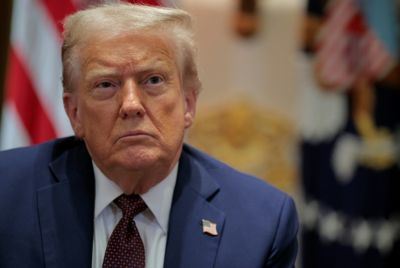
Trump's Press Ban 'Backfires' as White House Event Is Left Without Audio After TV Networks Halt Pool Coverage
ABC, CBS, Fox News, CNN and NBC suspended pool coverage after CNN was blocked, while the affected outlets sued Trump and administration officials
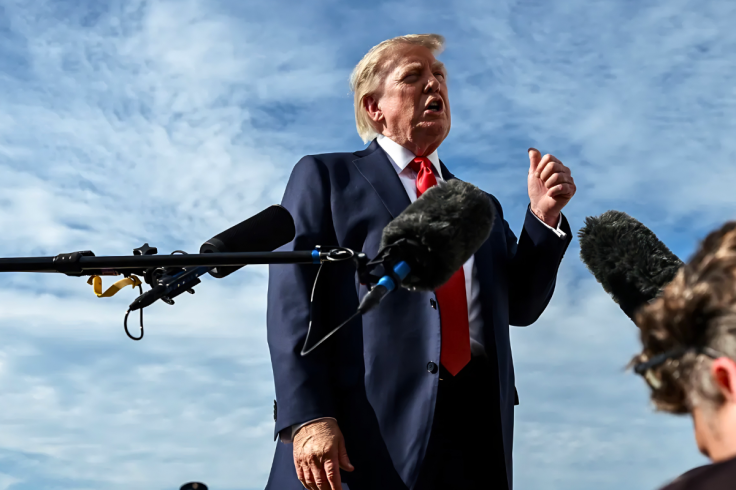
The White House's ban on three news outlets has left presidential events designated for pool coverage without the shared camera and microphone that normally carry the president's words to the world.
On 21 September 2026, the five networks that run the White House television pool suspended coverage of those events after the administration blocked CNN from its assigned duties.
The decision came three days after Trump announced that CNN, MS NOW and Politico were banned from the White House. The three outlets have since filed a joint lawsuit.
Rivals Close Ranks Behind CNN
CNN was due to serve as the primary television pool on Monday and to travel with Trump to the United Nations General Assembly in New York. Instead, the White House's Sunday night schedule named no primary television crew.
Hearst Television was listed in a secondary role in Washington, and Real America's Voice in a secondary role for New York. CNN describes Real America's Voice as a small, pro-Trump network.
The other networks declined to fill the gap. Bryan Boughton, Fox News's Washington bureau chief and acting chair of the TV pool consortium, told members there would be 'no replacement pool'. He said other pool coverage, including Congress, VIPs and selected events, would continue as normal.
ABC, CBS, CNN, Fox News and NBC then issued a rare joint statement. 'No administration should restrict a news organisation because it objects to its reporting,' they said.
NPR, a member of the radio feed that runs parallel to the TV pool, also condemned the ban. In a statement released Sunday, editor in chief Thomas Evans called it a blatant violation of the First Amendment.
What Disappears When the Feed Goes Dark
Under the pool system, the network on duty sends a small crew to film the president, usually a camera operator, a sound technician and a producer or reporter. The footage is shared with rivals, local stations and overseas broadcasters. The arrangement exists because access is restricted at many events and following the president is expensive.
CNN's Kaitlan Collins said that on Monday there would be 'no TV camera with the president' sharing footage with the wider press corps. Events designated as pool coverage therefore lack the shared audio and video feed that broadcasters normally rely on.
Print, radio and wire reporters and still photographers are expected to keep covering Trump. The Associated Press said it would still cover his UN appearances, with reporters on the ground providing live video, photos and reporting.
The five networks will not provide a replacement pool, while it was unclear how widely the secondary crews would distribute their footage.
LMFAO -- Trump is holding an event at the White House right now but there's no audio because the press pool isn't there. The Newsmax host notes that this is an example of Trump's attacks on the press "backfiring just a little bit" pic.twitter.com/dAy1dvDvFL
— Aaron Rupar (@atrupar) September 21, 2026
Lawsuit Tests the Ban in Federal Court
CNN, MS NOW and Politico sued Trump and other administration officials on Monday, alleging violations of the First Amendment and of the Fifth Amendment's due process clause.
The defendants include White House chief of staff Susan Wiles and communications chief Steven Cheung. The outlets are seeking a temporary restraining order from the federal district court in Washington, DC, and have requested an expedited hearing.
The complaint accuses Trump of retaliating against coverage he deemed 'negative'. The case has been assigned to Judge Timothy Kelly, a 2017 Trump nominee.
In 2018, Kelly ordered CNN reporter Jim Acosta's credentials temporarily restored after finding that he had not been given due process. The outlets' attorney, Theodore J. Boutrous Jr, said: 'The law is on our side across the board.'
The White House's position is that the outlets have spread falsehoods. Asked on Friday to justify the ban, Trump said 'Because they're fake news.' On Monday he posted that the White House was 'not instituting an assault on the Free Press' but rather on fake news, which he called a threat to national security.
A Widening Fight over Presidential Access
CNN won its seat in the pool by suing the Reagan administration and ABC, CBS and NBC in 1981. Trump has narrowed access before. In April 2025, the White House ended the shared wire-service slot in the pool held by the AP, Reuters and Bloomberg. The AP's lawsuit over its own exclusion is still ongoing. A D.C. Circuit panel voted 2-1 in June 2025 to block a ruling in the AP's favour, saying the administration retains discretion over admission to restricted presidential spaces, including on the basis of viewpoint.
On Friday, Trump said there was no particular reason for announcing the ban that day. He also labelled the New York Times and Washington Post fake news, saying they had not been removed but that others could join the three outlets. He has warned that further bans could follow.
The four other pool networks, including Fox News, have now joined CNN in withholding coverage, leaving presidential events without a shared television feed for now. Whether the cameras return depends on the federal court, the networks and the White House.
© Copyright IBTimes 2026. All rights reserved.
- Recommended For You