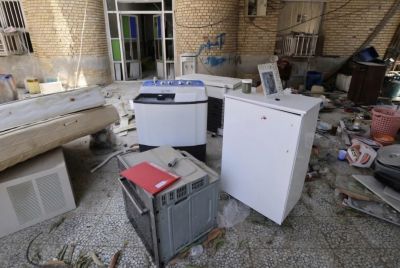
Pentagon Blames AI System for Deadly US Strike That Killed 123 Iranian Schoolchildren
An unreleased internal inquiry reportedly found that US personnel knew within hours the target was a school, while outdated intelligence and reduced civilian-harm staffing compounded the failure
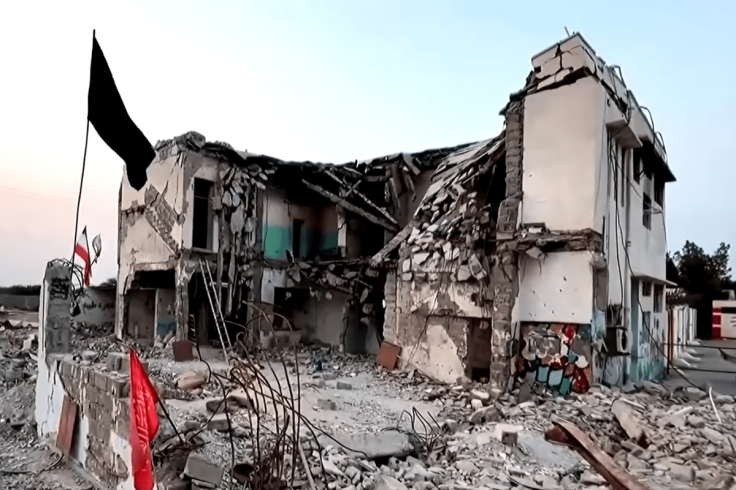
A single missile strike on an elementary school in southern Iran has forced the Pentagon to confront how deeply artificial intelligence now shapes decisions of life and death on the battlefield.
An unreleased internal Pentagon review has concluded that Pentagon personnel knew within hours that the United States was responsible for the strike on the school, describing a cascade of preventable failures that included an overreliance on an AI tool built by Palantir.
The findings, first reported by Bloomberg, arrive more than six months after the attack and amid mounting congressional pressure for accountability.
The Strike That Shocked Minab
On 28 February 2026, two Tomahawk missiles hit Shajarah Tayyebeh Elementary School in the southern Iranian town of Minab on the opening day of the Iran war.
The strike killed more than 150 people, including at least 123 children, according to Bloomberg, while a UN fact-finding mission has separately said the attack killed more than 150 people, including 120 children.
The school sat fewer than 100 yards from a long-standing Islamic Revolutionary Guard Corps naval installation and had previously been located within the IRGC compound perimeter until a wall appeared between 2013 and 2016, according to Amnesty International's analysis of satellite imagery.
The school had been active on social media and had its own website, details that later raised questions over why outdated targeting data was not corrected before the strike.
PENTAGON knew ‘WITHIN HOURS’ it had BOMBED IRAN MINAB SCHOOL — Bloomberg
— RT (@RT_com) September 19, 2026
‘FLAWED INTEL, OUTDATED IMAGERY and OVERRELIANCE on AI’ behind STRIKE
Officials relied ‘TOO MUCH’ on PALANTIR-MADE AI SYSTEM to make DECISIONS pic.twitter.com/OB2fh6JkvD
How Artificial Intelligence Became a Suspect
At the centre of the inquiry is the Maven Smart System, a targeting and intelligence platform built by Palantir Technologies under a Pentagon contract worth up to $1.3bn, designed to fuse satellite imagery, drone feeds and signals intelligence into strike recommendations at speed.
Some personnel at US Central Command, which conducted the strike, relied heavily on artificial intelligence embedded in Palantir's Maven Smart System, expecting the system to identify outdated or inconsistent intelligence, according to officials briefed on the review.
More than 1,000 Iranian targets were struck in the first 24 hours of the campaign, according to people familiar with the Pentagon's findings, a tempo that compressed the time available for additional confirmations.
Work that previously took staff hours to prepare was condensed into minutes with the help of Maven, according to people familiar with the Pentagon's findings.
The revelations prompted formal scrutiny on Capitol Hill. More than 120 House Democrats asked in a 12 March letter to the Pentagon whether artificial intelligence, including the Maven Smart System, was used to identify the school as a target, days after 46 Senate Democrats sent a similar request.
Responding to the letter, a Pentagon official said in a statement that 'the incident is under investigation'.
Human Failures Behind the Machine
Investigators found the technology was not operating in a vacuum. An intelligence analyst had flagged changes to the site as early as 2019, but the information was entered into a system that was not connected to the authoritative targeting database, meaning the warning never reached those assembling the strike package.
Staffing across a number of Pentagon civilian harm mitigation teams had also fallen by roughly 90 per cent in the years before the war began.
Palantir has pushed back on characterisations that its software was to blame. The company has said it was not responsible for the underlying data or for identifying intelligence deficiencies, noting that AI can process intelligence rapidly but cannot correct inaccurate information fed into the system.
That framing was echoed elsewhere: one investigation citing former officials concluded that human failures, not the machine itself, bore primary responsibility, arguing that without comparing current satellite photos to older ones, human reviewers with outdated information would have had little reason to doubt the area was a military target.
Lawmakers have rejected any suggestion the episode can be reduced to a technical glitch. Democratic Representative Sara Jacobs of California said Americans should feel 'deeply ashamed by the killing of 175 civilians, mostly little children', and called for the administration to take responsibility should US involvement be confirmed.
Accountability Still Pending
Six months on, the case remains open, and it is no longer isolated. Iranian officials and a UN body have attributed the 1 September strike on Kuhestak, roughly 20 miles south of Minab, to the US, with the attack hitting a wedding party and killing at least five people; the incident is also under investigation.
Human Rights Activists, a group tracking casualty figures viewed by some Pentagon officials as an authoritative source, has warned its estimates remain conservative. Deputy director Skylar Thompson said the group wants answers on 'how so many civilians were killed amid an unprecedented tempo of strikes'.
The Pentagon's full investigation has not yet been publicly released, and neither the Pentagon nor Palantir has said whether any individual will face disciplinary action. For the families of Minab, questions over responsibility and accountability remain unresolved.
© Copyright IBTimes 2026. All rights reserved.
- Recommended For You