

Who Is Abdul El-Sayed? The First Muslim US Senator Trump Compared to 9/11 Terrorists and Called a 'Jihadist'
The progressive Democrat makes history with his Senate victory following a campaign marked by controversy over his faith and political views
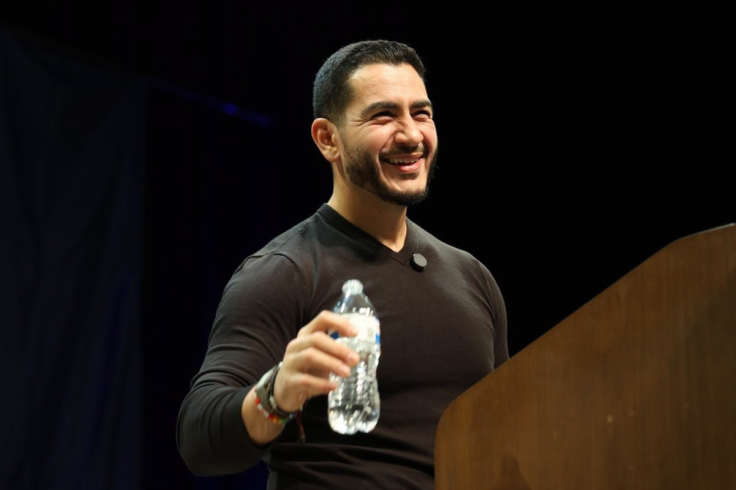
Abdul El-Sayed is set to make history as the first Muslim elected to the United States Senate after defeating Republican Mike Rogers in Michigan's 2026 midterm elections, according to media projections. However, his political breakthrough has come amid a campaign marked by controversy, particularly after President Donald Trump repeatedly labelled him a 'jihadist' and compared the effort to defeat him to America's fight against terrorists following the 11 September attacks.
The progressive Democrat, who is the son of Egyptian immigrants, entered the Senate race without having previously held elected office. His journey from public health official to one of the country's most prominent progressive politicians has attracted national attention, with his background, religious identity and criticism of Israel becoming major subjects of political debate.
According to a report from The Associated Press, El-Sayed defeated Rogers in a closely watched contest for Michigan's open Senate seat, overcoming significant outside spending and divisions within the Democratic coalition.
Who Is Abdul El-Sayed? His Background and Education
El-Sayed is the son of Egyptian immigrants and built his professional career in public health before entering electoral politics. He previously served as a public health official and became known for his progressive positions on healthcare and social policy.
According to the AP report, he had never held elected office before his Senate victory. However, his political ambitions were already visible in 2018, when he ran for Michigan governor as a Democrat.
That campaign ended in a double-digit defeat in the Democratic primary, but it helped establish his profile among progressive voters. Eight years later, he returned to the political stage and secured a victory in a much more competitive statewide contest.
The supplied AP report does not provide details of his childhood, schools attended or specific educational qualifications. It identifies his Egyptian immigrant family background and public health career but does not offer a complete account of his upbringing or academic history.
Why Did Trump Call El-Sayed a 'Jihadist'?
El-Sayed's Senate campaign became a target of repeated attacks from Trump, who used inflammatory language to question his loyalty and political beliefs.
According to a report from The Washington Post published on 25 October, Trump repeatedly called El-Sayed a 'jihadist' during a campaign rally in Port Huron, Michigan. He also accused the candidate of wanting to impose Sharia law and suggested that his access to national security information as a senator would be dangerous.
Trump further alleged that El-Sayed was associated with the Muslim Brotherhood. However, the candidate has disavowed the organisation, and the newspaper reported that no evidence had been provided to establish an affiliation.
During the rally, Trump invoked the 9/11 attacks and referenced Todd Beamer, a passenger on United Airlines Flight 93 who helped resist the hijackers. He urged Michigan voters to 'stand up and fight' to stop what he called a jihadist.
These accusations became part of a wider Republican effort to challenge El-Sayed's positions and question his loyalty. The claims about Sharia law and terrorist affiliations were not substantiated in the supplied reporting.
How El-Sayed Won Michigan's Senate Race
El-Sayed's campaign focused on progressive policies, including Medicare for All, reducing the influence of outside money in elections, and criticism of Israel.
He received support from prominent progressive figures, including Senator Bernie Sanders and Representative Alexandria Ocasio-Cortez. His campaign also faced significant opposition spending, particularly from the American Israel Public Affairs Committee, which reportedly invested nearly $30 million (£22.36 million) against him during the Democratic primary.
In his victory speech, El-Sayed criticised the attacks directed at his name and faith, arguing that these issues did not address the financial struggles facing Michigan residents.
His victory marks a significant moment for Muslim representation in American politics and gives the progressive movement a high-profile success ahead of the 2028 presidential election.
© Copyright IBTimes 2026. All rights reserved.