

How Much Did Elon Musk Spend on the Midterms? The Figures Behind the Online Mockery
Musk's reported $474 million in political contributions draws ridicule after Republican defeats in Texas, as critics question what else the money could have funded
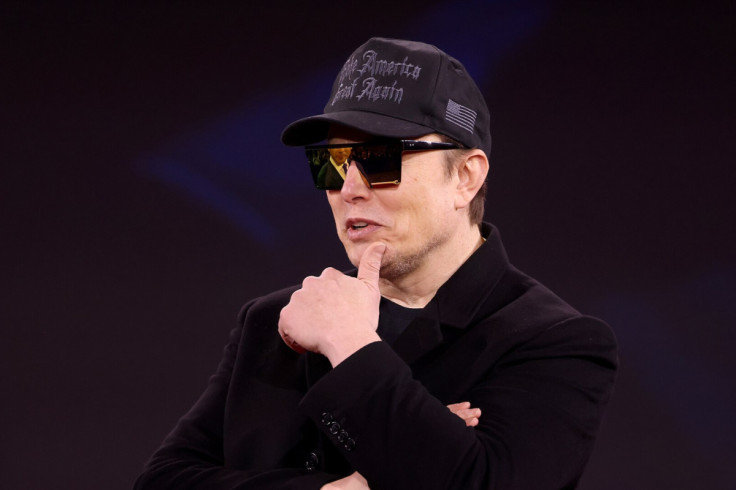
Elon Musk contributed a reported $474 million (£353 million) to political groups during the 2026 election cycle, only to see Republican defeats turn his financial backing into material for online mockery. On Threads, users questioned the scale of his donations, joked about Texas electing Democrats and suggested the money could have supported people facing hunger or homelessness.
The reaction followed the 3 November midterms, when voters chose members of Congress alongside governors and other officials. In Texas, Democrat James Talarico defeated Republican Ken Paxton for the US Senate, while Gina Hinojosa unseated Republican Governor Greg Abbott, according to Associated Press reporting.
How Much Did Musk Actually Give?
A 2 November New York Times analysis, republished by The Philadelphia Inquirer, calculated $474 million (£353 million) in disclosed donations to federal and state political groups since 1 January 2025. Its breakdown included approximately $216 million (£161 million) for America PAC, $168 million (£125 million) for the Senate Leadership Fund and $30 million (£22 million) for the Congressional Leadership Fund.
The analysis also identified roughly $44 million (£33 million) for other Republican federal groups or candidates and $16 million (£12 million) for state-focused efforts. It cautioned that the total excluded undisclosed giving and possible later contributions, with federal records covering only the period through 14 October.
IBTimes UK's earlier coverage reported $366 million (£273 million) in cycle activity, while subsequent WIRED reporting put giving above $445 million (£332 million). These figures reflect different reporting dates and scopes; they should not be added together or treated as donations directly to one candidate.
What the Earlier Breakdown Covered
The earlier totals help explain how Musk's support extended beyond one race. Reuters' 12 October breakdown, confirmed by an America PAC spokesman, listed $158 million (£118 million) for the Senate Leadership Fund, $76 million (£57 million) for America PAC and $20 million (£15 million) for the Congressional Leadership Fund.
It also identified $10 million (£7 million) each for the Paxton-supporting Lone Star Liberty PAC and the Republican Governors Association, plus $2 million (£1.5 million) for the Republican Attorneys General Association. Together, those contributions accounted for $276 million (£206 million) donated since July.
Reuters said roughly $90 million (£67 million) of the wider $366 million (£273 million) cycle total related to other political activity or work connected to the previous election. Consequently, describing the entire cycle total as money spent solely on November's congressional races would be misleading.
Why Donations and Spending Are Different
A contribution to a political committee is money received, not necessarily money already spent. WIRED reported that America PAC spent nearly $43 million (£32 million) during the first two weeks of October and still held nearly $47 million (£35 million) afterwards.
The FEC permits super PACs to accept unlimited contributions. It defines independent expenditure as spending on communications supporting or opposing candidates without coordination with their campaigns or political parties.
Why Texas Became the Focus
Musk-funded groups had backed Paxton's Senate bid, making his defeat particularly relevant to the spending debate. The Times analysis reported that almost all Musk's $168 million (£125 million) contribution to the Senate Leadership Fund effectively supported Paxton.
Hinojosa's victory also ended Republicans' long hold on the governorship, with Texas set to have its first Democratic governor since Ann Richards left office in 1995. The outcome supplied another point of irony for critics because Tesla relocated its corporate headquarters from California to Austin in December 2021.
Musk Posts About 'Space Lasers' and Envy
Data centers in space looking pretty appealing right now
— Elon Musk (@elonmusk) November 4, 2026
Musk's X posts adopted a joking tone, with one reading: 'Guess my election-interfering space lasers didn't work this time'. Another stated: 'Data centers in space looking pretty appealing right now', although the posts do not establish any actual electoral interference.
Guess my election-interfering space lasers didn’t work this time 🤷♂️
— Elon Musk (@elonmusk) November 4, 2026
A separate X post showed Musk replying 'True' to Naval Ravikant's statement: 'Greed can be satisfied. Envy, cannot.' The image does not establish that Musk was referring to election critics, but replies challenged the sentiment, including one asking: 'This is in reference to YOUR greed?'
— Elon Musk (@elonmusk) November 4, 2026
The posts illustrate how the argument expanded beyond election results to competing views of wealth and political influence. The financial distinction remains essential: donations to political groups, those groups' expenditure and the results of individual races are separate measures.
'Imagine What a Philanthropic Billionaire Could Have Spent'
'Imagine what a philanthropic billionaire could have spent $446 million on,' wrote Threads user @cristinbishara. Another account, @theusasingers, argued Musk could have spent the money 'feeding the hungry or housing the homeless', framing the donations as a question of social priorities.
Other users focused on the electoral outcome, with @pstomlinson writing: 'Elon Musk spent half a billion dollars, more than any other human being in history, to lose.' Those are the commenter's words: the $474 million (£353 million) report is below an exact half-billion, and defeats in prominent races do not establish that every supported candidate lost.
Other Threads posts offered similar ridicule, including @thechudreports' claim that Musk 'spent $500 million to lose'. Meanwhile, @clinttomerlin wrote: 'Roses are red, Texas is blue / Abbott is gone, Elon is screwed', and @datakiss99 joked about Tesla's headquarters move preceding Texas's Democratic breakthroughs.
© Copyright IBTimes 2026. All rights reserved.