

AI.com Super Bowl Ad Triggers Traffic Surge, Website Crashes
The AI agent platform's servers buckled under demand during its national television debut, with CEO Kris Marszalek admitting the infrastructure was not ready for the surge.

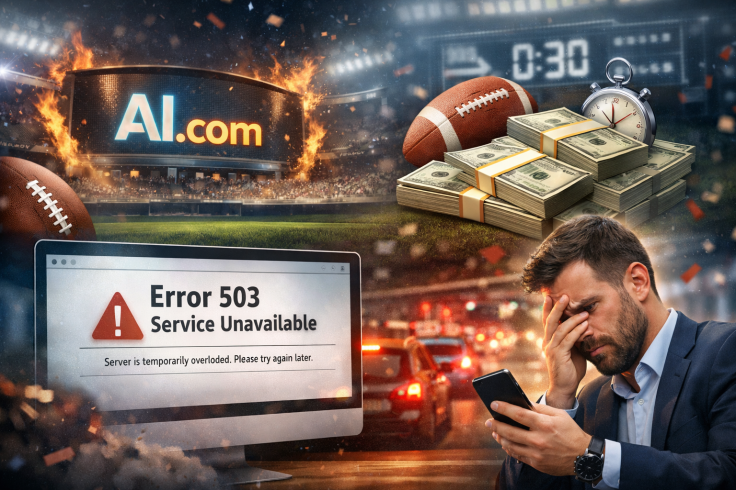
There is something almost painful about watching a company spend a fortune introducing itself to the country and then falling flat on its face in front of everyone.
That is what happened to AI.com on the night of 8 February 2026. A slick 30-second advert ran during the fourth quarter of Super Bowl LX, inviting viewers to visit the site and claim a personal handle on a new AI agent platform. The ad looked good. The product sounded ambitious. And then the website collapsed under the weight of people who did what the ad told them to do.
Kris Marszalek, who runs AI.com and co-founded Crypto.com, went on X shortly afterwards and said the platform had seen 'insane traffic levels'. His team had planned for a big evening. The evening was bigger.
Most people who tried to visit the site in those first few minutes received an error page. Some tried again later. Plenty did not bother.
What AI.com Was Trying To Pull Off
The platform wants to be the place where ordinary people, not developers, not engineers, deploy AI agents that do things for them. Send messages. Organise calendars. Move information between apps without anyone having to click through screens.
That is a big promise. On the one night the company had the entire nation's attention, it delivered a website that wouldn't load. Difficult to sell the future of automation when your own infrastructure cannot handle a traffic spike you created yourself.
Marszalek paid roughly $70m in cryptocurrency for the AI.com domain. That figure, widely reported at the time, made it the largest publicly known domain sale ever. He wanted the name that would own the category. The kind of address people remember without being told twice.
A Super Bowl ad slot in 2026 ran around $8m for 30 seconds, according to industry estimates. AI.com has not confirmed what it paid. But between the domain and the ad buy, the company staked an enormous amount on one evening of exposure.
The exposure came. The website did not cooperate.
The Internet Was Ruthless About It
Social media piled on within minutes. Screenshots of the error page spread fast. The jokes were not gentle.
One post was titled 'How to burn $10m.' Another labelled the crash 'top tier comedy.' A thread on X suggested nobody had bothered to warn the DevOps team that the ad was about to air. Whether or not that was true, the image stuck.
What made the ridicule worse was the product itself. AI.com sells intelligent automation. Agents that think ahead and handle complexity on your behalf. And on the company's biggest night, its servers could not handle a predictable wave of web traffic. People noticed the contradiction. They were not kind about it.
Marszalek responded publicly and kept his tone steady. He said the outage was temporary, that preparations had been made, and that demand outpaced what the systems were built for. He did not share specific numbers on how many visitors tried to access the site or how long it stayed down.
Fair enough. But the damage was already scrolling across every timeline in the country.
Coming Back Online Did Not End The Story
The site was restored later that evening. People could get through. Sign-ups started moving.
But here is the problem with a Super Bowl debut. You get one shot at a first impression with that audience. Tens of millions of people saw the ad. A fraction of them tried to visit. And the ones who tried earliest, the ones most curious and most likely to convert, got a broken page.
Some of the coverage that followed focused on the platform's ambitions. A good portion focused on the crash. When journalists have to choose between 'promising AI startup launches' and 'AI startup crashes on live television', the crash wins every time. That is how news works.
The consumer AI space is brutal right now. OpenAI and Google are spending billions. Startups are everywhere. Standing out requires more than a good domain name and a flashy advert. AI.com now has name recognition. The question is whether people remember the product or the punchline.
No date has been given for the full public launch. Marszalek and his team have time to rebuild the narrative. Not much, though. Attention moves fast, and the next company with a big launch and a working website is never far behind.
© Copyright IBTimes 2026. All rights reserved.