

An Alien World 7.5 Light-Years Away Has Water Clouds That 'Are Becoming Thicker and Thicker'
Water clouds on WISE 0855 appear to vary in thickness, with James Webb observations revealing new clues about weather 7.5 light-years away
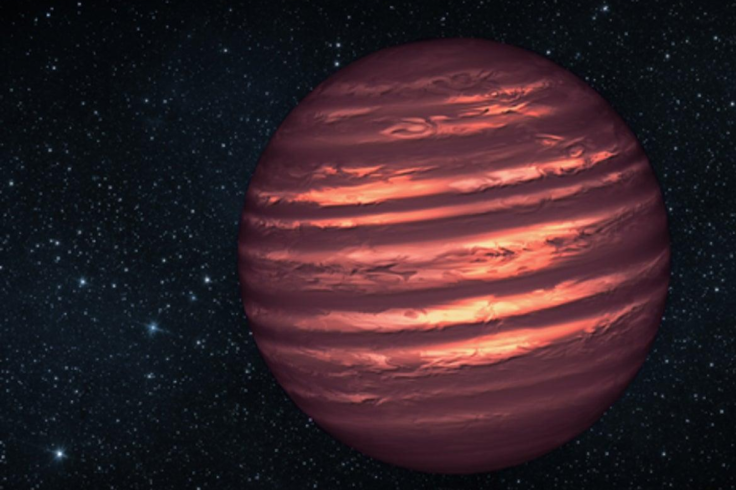
Astronomers have found evidence that water clouds on WISE 0855, an alien world roughly 7.5 light-years from Earth, vary in thickness.
The University of Arizona announced the findings on 8 October, following observations with the James Webb Space Telescope.
Previous research had already pointed to water clouds in its atmosphere. The challenge was separating their effects from changes in temperature and chemistry. The new observations give scientists a more detailed picture of what may be happening.
WISE 0855 is classified as a brown dwarf, sharing characteristics with stars and giant planets. It has no known host star and emits faint heat. At an estimated 265 Kelvin (about minus 8C), it is the coldest known brown dwarf.
James Webb Telescope Tracks Water Clouds on WISE 0855
Brittany Miles, an assistant professor and assistant astronomer at the University of Arizona's Steward Observatory, led the observations. Her team used Webb's Near-Infrared Spectrograph to collect a spectrum every 15 minutes across an 11-hour session.
A spectrum separates light into wavelengths that carry clues about atmospheric substances. By comparing the readings over time, astronomers could examine changes that ordinary brightness measurements tended to blur together.
The team's research paper presents evidence of patchy water clouds, based on comparisons between Webb's measurements and atmospheric models. Thicker and thinner regions appear to influence how infrared light escapes into space.
'This is the first time we've been able to confirm that water clouds are becoming thinner and thicker on a nearby world,' Miles said in the university's announcement.
Webb did not take photographs showing individual clouds expanding or shrinking. Instead, researchers interpreted shifts in the light spectrum as WISE 0855 rotated, bringing different atmospheric regions into view.
That distinction changes how to read the discovery. The evidence points to variable cloud cover across a rotating world, not an uninterrupted thickening of its atmosphere.
Carbon Monoxide and Phosphine Reveal a Different Signal
The clouds were not the only finding. Webb also recorded changes in spectral features associated with carbon monoxide and phosphine, gases that can reveal activity deeper in WISE 0855's atmosphere.
Carbon monoxide produced the strongest changing feature in the measurements. According to the paper, its absorption varied by up to 10% between maximum and minimum readings at certain wavelengths.
The researchers found that carbon monoxide and phosphine changed in related patterns. Their analysis links those variations to atmospheric mixing at depths different from the cloud layer.
Convection offers one explanation for that chemistry. Rising material can carry gases from hotter layers into cooler regions, leaving molecular signatures that would otherwise be unexpected there. Scientists call these effects disequilibrium chemistry.
Mark Marley, director of the University of Arizona's Lunar and Planetary Laboratory and a co-author of the study, compared the atmosphere to a screen door. Light escapes through it, but the intervening gases and clouds filter what the telescope detects.
That means astronomers must understand the atmospheric filter before drawing conclusions about conditions further below. Changing chemical signatures and cloud patterns cannot be treated as a single phenomenon.
Why WISE 0855 Matters to Alien World Research
The latest work extends a discovery made a decade earlier. In 2016, NASA described strong evidence of water clouds on WISE 0855, based on observations with the Gemini North telescope in Hawaii.
The advance now is the ability to track how separate features change during one observing session. That could help researchers distinguish clouds from chemistry in distant gas-giant exoplanets, where atmospheric information is even harder to obtain.
One reader asked in an online r/space discussion whether water clouds could point to life. The study makes no claim about living organisms or habitability. Clouds alone are not evidence of either.
Miles said brown dwarfs can exhibit planet-like behaviour, despite their different classification. She also credited years of work by Marley and fellow researchers for improving the atmospheric models used to interpret Webb's data.
Further observations could help the team constrain WISE 0855's rotation and investigate its atmospheric circulation in more detail. For now, its changing infrared light offers an unusually close look at weather-like processes beyond the Solar System.
© Copyright IBTimes 2026. All rights reserved.