Apple Accused of Editing iPhone Duo Ad To Make Its 7.6-Inch Foldable Look Easier To Hold
A viral image has fuelled debate over the foldable phone's one-handed usability, but Apple has not addressed the allegation and no forensic evidence has emerged
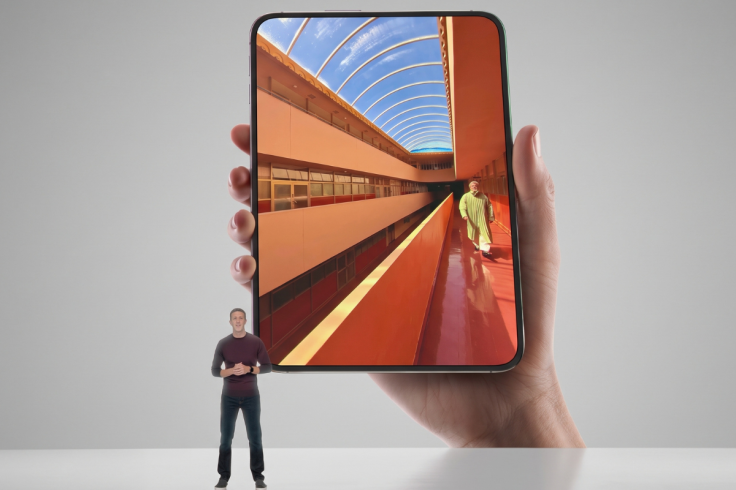
Apple's newest iPhone has barely left the stage, and one of its marketing images is already facing intense online scrutiny. Within hours of the iPhone Duo's unveiling, a side-by-side comparison circulating on X accused Apple of digitally stretching a model's fingers to make its 7.6-inch foldable display look more manageable in one hand.
The image, which removes the phone from Apple's promotional shot to leave what appears to be an unusually elongated hand behind, has been shared and amplified by thousands of users, including the prediction-markets account Polymarket. Apple has not addressed the specific allegation, and no conclusive proof of manipulation has yet surfaced.
A Viral Image Sparks An Ergonomics Debate
The controversy began on 9 September 2026, the day Apple unveiled the iPhone Duo alongside the iPhone 18 Pro and Pro Maxat its 'Surprise and Shine' keynote. Digital artist Christopher Fryant, posting on X as @cfryant, shared an edited version of Apple's hero shot with the phone itself removed, leaving only the hand that had been holding it.
The remaining hand, with its fingers extended and palm relaxed, struck many viewers as unusually elongated. Fryant captioned the post simply, 'Yeah I don't know if I buy this, Apple.'
The clip was subsequently amplified by the account @AutismCapital before Polymarket flagged it as breaking technology news. Polymarket's own post read: 'JUST IN: Internet accuses Apple of photoshopping "freakishly long" fingers into its iPhone Duo marketing, to make the massive foldable look easier to hold one-handed.'
The claim resonated because it touches a genuine design tension. The Duo's inner display is Apple's largest ever, and Apple describes the device as comfortable to use one-handed when closed, which makes the ergonomics shown in its hero image commercially meaningful rather than decorative.
Yeah I don't know if I buy this, Apple. https://t.co/F1y9tPbg6V pic.twitter.com/ScUSXiA4Ya
— Christopher Fryant (@cfryant) September 9, 2026
The Evidence, and Its Limits
Despite the volume of online commentary, no outlet has published conclusive proof that Apple altered the image. Reporting on the episode has stressed that there is currently no concrete evidence Apple deliberately elongated the fingers in the promotional photograph.
Product photography rarely involves a single click of a shutter. Lighting, lens choice, camera angle and hand positioning can all make fingers and palms appear longer or larger than they would in person, and a folding device the size of the Duo makes those distortions more likely to stand out.
Apple has not issued any public statement responding specifically to the Photoshop allegation. The company did, however, publish an official press release for the iPhone Duo on 9 September, alongside its product and technical-specification pages.
That silence on the specific allegation has done little to slow the online discussion, which has increasingly treated the image as a point of scrutiny rather than as evidence of established manipulation.
The iPhone Duo itself starts at £1,999 ($1,999) for the 256GB model, rising to £3,199 ($3,199) for 2TB of storage, with pre-orders opening on 16 October 2026 and availability beginning on 23 October 2026 in more than 70 countries and regions.
A Precedent From Seoul
The accusation lands against a backdrop that cuts both ways for Apple. In September 2025, the company quietly removed a 'pinching fingers' gesture from South Korean advertisements for the iPhone Air, after the gesture became entangled in a long-running online dispute in the country.
While Apple's global adverts for the Air showed the phone held delicately between two fingers to highlight its slim profile, the Korean version of the campaign omitted the gesture entirely, according to reporting from PetaPixel and the Korea Herald.
The pinching motion, known locally as 'jibgeson', had become associated in some online communities with mockery of male anatomy, and companies including Nexon and Posco had previously withdrawn similar imagery after backlash.
That episode shows Apple has previously adjusted hand imagery in response to a market-specific controversy, but it is not evidence of a broader pattern of misrepresenting how its products feel to hold.
Editing an image to avoid a culturally loaded gesture is materially different from the manipulation Apple is accused of, and reporters have been careful to draw that distinction rather than treat the Seoul precedent as proof of intent.
Until independent reviewers can test the device by hand from 23 October, the finger controversy is likely to remain a matter of perception rather than proof. It is a reminder that scrutiny of a launch photograph can spread faster than any response from the company that took it.
© Copyright IBTimes 2026. All rights reserved.
- Recommended For You