Exoplanet Update 2026: Why 45 Worlds From 6,000 Candidates Are 'Best Bets' For Life
The catalogue is already shaping plans for James Webb and future telescopes that will probe these distant atmospheres for signs of habitability.
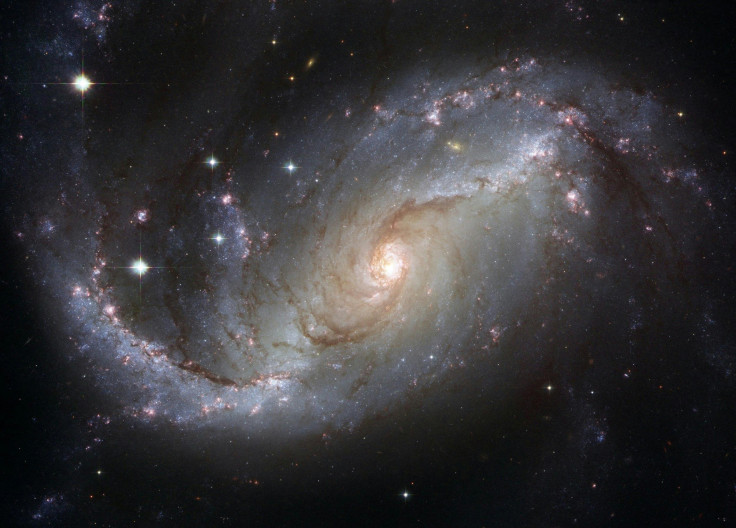
Astronomers have released a major exoplanet update in 2026, singling out 45 rocky worlds across the galaxy as the 'best bets' for life from a pool of more than 6,000 known candidates, in work led from Cornell University and published in Monthly Notices of the Royal Astronomical Society.
The paper, titled Probing the Limits of Habitability: a Catalogue of Rocky Exoplanets in the Habitable Zone, was published on 19 March. Its authors are Abigail Bohl, an undergraduate at Cornell, alumni Lucas Lawrence and Gillis Lowry, and Professor Lisa Kaltenegger, who directs the Carl Sagan Institute in Cornell's College of Arts and Sciences.
The team used updated measurements from the European Space Agency's Gaia mission, combined with the NASA Exoplanet Archive, to refine what we know about thousands of planets and their host stars.
At the heart of the exoplanet update is a simple idea, use our own Solar System as a benchmark. Bohl put it plainly in comments quoted in the original report. 'We can use our solar system as a reference to search for exoplanets that receive stellar energy between what Venus and Mars get,' she said.
How The Exoplanet Update Narrowed 6,000 Worlds To 45
Telescopes measure tiny dips in a star's brightness as a planet passes in front of it, or slight wobbles in the star's motion. From these faint signatures, astronomers infer a world's size, likely composition and orbit. The new catalogue runs those inferred properties through a tighter filter.
The researchers first focused on planets that are likely to be rocky rather than gaseous, on the basis of their estimated sizes and masses. They then looked at how much energy each world receives from its star, picking out those that fall in the range where climate models suggest surface water could exist.

The result is 45 rocky exoplanets in the classic habitable zone, plus a further 24 in what the authors describe as a narrower, more conservative zone that assumes a lower tolerance for stellar heating.
The study stresses that being in the habitable zone is not the same thing as being habitable. The authors argue that a planet would also need an atmosphere, a relatively stable climate and suitable chemistry to stay liveable over long periods.
Still, as Lowry, now a master's student at San Francisco State University, put it, 'While it's hard to say what makes something more likely to have life, identifying where to look is the first key step – so the goal of our project was to say "here are the best targets for observation".'
Lawrence, now pursuing a master's degree at the University of Padua in Italy, said the effort was as much about building a tool for the wider community as it was about their own analysis. 'We wanted to create something that will enable other scientists to search effectively,' he said. 'And we kept discovering new things about these worlds we wanted to investigate further.'
Among the 45 is Proxima Centauri b, orbiting the closest star to the Sun. Even that "nearby" world is staggeringly remote. It lies more than 24 trillion miles from Earth. Travelling at the speed of Voyager 1, the fastest spacecraft to leave the Solar System, the journey would take about 75,000 years.
What Makes These 45 Worlds The 'Best Bets' For Life
Astronomers have already found thousands of exoplanets, many in their stars' habitable zones, but most are poor candidates for life. Some are battered by intense stellar flares. Others may have run‑away greenhouse climates, or no meaningful atmosphere at all.
The new list is an attempt to strip away the least promising cases and highlight where upcoming telescopes should spend their limited time.
All of the highlighted planets sit in the habitable zone of their stars, an orbital band sometimes called the Goldilocks zone – not so hot that surface water boils away, not so cold that it remains permanently frozen.

The team also pays particular attention to planets that receive almost exactly the same stellar radiation as Earth. Lowry said she has already begun using the list to study ten such worlds, identifying two that are close enough for detailed scrutiny: TRAPPIST‑1 e and TOI‑715 b.
The TRAPPIST‑1 system is already a major target for the James Webb Space Telescope, in an observing campaign led by Nikole Lewis, an associate professor of astronomy at Cornell. Both TRAPPIST‑1 and TOI‑715 b orbit small red dwarf stars, which makes it easier for telescopes to pick out the signatures of Earth‑sized planets against the glare of their suns.
Lowry noted that observing these worlds is the only way to confirm whether they have atmospheres and liquid water, and therefore to start pinning down the real limits of the habitable zone.
Kaltenegger, who has long argued that defining where habitability begins and ends is central to the search for life in the cosmos, said these planets will help astronomers test where that boundary truly lies, rather than relying purely on theory.
From Exoplanet Update To Next‑Generation Telescopes
The timing of this exoplanet update reflects a broader shift in observational capabilities. The list is explicitly designed to guide astronomers using the James Webb Space Telescope and a suite of next‑generation observatories due to come online over the next two decades.
The Nancy Grace Roman Space Telescope is scheduled to launch in 2027. The Extremely Large Telescope in Chile aims to see "first light" in 2029. NASA's Habitable Worlds Observatory, intended specifically to capture images of potentially habitable exoplanets, is planned for the 2040s. There is also the proposed Large Interferometer for Exoplanets project.
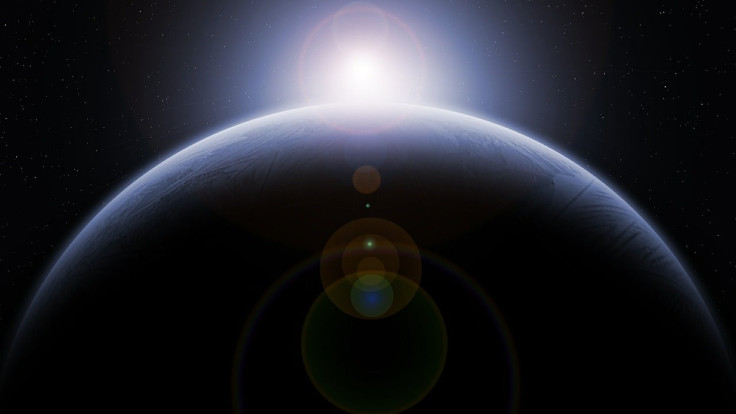
The Cornell team has identified which of their 45 worlds are best suited to which observing techniques, effectively offering a roadmap for how to use these expensive facilities most efficiently.
Bohl said the work was drawing interest even before formal publication, noting that the online preprint had already been cited five times by other researchers. 'It's definitely exciting that people are already seeing it and citing it,' she said. Kaltenegger added that another research group had in fact begun observations several months earlier to characterise the host stars of the planets her students identified.
© Copyright IBTimes 2026. All rights reserved.
- MOST POPULAR IN Science