

Avi Loeb Sounds Alarm: 3I/ATLAS Shows 'Mind-Blowing' Anomalies Scientists Can't Explain
Harvard Astronomer Avi Loeb highlights mysterious space anomalies in 3I/ATLAS observations

Astrophysicist Avi Loeb has sparked a new debate within the scientific community by asserting that the interstellar object 3I/ATLAS exhibits several 'anomalous' behaviours that cannot be readily attributed to a natural comet.
The only third object to have visited the Solar System beyond it has perplexed the observers with features that, according to Loeb, are mind-boggling in their defiance of conventional comet physics.
Unusual Trajectory and Jet Structures Raise Questions
A peculiar characteristic of 3I/ATLAS is its unusual retrograde path. Although comets may have different orbital paths, Loeb has noted that the retrograde orbit of the ATLAS lies within five degrees of the ecliptic plane — the flattened area in which the planets orbit — a coincidence he calculated would be expected only 0.2 per cent of the time.
Another interesting finding was the comet's jet structures. Typical cometary jets — dust and gas streams driven off from the nucleus by solar heat — are known to take specific patterns driven by solar radiation. Nevertheless, 3I/ATLAS shows a cluster of numerous jets with 'anti-tails' that face the Sun, the opposite direction of usual cometary behaviour, with the tails being pushed by the solar wind.
These jets, as well as the persistence of an anti-tail, have been proposed by Loeb to challenge simple models of sublimation and to demand further research. In a popular article, he conjectured that these structures may indicate either anomalous natural phenomena or, at least, behaviour that cannot be fully accounted for by current models.
Brightness and Chemical Composition
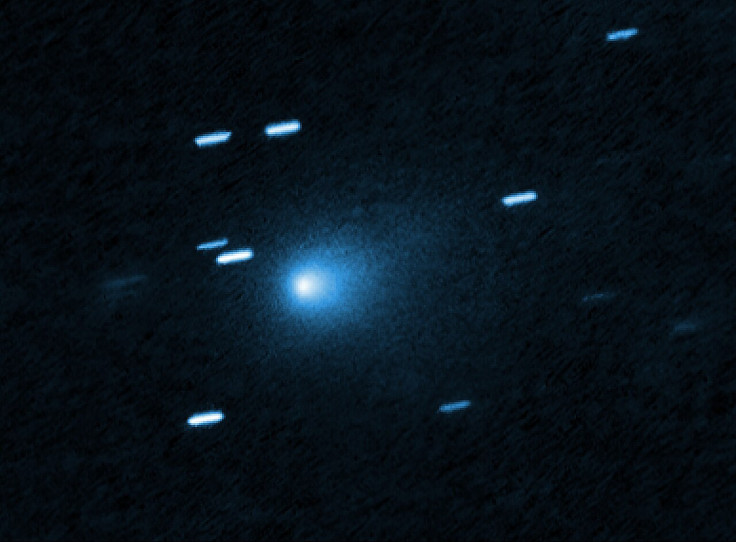
Spectroscopic observations have contributed to the riddle. Initial data from the James Webb Space Telescope indicate that 3I/ATLAS contains an enhanced amount of carbon dioxide and other volatile species in its coma, more substantial than in many Solar System comets.
There are also odd brightness variations in the object as it approaches perihelion (its nearest approach to the Sun), which Loeb and others have noted. It was observed that ATLAS became brighter in a manner not predicted by some scientists, and even appeared bluer than the Sun in some photometric bands, a phenomenon not typically seen in small-body comets composed of ice and dust.
Debate: Natural or Something Else?
Despite Loeb's arguments, the larger astronomical community has remained cautious. Most researchers have held that 3I/ATLAS and other interstellar comets can best be viewed as natural objects composed of volatile ices and dust, though possibly with unusual proportions or behaviour. The complex anti-tail, an example of which was given, may also be formed by the usual physical processes as opposed to suggesting an extraordinary origin.
However, Loeb has advocated increased transparency in factual investigation rather than quick, non-substantive conclusions. Through his works, he stresses that society must be ready to change models in the presence of healthy anomalies. It depends on data, logic, and experimentation by those prepared to be proved wrong, he wrote.
This position reflects Loeb's broader scientific philosophy: that anomalies in astrophysical observations ought to be sought rather than dismissed. He has already debated on the subject of other interstellar visitors before the public, and he has been calling on the unexpected data to open new phenomena in the universe.
Scientific Significance and the Approach to Earth
It is not projected that 3I/ATLAS will come dangerously close to Earth; Europe will reach a minimum distance of approximately 1.2 astronomical units (AU), well-above the orbit of Mars, on 19 December 2025.
With that said, its flyby provides scientists worldwide with a unique opportunity to gather data on an object formed outside the Solar System. Due to the paucity of interstellar objects, each new object yields a new laboratory on which to compare physics, chemistry and dynamics with known Solar System comets.
The discovery of additional information on the composition, activity, and structure of 3I/ATLAS should be considered in the future, with observations made by facilities such as the Hubble Space Telescope and by European instruments, including ESA's Juice spacecraft. It is hoped that further observations, particularly spectroscopy and high-resolution imaging, will determine whether its anomalies can be explained in this way or require new physics.
The question of whether 3I/ATLAS will eventually reconsider the physics of comets or whether it can be included in an extended paradigm of the natural behaviour of the universe, the exploration of 3I/ATLAS reminds us of how each new visitor to our planet tests human understanding of our universe.
© Copyright IBTimes 2026. All rights reserved.