'Baby Nostradamus' Claims Earth Is Not Real, Issues Tsunami Warning From Car Seat
The viral clip shows a young boy making apocalyptic claims about a massive tsunami and suggesting life is 'just a simulation,' triggering online debate and concern.
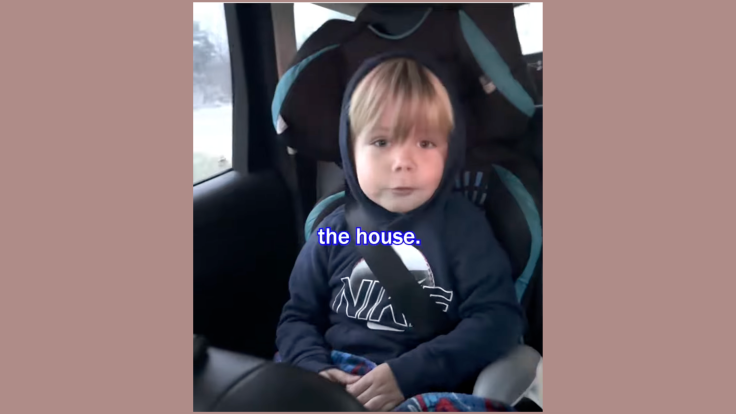
A video circulating widely on social media shows a young boy, dubbed 'Baby Nostradamus', delivering a dire warning: a colossal tsunami—an '800‑metre' wave—is about to strike.
Simultaneously, the child questions whether Earth itself is real, suggesting life might be 'just a computer, like a simulation.'
In the recording, the boy firmly declares: 'There's gonna be a tsunami and a flood, but they call it the flood 2.0.'
He estimates the wave to be '800' metres tall, though he admits he does not fully understand what that means, saying only that it would be 'bigger than the house' and 'almost bigger than the planet.'
He goes on to describe apocalyptic images he believes will accompany the disaster — including 'great sharks' surfacing when the flood arrives.
When asked about the source of his information, he reportedly said 'Guy,' implying someone else had told him about the impending catastrophe.
The shift from natural‑disaster warning to existential doubt is jarring. The boy wonders aloud if Earth is not real. He suggests that some scientists 'didn't find out,' prompting him to believe life might be 'a computer... like a simulation.'
He appears visibly distressed in the video—at one point asking whether people are 'just gonna die today when the flood happens.' An adult reassures him, saying 'not today.'
Social Media Reacts: Shock, Curiosity, Concern
Once posted online, the video quickly gained traction. Social media users responded with a mix of shock, disbelief and concern.
Some speculated the boy may have absorbed conspiracy theory content from the internet. One comment read: 'He's already watching conspiracies on his tablet.'
Another remark stood out: 'Fact he's using metric is interesting,' pointing out the unusual use of '800 metres' by a child.
The contrast between the child's calm, matter‑of‑fact tone and the dramatic nature of his 'prophecy' has fuelled the nickname 'Baby Nostradamus.'
Many viewers expressed concern about what might have influenced the boy's imagination. Some suggested that he may have encountered speculative or apocalyptic content online—raising broader questions about how children absorb and rearticulate fear-laden narratives seen on social media.
Could Tsunami Warning Be Credible? Experts Say No
While dramatic claims like 'an 800‑metre tsunami' can grab attention, scientific and disaster‑management experts have repeatedly warned that such predictions — especially from non‑scientific sources—are highly unreliable. In similar contexts, videos showing huge waves are often later flagged as fake or AI‑generated.
In fact, experts stress that accurate tsunami forecasting requires real-time seismic and oceanographic data—not hearsay from posts or videos.
Given the lack of any credible institution backing the boy's claims, the 'Flood 2.0' scenario remains in the realm of speculation and Internet-driven fear.
What This Says About Children, Media and Misinformation
Beyond the sensational headlines, the 'Baby Nostradamus' clip raises deeper concerns about how children interact with—and absorb—content in a media-saturated environment.
A dramatic idea heard or seen online, when repeated by a child with sincerity and fear, can gain viral traction and stir widespread anxiety.
Psychologists and educators warn that children with limited understanding of scale—such as what '800 metres' really means—may internalise dramatic or catastrophic narratives without grasping the underlying improbability.
The video highlights the importance of media literacy—and responsible content sharing—especially when young minds may be exposed to sensational or conspiratorial material. What may start as a child's imaginative fear could spiral into a widely circulated, emotionally charged viral moment.
Even if 'Baby Nostradamus' did not intend to spread panic, the clip has already sparked discussion about internet content, childhood impressionability and the power of viral storytelling.
The sad truth is that children often mimic what they don't fully understand—making it all the more important for guardians and platforms to guard what ends up in their feeds.
© Copyright IBTimes 2026. All rights reserved.
- MOST POPULAR IN Trending