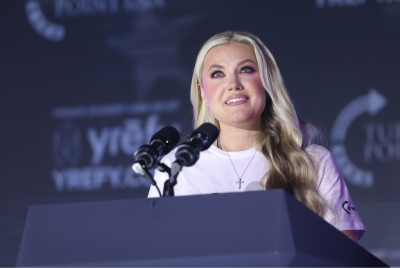
Candace Owens Accuses TPUSA of Manufacturing Erika Kirk's 'Staged' WHCD Shooting Breakdown to Go Viral
Owens suggests political operatives orchestrated viral footage of Erika Kirk's emotional exit.
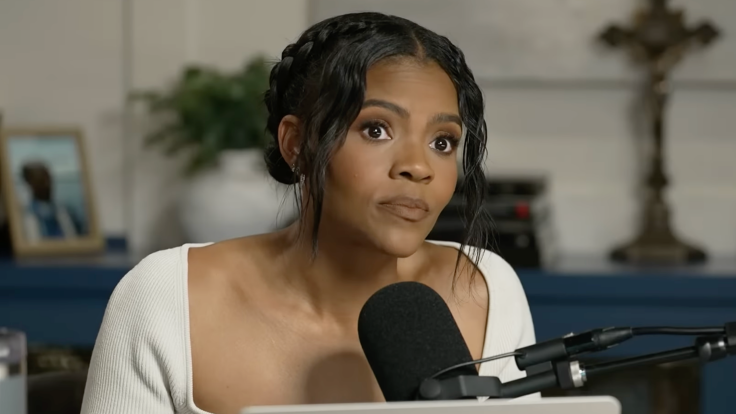
Candace Owens has accused Turning Point USA of helping to manufacture a viral, allegedly 'staged' video of Erika Kirk leaving the White House Correspondents' Dinner in Washington, DC, on Thursday 25 April, saying on her show that a political operative filmed the moment so it would spread online. Owens has not provided documents, messages or on‑record witnesses to support the allegation, and no official investigation has described the clip as orchestrated, so nothing is confirmed yet and everything should be taken with a grain of salt.
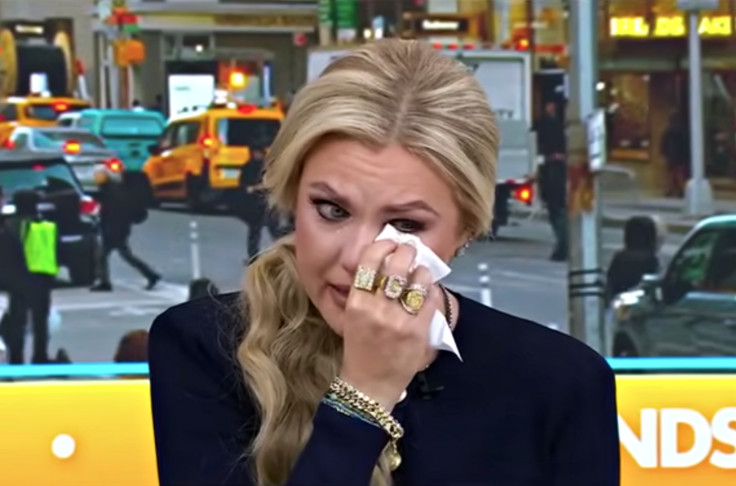
For context, the footage shows Erika Kirk, 37, crying as she is escorted away from the high‑profile event after shots were fired. CNN journalist Sara Sidner posted the short video on Instagram, where Kirk can be heard saying that she wants to go home while being guided from the venue by security or staff. The recording does not reveal who is holding the camera or when the filming began in relation to the gunfire. Sidner did not identify the original recorder in her caption, and has not issued a public statement clarifying who actually shot the clip.
Owens Details Staged Video Claim
The news came after Owens used the Thursday 7 May episode of her show to outline what she said she had been told about how the Erika Kirk video was made. She told viewers that an unnamed 'political operative' had approached her and claimed they had been 'positioned in advance with the specific instruction to take that exact video at that exact place at that exact time.' Owens did not name the operative, specify which organisation they worked for or explain how or when the conversation took place.
Owens, 37, added that the operative 'was allegedly in communication with digital media teams and the entire moment was staged, captured and then intentionally shared amongst those digital media teams and their operatives, whereupon it was made to go viral.' She did not present emails, screenshots or other records to demonstrate that such co-ordination occurred, and no independent outlet has published corroborating material about these communications.
She then moved from relaying what the anonymous figure allegedly said to her own judgement of the situation, telling her audience that 'every instinct is [telling me] the video was staged.' She also said she 'didn't buy that Sara Sidner of CNN, who initially put the video online, recorded it.'
Owens did not provide a transcript, audio clip or direct message from Sidner to support that claim. Sidner has not publicly admitted to staging the moment or misrepresenting how the footage was obtained, and CNN has issued no statement endorsing Owens' account.
Sidner's post shows Kirk leaving the dinner in clear distress after the shooting interrupted the event. The CNN correspondent has said she was near the area when Kirk came through the exit, a detail Owens has seized on as leaving room for the possibility that Sidner received the clip from someone else and uploaded it. No independent reporting has verified that Sidner was sent the video by a third party rather than recording it herself, and there is no public evidence of a pre-arranged handover of the footage.
Staged Video Dispute Draws in Erika Kirk and TPUSA
For starters, the emotional weight of the clip is central to the argument now raging around it. Erika, described as the widow of slain right-wing activist Charlie Kirk and a mother of two, can be heard saying 'I just want to go home' as she is led away. That line has been frequently highlighted in posts sharing the video, turning what appears to be an intensely personal moment into widely circulated content. Kirk has not issued a detailed public statement about how she felt that night or about her reaction to seeing the moment replayed and debated online.
Owens has suggested that this raw display of fear and shock is exactly what would have made the footage attractive to political media staff. On her show she raised the possibility that a spokesperson for Charlie's nonprofit, Turning Point USA, could have been responsible for ensuring the scene was captured and pushed out across social channels. She pointed at the organisation's orbit and questioned whether the recording had been taken and amplified from within that network rather than by an uninvolved passer‑by. Owens did not produce internal Turning Point USA communications, planning notes or financial records to link the group directly to the filming or release of the video.
At one point, Owens mentioned a specific name, saying 'Maybe it was Andrew Kolvet' while talking about who might have been behind the camera, and added that Erika might have had 'no idea' she was being filmed. She went on to tell viewers that 'Someone did it without her knowledge or did it without her consent. Someone sold her grief. How terrible would that be?'
Her wording implies that Kirk's visible distress was turned into a kind of product by people she trusted. Kolvet has not issued a statement responding to Owens' speculation, and there is no independent confirmation that he, or any other Turning Point USA spokesperson, directed the recording of Kirk's exit. Turning Point USA has not publicly confirmed any role in planning, filming or distributing the clip.
Owens' framing is stark, yet the factual spine remains narrow. Her claim rests on a conversation with an unnamed operative whose account has not been tested, her reading of Sidner's proximity to the scene and her own sense of how political digital operations typically behave. Without additional documents or on‑record witnesses, the gap between what she alleges and what can be firmly established remains wide.
What Can Be Verified About the Allegation
For context, the chain of events that can be checked from available reporting is limited but clear. Shots were fired at the White House Correspondents' Dinner in Washington, DC, on 25 April. During the confusion, Erika Kirk was filmed leaving the venue in tears, saying she wanted to go home while escorted by others. Sara Sidner later posted that footage on Instagram, and from there it spread rapidly across social media. On 7 May, Candace Owens used her show to allege that the video had been staged and to suggest that an unnamed operative, digital media teams, Sidner and figures linked to Turning Point USA were all part of a coordinated effort to create and distribute the clip.
Beyond those points, the picture becomes far murkier. Owens maintains that she heard directly from a political operative who described a pre‑planned filming operation, but she has not supplied material that would allow that story to be independently scrutinised. Sidner has not laid out a step‑by‑step account of how the video moved from whoever held the phone to her Instagram feed. The individuals and organisations named by Owens have neither produced evidence backing up her theory nor, in the material available, gone into detail about any role they may or may not have played.
That vacuum invites strong interpretations on all sides. Supporters of Owens echo her suspicion that political actors around Turning Point USA exploited the fear of a grieving widow and turned it into a powerful clip for their own purposes. Her critics argue that she is levelling a serious charge about exploitation and deceit while leaning heavily on anonymous sourcing and intuition. In the middle of that argument sits a brief video of a shocked woman leaving a chaotic scene, and a set of contested claims about how and why those few seconds were captured and shared, claims that remain unverified and should still be treated with a grain of salt.
© Copyright IBTimes 2026. All rights reserved.
- Recommended For You