

Is Bad Bunny Gay? Singer Addresses Sexuality Rumours Following Viral Super Bowl Halftime Show
Bad Bunny addressed sexuality rumours years ago: labels don't define him.

The lights go down, the cameras swing, and suddenly a three-minute performance becomes a national Rorschach test. Bad Bunny has made a career out of refusing other people's boxes, yet the morning after his Super Bowl halftime slot, the same old question surged back into view: what, exactly, is he?
It is a weary little ritual, this scramble to turn a pop star into a label. And it says more about the audience than the artist.
Bad Bunny's flamboyance — sparkle, swagger, softness, the deliberate blurring of gender expectations — has long been treated by parts of the internet as an invitation to speculate. The Tab notes that whenever an artist strays from gender norms, sexuality rumours often follow, pointing to Shawn Mendes, Harry Styles and Billie Eilish as recent examples of the same phenomenon. Bad Bunny, they argue, has been 'unapologetically embracing femininity,' including dressing in drag for a music video and not shying away from kissing a man.
Then came the Super Bowl spotlight, magnifying everything at once. CNBC described Bad Bunny's halftime set as 'salsa- and reggaeton-filled' and reported he closed it out with his hit 'DtMF.' The Tab says the performance pushed him even further into the glare, reviving the familiar churn of sexuality questions.
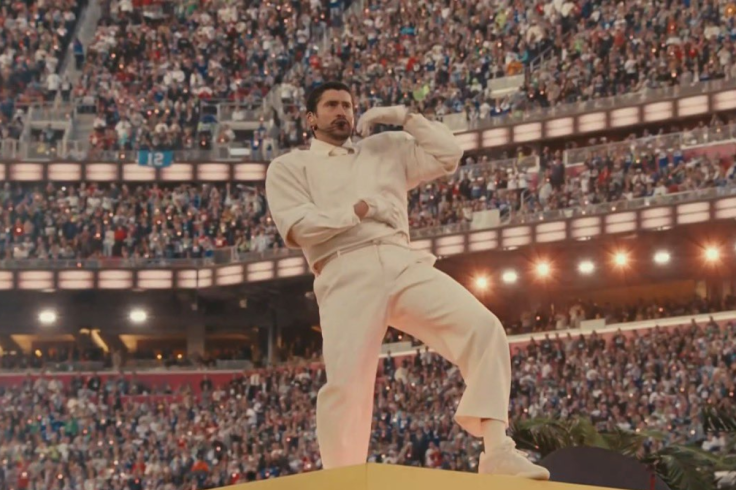
Bad Bunny and the Rumour Machine That Won't Quit
Let us get the blunt bit out of the way: clothing, stagecraft and flamboyance do not tell you someone's sexuality. That's not prudishness; it's just reality — people perform, people play, people provoke and none of it is a sworn affidavit about who they fancy.
What makes this moment striking is how quickly curiosity curdles into entitlement. Bad Bunny's whole public persona is built on freedom: the right to experiment, to flirt with masculinity and femininity, to be messy in public without being declared a symbol by strangers who've never met him.
Bad Bunny said GAY RIGHTS https://t.co/G3EyJ13hMg
— Bones (@CybrTwnk) February 9, 2026
And yet, there's always a subset of commentators who treat gender nonconformity as either a confession or a threat, depending on how much of their own insecurity they have brought to the viewing party.
Bad Bunny has also been widely framed as an LGBTQ+ ally, which, for some, appears to intensify the demand that he 'explain himself.' That demand is often dressed up as fandom, but it can slide into something harsher: the insistence that ambiguity is unacceptable, that fluidity is a dodge, that a person must pick a team and stay there for everyone else's comfort.
Bad Bunny's Words on Sexuality, in Plain English
Bad Bunny has actually addressed this before, and in far more thoughtful terms than the gossip economy deserves. In a 2020 interview with the Los Angeles Times, he pushed back on the idea that sexuality should be treated as a defining headline.
'It does not define me,' he said. 'At the end of the day, I don't know if in 20 years I will like a man. One never knows in life. But at the moment I am heterosexual and I like women.'
That is not a 'coming out' staged for applause; it's a refusal to hand over the steering wheel. It also leaves very little room for anyone else to declare, with false certainty, what he is or is not.
Ricky Martin made a surprise appearance during Bad Bunny's #SuperBowl Halftime Show. pic.twitter.com/MEZKRZ72fq
— Pop Crave (@PopCrave) February 9, 2026
As for relationship history, The Tab reports that Bad Bunny has only publicly dated women, including college sweetheart Carliz De La Cruz (2011 to 2017), a five-year relationship with influencer Gabriela Berlingeri, and later a relationship with Kendall Jenner that lasted until 2024. The Tab also quotes an Entertainment Tonight source describing that Jenner and Bad Bunny 'slowly started to fizzle out' and that both 'knew going into this that it likely wouldn't be a forever type of relationship.'
If you are looking for a neat answer — one word, one box, one definitive label — Bad Bunny has already told you that you are missing the point. And perhaps that is the only honest takeaway from the post-halftime noise: sometimes the most radical thing a global star can do is decline to be simplified.
© Copyright IBTimes 2026. All rights reserved.