

British Army Halts Exercises Due to Money Shortage Despite Attack Warnings From Kremlin
British troops are being left in barracks as major tank and Apache exercises are cancelled, raising fears that a £30 million squeeze could weaken military readiness as tensions with Moscow escalate
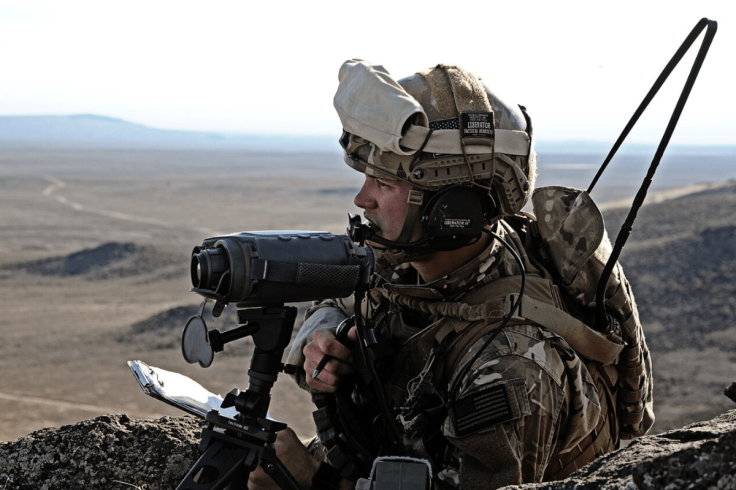
British soldiers are facing an extraordinary squeeze on military training, with major exercises halted due to a £30 million funding gap, just as London warns of a more dangerous security environment.
The order affects large-scale collective training, including exercises involving Challenger 2 tanks and Apache gunships.
A military source described the situation bluntly, saying commanders could be left with '600 blokes with nothing to do'.
The timing has made the decision particularly contentious. The UK continues to support Ukraine, while tensions with Moscow remain high and warnings have been issued over British military involvement.
Six-Week Tank Exercise Cancelled
The scale of the British Army training cuts is perhaps best illustrated by what happened in Wales. The Royal Tank Regiment was due to conduct six weeks of live-fire training there from the following week, but the exercise was reportedly cancelled at just a few days' notice. Associated reservist training was also cut.
Major war games involving 90 or more soldiers have also been suspended unless units are preparing for deployment, on standby, or assigned to a quick-reaction role.
That does not mean the entire British Army has stopped training. Foundational training, smaller-scale activity, and training directly linked to operational commitments are continuing.
But for much of the wider force, large collective exercises have been put on hold because commanders do not have enough in-year money to run them.
The army has been forced to stop a range of vital training, including live-fire tank exercises, because of a lack of money even as the government warns that the UK needs to be ready for war.
— Sky News (@SkyNews) September 4, 2026
Sky News' Security and Defence editor @haynesdeborah reports: pic.twitter.com/DqcuOsKPUN
'Absolutely Devastating' Warning
The decision has provoked unusually strong criticism from former senior military figures. Former Army chief General Sir Patrick Sanders called the move 'unbelievably short-sighted', while Justin Maciejewski, director of the National Army Museum, described it as a 'scandal'.
Another military source called the decision 'absolutely devastating', arguing that training is fundamental to an army's ability to fight.
The concern goes beyond individual cancelled exercises. If large-scale training is repeatedly missed, commanders and units lose opportunities to practise operating together under realistic conditions.
The 'Hollow Force' Risk
That is where the warning about a British Army 'hollow force' comes in. An army can have personnel, tanks, helicopters, and other sophisticated equipment on paper, but still lack the collective experience needed to use them effectively if troops have not trained together sufficiently.
The problem is especially important for complex operations involving armour, artillery, aviation, and other capabilities that have to work together.
Some missed training can also be difficult to recreate later. Exercises depend on specific personnel, equipment, locations, and schedules, meaning a cancelled exercise cannot always simply be slotted back into the calendar.
Why the Army Is Short of Cash
The immediate problem is a shortage of funds to run activities, rather than a decision that military training itself is unnecessary.
Higher fuel and ammunition costs have increased the price of exercises that may have been planned years in advance. Commanders have therefore been forced to prioritise activity considered most directly linked to readiness and deployment.
Matthew Savill, director of military sciences at the Royal United Services Institute, has highlighted the distinction between the resource spending required to operate existing capabilities and the capital spending on new equipment.
That distinction matters because money committed to future defence projects does not necessarily pay today's fuel, ammunition and exercise bills.
The £2 Billion Training Investment
There is an apparent paradox at the heart of the dispute. The Ministry of Defence announced a £2 billion, 15-year contract in July for AI-based training and analytics designed to help prepare the British Army for modern warfare.
The programme is intended to train tens of thousands of soldiers each year, using technologies such as artificial intelligence and data analytics.
Yet that long-term investment does not remove the immediate pressure on the Army's operating budget.
The Army says its training continues and that the activity contributing most directly to readiness, deployability, and operational effectiveness is being prioritised.
Reservists Also Hit
Reservists are also being affected, with some personnel facing fewer training days. That matters because reserve forces are intended to provide additional manpower and firepower during a major national crisis. Their effectiveness depends on maintaining the skills needed to operate alongside regular troops.
The cancellation of reservist activity attached to the Wales exercise therefore adds another dimension to the readiness debate.
A More Dangerous Security Environment
The controversy is ultimately about more than one cancelled exercise. Britain is trying to adapt its armed forces to lessons from the war in Ukraine, including the growing importance of drones and smaller, more mobile formations. At the same time, the UK faces continuing tensions with Russia and warnings connected to its support for Ukraine.
That leaves a difficult question at the centre of Britain's defence debate. The Army insists its most important training continues. But if major exercises are being cancelled because of a relatively small funding gap, how long can collective training be squeezed before it begins to affect British Army readiness?
For soldiers facing a rapidly changing battlefield, that is not an accounting question. It is a question of whether they get the chance to practise fighting together before they ever have to do it for real.
© Copyright IBTimes 2026. All rights reserved.