

Charlamagne Tha God Says Trump Administration Is Now an 'Authoritarian Regime' After FCC Threats
Kimmel's disputed FCC allegation fuels a wider fight over political interviews, broadcast rules and government pressure

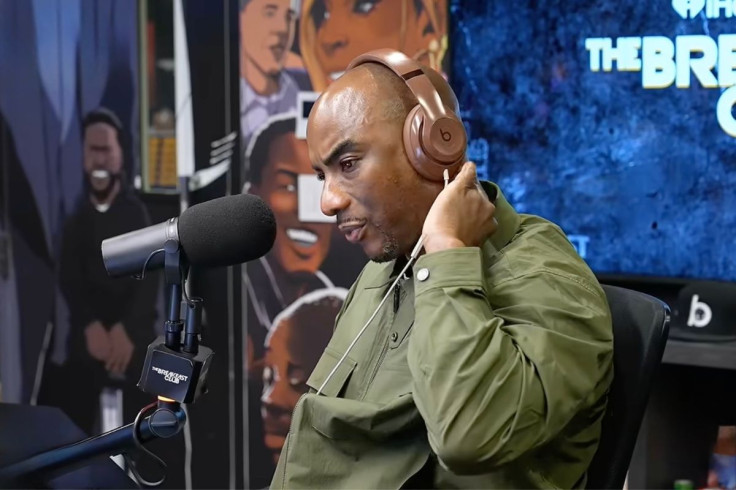
Radio host Charlamagne Tha God called President Donald Trump's administration an 'authoritarian regime' on Thursday, 10 September, after Jimmy Kimmel said Federal Communications Commission threats prompted him to keep an interview with Democratic U.S. Senate nominee James Talarico off ABC television.
Kimmel said a day earlier that the interview would instead be released on YouTube. He described the decision as an effort to protect local ABC stations, particularly affiliates in Texas, from regulatory complications. The White House disputed his account, saying FCC Chairman Brendan Carr had not threatened Kimmel over interviewing Talarico or any other candidate. The FCC did not immediately comment.
Charlamagne Tha God Criticises Kimmel-FCC Dispute
Speaking on The Breakfast Club, Charlamagne argued that the episode showed what he viewed as government interference in media decisions.
'Well, it's safe to call the Trump administration an authoritarian regime now. Like, it's absolutely official,' he said. Charlamagne went on to argue that interference with media narratives and interviews amounted, in his view, to suppression of public discussion.
His comments represented his political assessment of the administration rather than a legal finding about its status or conduct.
The dispute follows an FCC notice issued in January addressing the equal-opportunities requirement for broadcasters. Under Section 315 of the Communications Act, stations that give airtime to a legally qualified candidate can be required to provide comparable opportunities to opponents unless an exemption applies.
The FCC said broadcasters should not assume that daytime or late-night talk shows automatically qualify for the 'bona fide' news exemption. The agency said such determinations depend on the circumstances and encouraged broadcasters seeking certainty to request a formal ruling.
Kimmel said his programme had interviewed political candidates for years without difficulty and accused the FCC of applying pressure over editorial choices and guest bookings. He said the Talarico interview was moved online out of consideration for local stations, including ABC affiliates in Texas.
The episode comes amid a wider dispute between Disney, ABC and the FCC. Disney and ABC sued the regulator in August to block early licence reviews of eight company-owned ABC stations, alleging that the action was politically motivated. The FCC has said the scrutiny stems from an investigation involving Disney policies, an assertion the company disputes.
Texas Senate Race Raises Political Stakes
Talarico is the Democratic nominee for a U.S. Senate seat in Texas. He faces Republican nominee Ken Paxton, the state's attorney general, in the November general election.
Paxton defeated incumbent Republican Sen. John Cornyn in the 26 May primary runoff after Trump endorsed Paxton late in the campaign.
The contest has since become increasingly competitive. An AARP survey released on 10 September found Talarico supported by 48% of likely voters and Paxton by 44%, with 8% undecided. The survey questioned 895 likely Texas voters between 30 August and 1 September.
The regulatory dispute also drew criticism from other Democrats. Rep. Ted Lieu of California accused ABC and other networks of yielding to political pressure and urged them to resist what he described as self-censorship. He also suggested networks could invite Paxton onto late-night programmes rather than avoid candidate interviews altogether.
Talarico separately criticised the decision during an appearance with Symone Sanders-Townsend, describing the situation as 'government censorship' and 'the most dangerous form of cancel culture.'
'Government censorship should be a concern to all of us, regardless of our political party,' Talarico said.
Kimmel's allegation remains disputed. The White House has denied that Carr threatened him over the Talarico interview, while Kimmel has maintained that regulatory pressure influenced the programme's decision to keep the interview off broadcast television.
The disagreement has become part of a broader debate over how federal broadcast rules should apply to political interviews and the extent to which regulatory scrutiny can influence editorial decisions during an election campaign.
© Copyright IBTimes 2026. All rights reserved.