

Donald Trump Claims He Has the 'all-Time' Christian Vote While Promising a Unique Era for American Faith
Behind Trump's claim of historic Christian support lies a divided electorate whose political loyalties are far from uniform
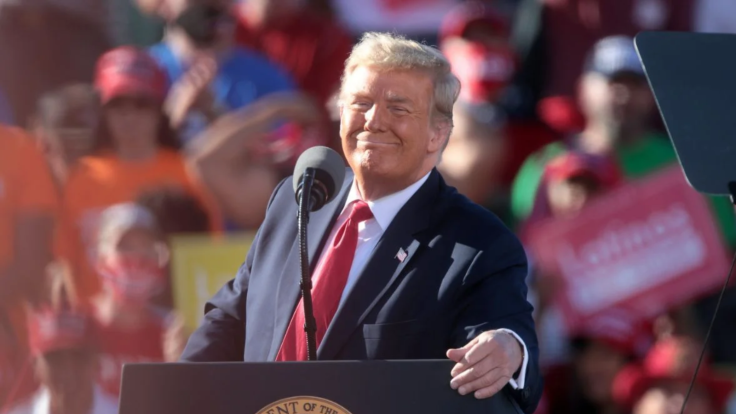
US President Donald Trump claimed an 'all-time' Christian vote at a rally in Park City, Kansas, on Monday, 19 October. Yet historical figures show Richard Nixon winning a larger share of white Christian voters, while new polling reveals deep religious divisions over Trump.
Trump was campaigning for Republican Sen. Roger Marshall ahead of the 3 November midterms. Marshall faces Democrat Adam Hamilton, a Methodist pastor, in a competitive Kansas Senate race.
'I have the all-time, in history, Christian vote,' Trump told supporters at Heartland Credit Union Arena, according to a transcript of his speech.
He claimed strong evangelical backing and recalled a Dallas pastor's prediction about his leadership.
According to Trump, the pastor overlooked his imperfect biblical knowledge and expected him to achieve something exceptional for Christianity. It was a recollection, not a new presidential promise. 'And he turned out to be right,' Trump said.
Robert Jeffress Defends Donald Trump's Christian Record
The pastor was Robert Jeffress, senior pastor of First Baptist Church in Dallas and a Trump supporter since 2016.
Jeffress told HuffPost that the president was paraphrasing remarks from a 2015 Fox News interview.
Jeffress recalled worrying about the country's direction under then-President Barack Obama. He believed Trump could reverse it and become an unusually supportive president for people of faith.
'I said, if [Trump] is elected, I believe he will be the most faith-friendly president in history,' Jeffress told HuffPost. 'Looking back 11 years later, I believe that came true.'
Jeffress argued Trump had been more accommodating to Christian believers than Obama or George W. Bush. He pointed to Trump's first-term Supreme Court nominees, Neil Gorsuch, Brett Kavanaugh and Amy Coney Barrett.
All three joined the majority in the June 2022 ruling overturning Roe v. Wade, which had recognised a constitutional right to abortion. Jeffress's judgement about Trump's wider religious record, however, remains an opinion.
Kansas itself illustrated Christianity's political diversity. Hamilton, Marshall's Democratic challenger, is a Methodist pastor who has criticised Trump's politics.
During the rally, Trump called Hamilton a 'radical left lunatic,' according to the speech transcript. The White House did not respond to HuffPost's request for comment.
Donald Trump's Christian Vote Claim Faces Historical Test
Trump's assertion has some support among white evangelicals, whose Republican voting patterns have strengthened over decades. An August analysis by the Public Religion Research Institute found that 84% of white evangelical Protestants voted for Trump in 2024, a historical high in its comparison.
The broader findings were less favourable. Trump won 69% of white Christian voters in 2024, compared with Nixon's 72% in 1972. These figures concern white Christians, not all Christian voters, and cover the elections the institute examined.
PRRI chief executive Melissa Deckman told HuffPost Trump was 'exaggerating a bit'. She also recognised his strong performance among white evangelicals compared with other recent Republican nominees. Political scientist Ryan Burge linked that strength partly to Christians' shift towards the Republican Party.
Recent findings measure something different. Pew Research Center surveyed 5,062 US adults from 28 September to 4 October, asking about presidential job approval rather than past election choices.
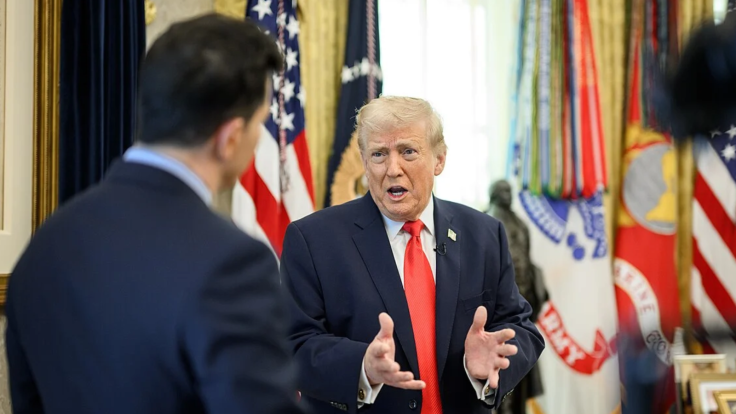
Trump's approval stood at 58% among white evangelical Protestants, down from 78% in early 2025. They remained the only religious group surveyed in which most respondents approved. Approval was 39% among white Catholics and 7% among Black Protestants.
The survey included 3,917 registered voters, and it also measured their congressional preferences. Among white evangelical registered voters, 73% preferred Republican House candidates. Among white Catholics, 50% favoured Republicans and 32% Democrats.
Those differences matter ahead of the Kansas vote on 3 November. Trump's standing with white evangelicals remains strong compared with other religious groups, but the evidence does not establish an 'all-time' Christian vote across the broader electorate.
With Marshall facing a challenge from a Democratic pastor, the contest will also test how religious identity and party allegiance intersect in one closely watched Senate race.
© Copyright IBTimes 2026. All rights reserved.