

Donald Trump's Swollen Leg Condition May Lead to 'Wounds That Don't Heal' in Time, Doctor Warns
Public photos tell one story about Donald Trump's health, and the vein specialist reading between the lines tells another
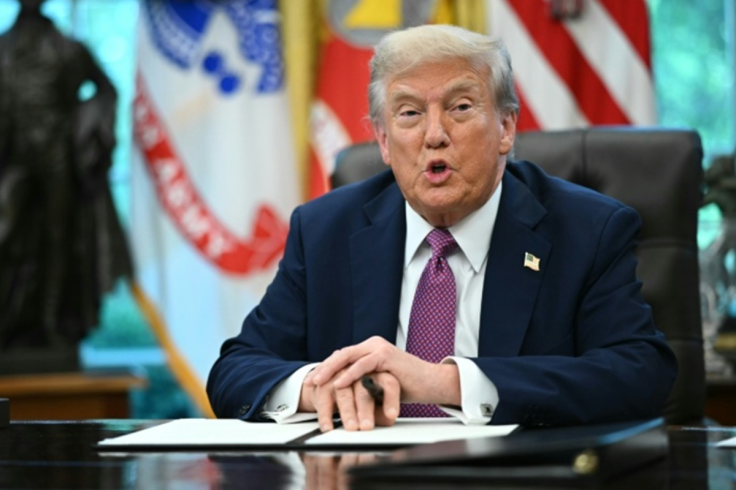
Donald Trump is still struggling with visibly swollen legs more than a year after being diagnosed with chronic venous insufficiency in Washington, and a leading vein specialist now warns the president's condition could eventually lead to 'wounds that don't heal' if it continues to deteriorate.
The concerns began quietly on paper. In April 2025, Trump's annual physical reported 'normal blood flow and no swelling,' according to the White House summary of his medical exam.
Just three months later, that calm official language collided with an uncomfortable visual reality and a new diagnosis: chronic venous insufficiency, a long-term problem in which leg veins fail to push blood effectively back to the heart, allowing fluid to pool in the lower limbs.
The turning point came when photographers caught Trump at the FIFA Club World Cup that same month. Close-up images of the president's ankles bulging over the edges of his shoes ricocheted around social media, sparking intense speculation about his health that the White House could not wave away as idle online chatter.
Donald Trump's Vein Condition Under Fresh Scrutiny
Trump's leg swelling has made repeated, and frankly awkward, appearances on the global stage. His enlarged ankles have been visible in official photos from sit-down meetings with German chancellor Friedrich Merz, Irish prime minister Micheál Martin, Japanese prime minister Sanae Takaichi, Egyptian president Abdel Fattah al-Sissi and Swiss president Guy Parmelin.
This April, the same issue was again on show when Trump welcomed King Charles III and Queen Camilla to the White House. As the two heads of state sat side by side in the Oval Office, photographers captured the president's ankles once more straining over his shoes.
Side-by-side images of Trump's swollen ankles next to the King's lean, unremarkable ones told their own story, without a single medical note.
Multiple videos over the past year have also recorded Trump moving with a slow, laboured stride. In some clips he appears to drag his right leg slightly while occasionally tapping it with his hand, behaviour that has not gone unnoticed by viewers poring over the footage frame by frame.
Interventional radiologist Dr Tonie Reincke, who specialises in vein disease and is director of the Reincke Vein Center, says that pattern fits with his known diagnosis. 'Tired, heavy, swollen legs can be due to chronic venous insufficiency,' she explained, adding that the condition is typically confirmed after a detailed history, targeted physical examination and diagnostic venous ultrasound.
According to Dr Reincke, first-line treatment usually involves closing off the damaged veins that are allowing blood to reflux backwards. This can be done using heat, adhesive 'glue' techniques or by removing obviously bulging varicose veins.
It is not a one-and-done fix though, which matters when we are talking about a sitting president who spends much of his life on aeroplanes and in long meetings.
Trump's Swollen Legs, Future Risks and 'Permanent' Changes
After Trump's most recent medical examination in May this year, his White House physician acknowledged that he still had 'slight lower leg swelling' but said he was 'showing improvement from last year'. The language sounded reassuring enough, on the surface.
Dr Reincke, however, stresses that even when initial treatments work, chronic venous insufficiency tends to be a repeat visitor rather than a forgotten chapter. 'Treatments help improve symptoms. However, with time, other veins may dilate, have backward blood flow and require additional treatments in the future,' she said. Having procedures, in other words, does not mean the underlying tendency disappears.
Left unchecked, she warns, the condition can progress far beyond puffy ankles. As the veins continue to stretch and fail, blood keeps flowing towards the feet instead of upwards. 'More advanced changes can include skin thickening and darkening, wounds that don't heal, and bleeding veins,' she said. That is the sort of stuff that turns a cosmetic worry into a serious long-term health problem.
Some of the changes associated with venous insufficiency can also become locked in. Dr Reincke notes that darkening or bruising of the skin, bulging veins and ankle swelling 'can all be permanent changes' once they develop.
That matters because Trump's ankles have now been visibly swollen in public for more than a year, including during some of the most heavily scrutinised diplomatic photo ops on the planet.
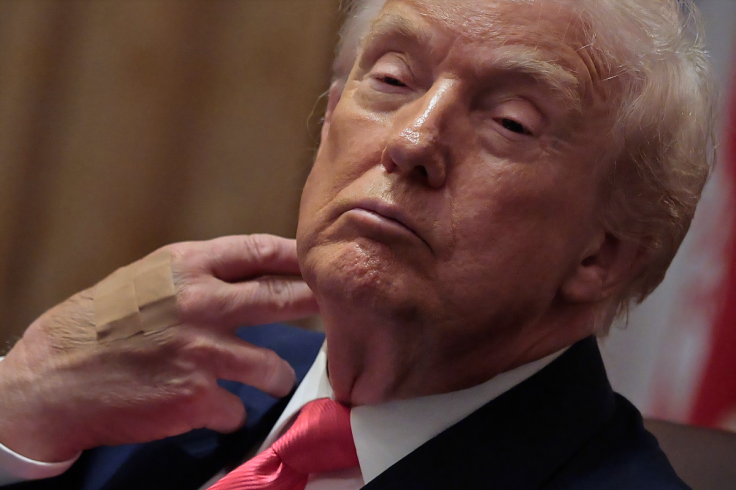
Around the same time the ankle issue first drew notice, observers also began to spot dark bruises on Trump's hands. The White House attributed those marks to frequent handshaking while the president was taking a high dose of aspirin, and Trump has continued to be seen with bruising on both hands ever since.
Dr Reincke is blunt. 'Bruising is common. Chronic venous insufficiency may cause bruising in the legs. Bruising in the hands is not likely caused by venous insufficiency,' she said. In other words, the leg condition and the hand bruises are almost certainly separate stories, even if they keep colliding in the same news cycle.
As for why Trump developed chronic venous insufficiency in the first place, Reincke points primarily to genetics. 'The number one risk factor for chronic venous insufficiency is hereditary,' she said, listing age over fifty, occupations involving prolonged sitting or standing, obesity and prior leg injury or surgery as additional contributors.
The White House has maintained that the president is under ongoing medical care and continues to work a full schedule.
© Copyright IBTimes 2026. All rights reserved.