

Elon Musk Calls Director a 'Bitter Old Man' and Threatens to Sue Over AI Clone in New Documentary
Alex Gibney's film raises questions about synthetic likenesses, editorial independence, and scrutiny of powerful public figures
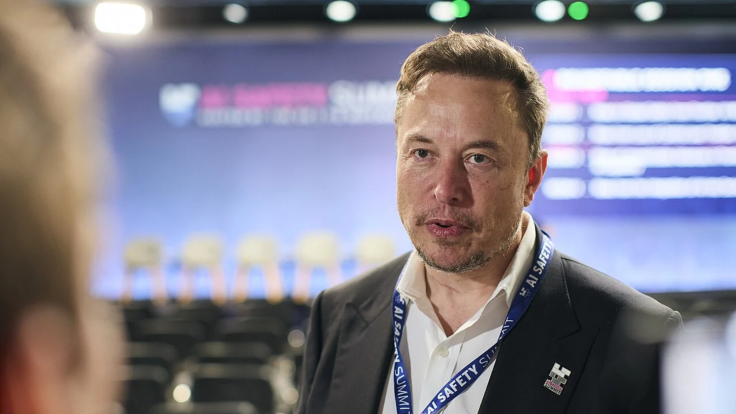
Elon Musk's dispute with documentary filmmaker Alex Gibney has become a test of how filmmakers can scrutinise powerful figures who decline to participate in their work. Musk has publicly attacked Gibney and threatened legal action over Musk, a feature-length documentary examining the billionaire's business empire and political influence.
The film uses an AI-generated likeness of Musk, drawing on his previous public statements after he declined to be interviewed, according to Gibney. Musk's lawyer, Alex Spiro, has challenged the film's treatment of Starlink and the 2024 US presidential election, arguing that it creates a false implication about Musk's conduct.
The controversy reaches beyond a clash between a filmmaker and his subject. It raises questions about how audiences distinguish authentic footage from synthetic reconstructions, how disputed claims should be presented, and whether legal threats can complicate the release of documentaries about influential people.
An AI Avatar Fills the Interview Gap
Gibney's Musk examines the entrepreneur's rise, his companies, his acquisition of Twitter, now known as X, and his growing political influence. Rather than relying on a conventional interview with its central subject, the documentary uses a computer-generated avatar built around material from Musk's previous public appearances.
The avatar is not a new interview, and its appearance should not be mistaken for Musk's participation in the production. Its use reflects a difficult editorial choice: how to represent a prominent subject who has declined to speak directly to the filmmakers without blurring the line between recorded evidence and reconstruction.
That distinction is increasingly important as AI tools make convincing digital likenesses easier to create. Documentary makers need to make clear how such representations are produced and ensure that audiences can distinguish a subject's recorded words from any synthetic presentation.
The Legal Dispute Centres on Starlink
Musk has attacked Gibney publicly, calling him a 'bitter old man' and accusing him of lacking integrity. He has also characterised the documentary as a 'hit piece' and threatened to sue.
Spiro has argued that the film falsely implies Musk used Starlink, the satellite internet service operated by SpaceX, to influence the 2024 US election. He has also said Musk's team sought to provide information during the film's fact-checking process.
Gibney, meanwhile, has said Musk declined to be interviewed. That account does not, on its own, resolve the separate disagreement over communications with Musk's representatives or the accuracy of the disputed material.
The election-related allegation must remain clearly attributed to Musk's legal team. The threat of legal action is not a court finding, and the dispute does not establish that Starlink was used to alter votes or that the documentary is defamatory.
Yeah, he’s a bitter old man who lost the plot long ago
— Elon Musk (@elonmusk) September 9, 2026
Distribution Adds Another Layer of Uncertainty
The film's release arrangements add a practical dimension to the dispute. Musk received a theatrical release in the United States through Bleecker Street, while HBO holds television and streaming rights. Theatrical distribution and later streaming availability are separate stages, so any discussion of release plans should specify the platform and territory.
The controversy has also played out on X, the social media platform Musk owns. His public criticism gives him a direct channel to challenge the film's framing and potentially draw attention to the dispute among audiences who have not seen the documentary.
That visibility does not establish that the legal threat has disrupted distribution. It does, however, illustrate how a subject's public response can become part of the story surrounding a film, influencing the debate before viewers assess its evidence for themselves.
The Editorial Test Is Transparency
The central issue is not whether documentaries should criticise powerful people. It is whether they present evidence, interpretation, and uncertainty clearly enough for audiences to judge the claims being made.
AI-generated likenesses add another responsibility. Filmmakers should disclose how a reconstruction was made and avoid creating the impression that a person took part in an interview or delivered new remarks when neither occurred.
For viewers, the key questions are what the film documents directly, which conclusions it draws from that material, and what remains disputed. For filmmakers, the challenge is to maintain rigorous standards while making clear where evidence ends and interpretation begins.
The dispute over Musk brings those responsibilities into focus. Its significance will depend less on the public insults exchanged than on the accuracy of the film's claims, the transparency of its methods, and how the competing arguments withstand scrutiny.
© Copyright IBTimes 2026. All rights reserved.