

Elon Musk Says Reverse Ageing Highly Likely but Warns Immortality Could Create 'Stultifying' Society
Tesla chief calls ageing 'very solvable problem' at Davos
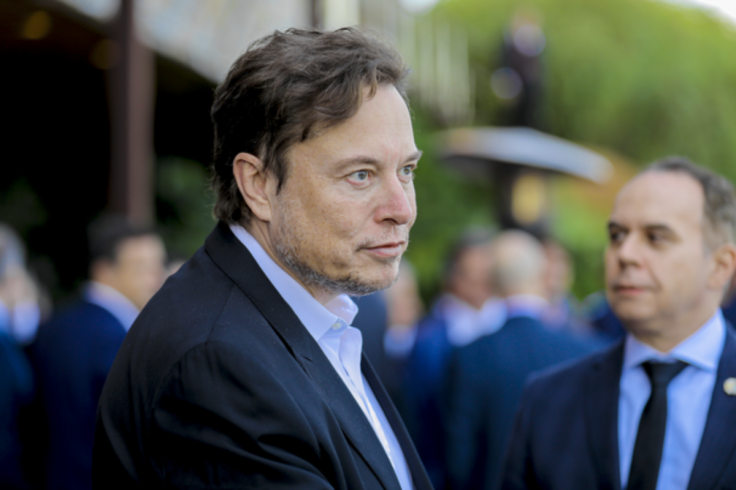
Elon Musk has made one of his boldest predictions yet, claiming humanity will likely unlock the secrets to reversing ageing whilst simultaneously warning that immortality could prove detrimental to civilisation. The Tesla and SpaceX chief executive shared his views during a conversation with BlackRock CEO Larry Fink at the World Economic Forum in Davos, Switzerland.
The tech billionaire, who admitted he has not 'put much time into ageing stuff', described extending human life as a 'very solvable problem'. Speaking before the Davos audience, Musk suggested that when scientists identify what causes ageing, the answer will prove 'incredibly obvious, not a subtle thing'. His optimism stems from observing how the human body ages uniformly across all tissue types.
Biological Clock Theory
Musk presented a theory centred on a synchronising biological clock governing approximately 35 trillion cells in the human body. 'I've never seen someone with an old left arm and a young right arm,' he said. 'That means there must be a clock, a synchronising clock, that is synchronising across 35 trillion cells in your body.'
This aligns with emerging research in biological ageing. Scientists have identified the suprachiasmatic nucleus in the hypothalamus as a master pacemaker initiating daily synchronisation across cellular clocks. Research published in Protein & Cell indicates that circadian desynchrony occurs with ageing, contributing to metabolic disorders and neurodegenerative conditions.
Death Serves a Purpose
Despite his confidence in extending lifespans dramatically, Musk delivered a stark warning about near-immortality's societal implications. 'There is some benefit to death, by the way,' he told the gathering. 'There's a reason why we don't actually have a longer lifespan.'
The world's wealthiest individual expressed concern that extreme longevity could lead to an 'ossification of society', where entrenched power structures, outdated ideas and rigid systems prevent progress. 'If people do live forever or for a very long time, then I think there is some risk of things just getting kind of locked in place,' he explained. 'It may become stultifying, lacking vibrancy.'
This echoes concerns raised by longevity researchers. Dr João Pedro de Magalhães, Chair of Molecular Biogerontology at the University of Birmingham, has noted that whilst curing ageing would end suffering, cultural and intellectual stagnation remains a legitimate concern if society fails to adapt to dramatically extended lifespans.
Scientific Community Responds
Musk's assertion that ageing is 'not particularly hard' to solve has raised eyebrows amongst longevity researchers who have spent decades grappling with the problem's complexities. His remarks mark a notable shift from his historical scepticism about life extension technologies.
However, his conclusion that reversing ageing is 'highly likely' resonates with recent advances. Life Biosciences recently received FDA clearance to initiate a Phase 1 clinical trial evaluating ER-100's safety, marking the first cellular rejuvenation therapy using partial epigenetic reprogramming to enter human trials.
Implications for Longevity Research
Musk's public endorsement of life extension research, despite his reservations, could shift public discourse around ageing science. His remarks came during the same week that Harvard professor David Sinclair, a prominent life-extension advocate, continued promoting his Information Theory of Ageing, which suggests that loss of epigenetic information drives cellular decline.
The billionaire's influence in technology sectors means his views could impact funding and public perception of anti-ageing research. The conversation around life extension has shifted from fringe science to mainstream discourse, with significant implications for healthcare systems, pension programmes and societal structures worldwide. Musk's warnings about societal stagnation highlight the need for discussions about how civilisation might adapt to a world where death becomes optional rather than inevitable.
Swipe at Trump Peace Initiative
The Davos appearance marked Musk's first time speaking onstage at the event, which he had previously dismissed as 'boring af'. Beyond ageing and longevity, the billionaire used the platform to take a wry swipe at US President Donald Trump's newly announced Board of Peace, designed to lead ceasefire negotiations in the Israel-Hamas conflict.
Opening his discussion with Fink, Musk joked about whether the initiative was truly about 'peace' or securing 'a little piece of Greenland, a little piece of Venezuela'. The quip referenced Trump's stated ambitions regarding territorial interests whilst the president positions the Board as a potential rival to the United Nations.
I love this take.
— VraserX e/acc (@VraserX) January 8, 2026
Elon Musk looks at aging like an engineer, not like a mystic.
Exactly the same mindset as Aubrey de Grey.
Core ideas that really hit:
•Aging is not chaos. The whole body degrades in sync, so there must be a central mechanism.
•If everything decays together,… pic.twitter.com/msWUNTfDPT
© Copyright IBTimes 2026. All rights reserved.