Elon Musk's Mars Colony Dreams At Risk As Human Sperm Loses Direction In Space: Report
New findings raise urgent questions about human reproduction beyond Earth

Elon Musk's long-standing ambition to build a human colony on Mars may be running into a very human obstacle. New research suggests human sperm struggles to function properly in space, raising serious questions about whether people can reproduce beyond Earth.
The findings, published in Communications Biology, have unsettled scientists and space agencies alike, especially as missions to Mars shift from theory to preparation. Rockets are improving and habitats are being designed, but the question of sustaining life across generations remains uncertain and far from settled.
At the heart of the issue is something simple, yet crucial. In microgravity, sperm appears to lose its sense of direction. That small failure could quietly undermine any attempt to establish a self-sustaining human population on another planet.
Scientists Warn of 'Lost' Sperm in Microgravity
Researchers from Adelaide University's Robinson Research Institute and the Andy Thomas Centre for Space Resources in Australia found that sperm cells behave differently under space-like conditions. Rather than swimming directly towards an egg, they become disoriented and less effective.
Using a device known as a 3D clinostat machine to simulate weightlessness or zero-G, the team examined how microgravity affects motility, or the ability of the sperm to move efficiently. What they saw was striking. Without Earth's gravity, the usual signals that guide sperm seem to break down.
As reported by The Guardian, this loss of direction could sharply reduce the chances of fertilisation. It is not just a biological curiosity. It touches on whether humans can survive, and continue, in space.
Senior research author Dr Nicole McPherson said it was the first time they had observed how important gravity is in helping sperm navigate through a channel similar to the reproductive tract. Associate Professor John Culton added that the research underlined the need to understand how microgravity affects the very earliest stages of life.
A Direct Challenge to Mars Colonisation Plans
As reported by Daily Express, the findings have raised new doubts about the practicality of long-term space settlements, including Elon Musk's plans for Mars.
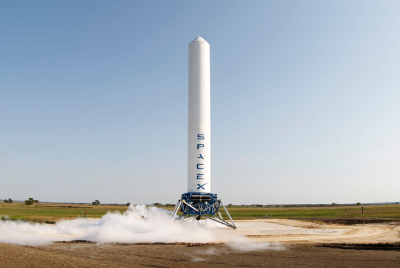
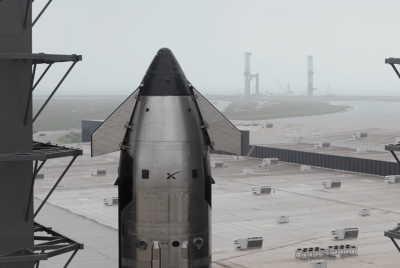
Musk has often said humanity must become a multi-planet species to survive. His company, SpaceX, is working towards sending humans to Mars in the coming decades.
Reproduction, however, is not a minor detail. Without it, any colony would depend entirely on Earth for population growth. That reliance would cut against the idea of a self-sustaining civilisation.
Experts say the issue cannot be brushed aside. If natural conception proves difficult in space, scientists may have to turn to assisted reproductive technologies or controlled environments that replicate Earth's gravity.
The Human Cost Behind the Science
Beyond the technical challenges sits a more personal truth. The idea of starting families is central to any vision of life on Mars.
According to Daily Star, the research exposes a gap in current space planning. Engineering hurdles often dominate the conversation, but human biology in extraterrestrial conditions is still not well understood.
Another study paints an even harsher picture. It suggests space is deeply hostile to human reproduction, with radiation, microgravity and toxic lunar dust all capable of damaging fertility, disrupting pregnancies and putting future children at risk.
For future astronauts, this could mean confronting limits on one of life's most basic experiences. That reality carries emotional weight, and it is already shaping how researchers approach the problem.
Some scientists also warn that even if conception becomes possible, risks may remain. These include potential effects on embryo development and pregnancy in low gravity.
Race to Find Solutions Before Liftoff
Space agencies and private companies, including Elon Musk and SpaceX, are now under growing pressure to respond. The task is not just to reach Mars, but to make it possible for humans to truly live there.
Researchers are exploring ways to simulate gravity, such as rotating habitats or specialised chambers. Others are investigating whether artificial environments could restore normal sperm behaviour.
For now, these ideas are still in their early stages. There is no clear solution, and time is tightening as space ambitions move forward.
The findings are a reminder that space exploration is not only about machines and engineering. It is also about the delicate systems that keep human life going.
For now, the dream of a thriving colony on Mars is still alive. But this research makes one thing clear that even the smallest cells may shape the future of humanity's biggest ambitions.
© Copyright IBTimes 2025. All rights reserved.
- Recommended For You