

Elon Musk Says Humanity Serving as Biological Bootloader for Machine Intelligence Could Mean Success
The SpaceX chief reframed his earlier warning about humanity's role in creating digital superintelligence while continuing to highlight AI risks
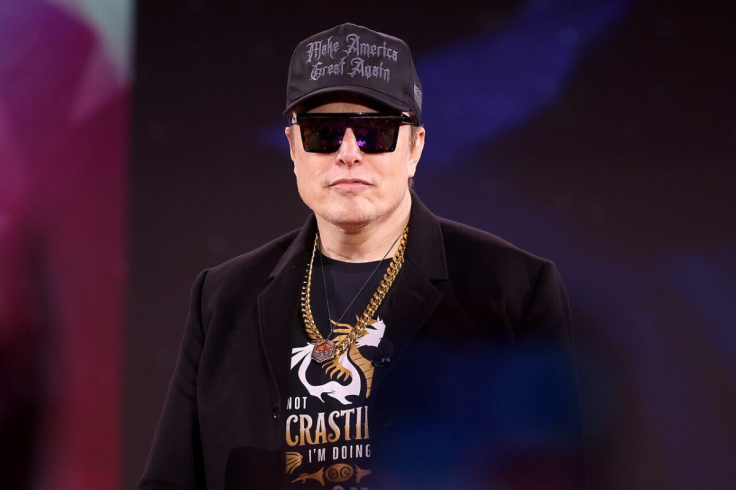
Elon Musk, CEO of Space Exploration Technologies Corp. (SpaceX), stated on X on Sunday that humanity serving as a biological bootloader for machine intelligence could represent a successful outcome if superintelligence spreads beyond Earth.
His comment revisited a concern he expressed in August 2014 about humanity's role in the development of digital superintelligence. The latest response shifts the emphasis from that warning towards a possible outcome in which advanced intelligence reaches the stars, connecting the discussion to SpaceX's space ambitions.
Musk Revisits His Biological Bootloader Warning
'Propagating super intelligence to the stars is a great success condition for a biological bootloader,' Musk wrote in response to a discussion revisiting his warnings about advanced AI.
The phrasing recalls his August 2014 post, which framed humanity's potential role in less favourable terms. 'Hope we're not just the biological boot loader for digital superintelligence. Unfortunately, that is increasingly probable.'
At the time, Musk had recommended Oxford philosopher Nick Bostrom's book Superintelligence. He also warned, 'We need to be super careful with AI. Potentially more dangerous than nukes.'
The difference between the posts concerns the outcome Musk describes. His earlier statement expressed concern about humanity serving as a precursor to digital superintelligence, while the latest identifies spreading superintelligence to the stars as a possible success.
The wording sets out one possible successful outcome for humanity's role as a biological bootloader. Musk's comment ties that outcome to the spread of superintelligence beyond Earth, rather than describing a development that has already occurred.
AI Risk Remains Part of Musk's Position
Musk has continued to warn about advanced AI despite the different emphasis in his latest post. Last month, he renewed his warning that artificial general intelligence poses a greater risk than nuclear weapons, according to the supplied report.
Reuters has also reported that Musk supports calls from leading AI executives for stronger safeguards and a slower pace at the frontier. Those reported positions place his latest comment alongside continuing concerns about how advanced intelligence develops.
The Sunday post therefore reframes the biological bootloader idea without explicitly retracting the earlier safety warnings. Its focus is the possibility of propagating superintelligence beyond Earth, a prospect Musk describes as successful under that condition.
Musk Connects Machine Intelligence With Space
SpaceX's founding goal is to make life multiplanetary. The company states that Starship is designed to carry people and cargo to Earth orbit, the Moon, Mars and beyond, and describes humanity 'out exploring the stars' as central to its mission. Musk's latest remarks connect that mission to his views on superintelligence.
Musk has argued that space will eventually become essential for scaling AI compute. SpaceX now lists 'developing orbital AI compute' among its core initiatives, bringing computing into the company's stated space plans.
According to the supplied report, SpaceX is developing Starmind satellites for orbital computing, and Musk has stated that Nvidia-powered AI computers could begin reaching orbit. The prospect remains an ambition in the supplied account, rather than a report of those computers already being deployed.
The report also states that Starship's first orbital mission last month deployed 26 Starlink V3 satellites, advancing the launch system expected to underpin the orbital computing ambitions.
On Saturday, Musk stated that SpaceXAI would be renamed SpaceXSI, replacing 'artificial intelligence' with 'super intelligence'.
© Copyright IBTimes 2026. All rights reserved.